
The pale green skin of the honeydew melon catches your eye. At home you’ll cut into it, hoping for something sweet. What you get is often watery and bland. Why? Because honeydew doesn’t continue to ripen after harvest. It runs out of gas on the vine, and that’s why you have to select for ripeness at purchase time.
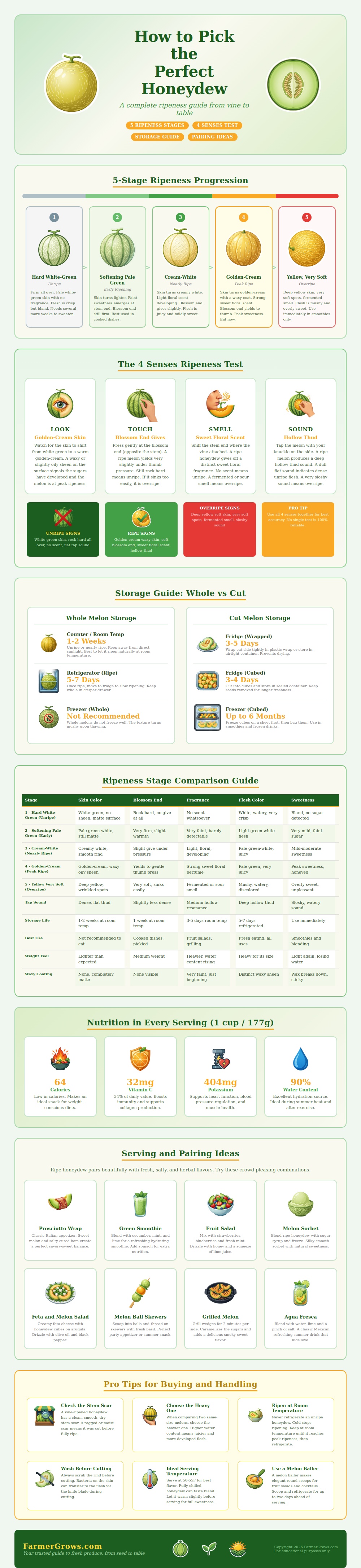
Selecting a good melon are more a matter of reading nature than chance. There are five developmental stages according to visual guide. Green skin makes a lot of folks give up there. But in fact honeydew stop developing sugar once it’s picked. If the melon isn’t ready, you won’t be able to dent it with your finger; its firmness will make it feel more like rock solid than squishy soft. The skin will also still have a matte finish that’s more white than green (though this can look like pale green in certain lights). When the fruit is fully mature, the skin’s creamy white shade begins to turn gold-cream. That’s prime time for eating it.
How to Pick and Store Honeydew Melons
Look at its color first. But don’t rely on your eyes alone. A four-sense test: Start with sight; confirm with touch. Gently press on the blossom end (opposite the stem) of the melon. If it gives a bit to your thumb, it’s ripe. It will feel fleshy, like underside of your own palm just below the base of your thumb. If it’s still as hard as a rock, put the melon aside. If it sinks easily, it’s overripe and beginning to go mushy.
Next: smell. Use your nose at the stem end, where it should be fragrant and floral. If there’s no aroma, then the sugars hasn’t formed yet. Fermented? You waited too long. The final step is to tap the melon. Juicy flesh sound hollow when tapped. A dull flat sound suggests density and unripeness.
The physical transformations are all linked. Starch transforms to sugar. Storage is important when you get the melon home. For now, if your honeydew is rock-hard, leave it out at room temperature, but not in the sun. Cool stops a melon from getting fully ripe. Stick that baby in the refrigerator, and it’ll pause in its tracks. You can let it progress another week or so until the melon has gone golden; with a hard melon this could take up to two. When it starts to soften, and has developed sweetness in its scent, transfer it to the fridge, where it will slow down even more and provide you with a good week or so of peak taste.
No: You do not want to freeze a whole honeydew. It turns to mush when defrosted; you’re left with something closer to soaked paper than fresh, crisp melon. Stash melons in an airtight container, or wrap snugly in plastic. If the fruit is cut, it will dry out fast and absorb odor from neighboring produce. Cubed melon last about three to four days before losing its crunch. If you’re overrun with ripe fruit, freeze cubes. First, flash freeze them on a sheet. This prevents them from sticking together into a solid ice block that is difficult to separate at serving time.
Think about what else it will go with. Melons, especially honeydew, are mild and have subtle flavors. Think of it like a blank slate for more powerful flavors. Because they’re so sweet, they also play nicely with salty items. A few slices wrapped in prosciutto make for a fancy yet easy combo. Slicing it up and pairing it with fresh lime juice or mint brightens up its naturaly sweetness. For something more savory, toss the cubes together with arugula and feta cheese. Bitter greens cut right through that fruity creaminess.
Little things make for a better eating experience. Wash the rind, always. Your knife blade transfers bacteria from the outside in. Pick a ripe melon. Heavier is juicer (with more water). Serve it slightly chilled, not ice cold. Ice cold numbs the taste buds. Even a perfect honeydew tastes bland when served to cold. Take it out of the fridge and let it warm up on the counter for ten minutes first. The difference is immediate.
How to pick honeydew: Pay attention; be patient. What you’re looking for is that moment when the flesh still feels firm but yields slightly. Sweetness hints, but there’s no mushiness. And all of this must be judged with all your senses. Trust your fingers’ feel. Don’t try to hurry by putting them in the fridge too soon. If you do, the first bite will remind you why it was called summer sunshine. You should of picked a better one!