🌾 Grass Silage Calculator
Estimate grass silage volume, fresh weight, dry matter, bale equivalents, and feed days from clamp size and density
| Silage Type | Typical Density (lbs/cu ft) | Typical DM% | Tons per 1,000 cu ft |
|---|---|---|---|
| Fresh grass silage | 40-45 | 28-35% | 20-22.5 tons |
| Wilted grass | 35-42 | 35-50% | 17.5-21 tons |
| Leafy second cut | 38-45 | 35-45% | 19-22.5 tons |
| High-DM grass | 38-44 | 28-35% | 19-22 tons |
| Young grass mix | 35-42 | 30-40% | 17.5-21 tons |
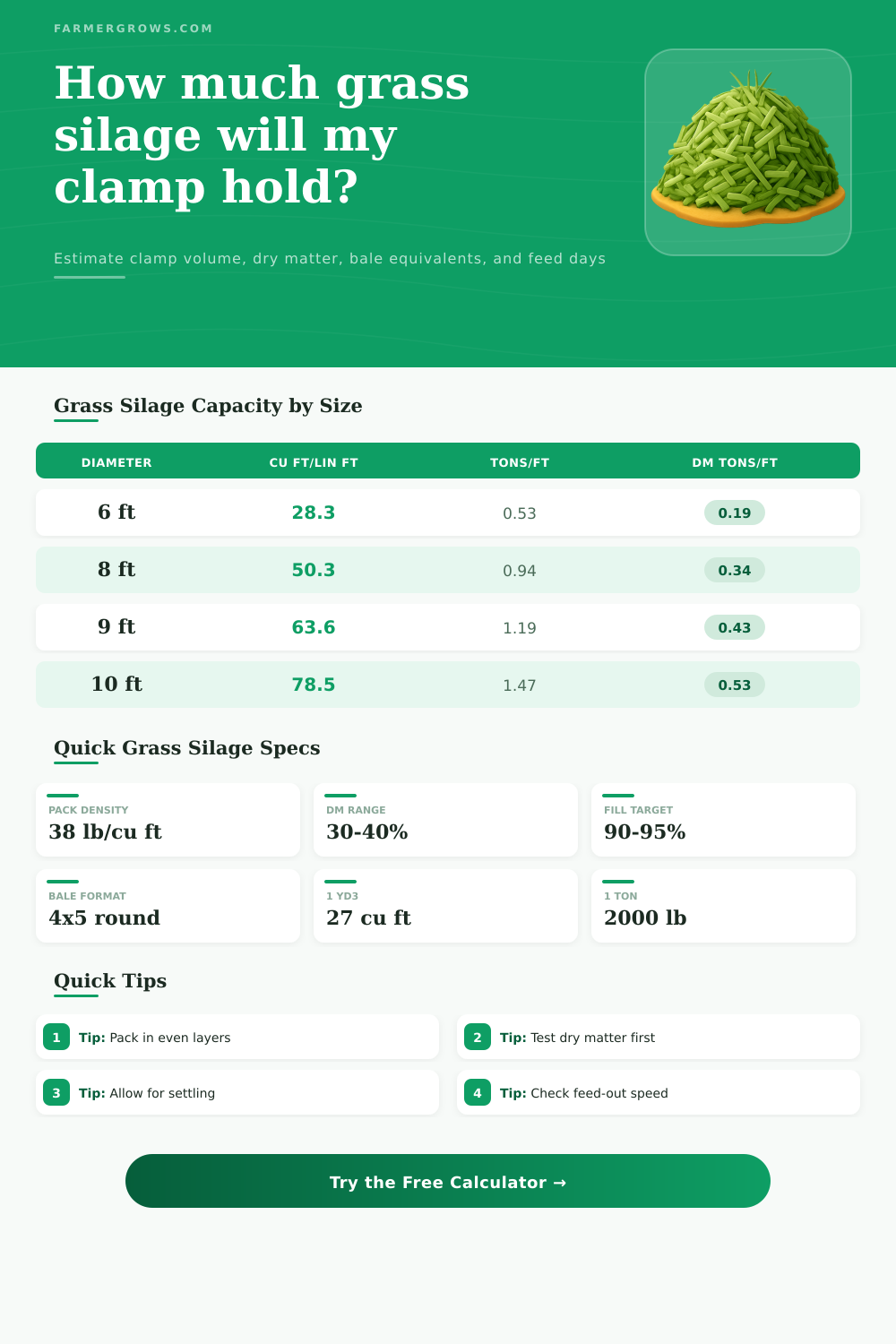
| Clamp Length (ft) | 9 ft Clamp Volume (cu ft) | Grass Silage Tons | Wilted Grass Tons |
|---|---|---|---|
| 100 ft | 5,726 | ~103 tons | ~81 tons |
| 150 ft | 8,590 | ~154 tons | ~122 tons |
| 200 ft | 11,453 | ~206 tons | ~163 tons |
| 250 ft | 14,316 | ~257 tons | ~204 tons |
| 300 ft | 17,180 | ~309 tons | ~244 tons |
| 400 ft | 22,906 | ~412 tons | ~326 tons |
| 500 ft | 28,633 | ~515 tons | ~407 tons |
Grass silage is made of canned grass forage. It works as main feed for animals during the winter because it helps to settle the problem of summer grass surpluses against yearly grazing needs. Simply said, it is pasture grass that you preserve by means of pickling.
That mode keeps the nourishment good for cows and sheep when natural pasture lacks for instance in dry periods
How to Make and Use Grass Silage
Silage forms from forage or chopped crop residues with lot of water, by means of controlled fermentation in anaerobic conditions. Germs from the grass self do the fermentation. It must happen in acidic pH between 4 and 5 to preserve nutrients and give cows and sheep food that they like.
Fermentation in higher pH gives silgae with bad taste and fewer sugars and proteins. For crops the process is like sauerkraut or kimchi. Under good conditions lactobacilli do the fermentation, producing lactic acid instead of alcohol.
You cut grass silage at the end of May or at the beginning of June, then preserve it by means of pickling. Two methods exist: covered silos or rolling grass bales. Corn works more for big bunkers, grass for little amounts, because bale silage works well here.
Even home makers use lawn mower cuts, molasses and almost airtight tins for their silage.
Grass silage and haylage use grass as the main part, but they differ according to preservation mode. Green, growing fodder have the most nutrients from forage. Ensiling do not add something additional to what already is.
So it matters to cut in the right moment. Cut grasses in boot stage, when the head exits from the whorl, at least for the first times.
For silage to dry cows or growing heifers you want more stemmy grass with less digestibility. Mow dry, without rain or dew, best in the morning. Spread quickly and evenly inside one hour after cutting for urge wilting.
Want 30% dry in 12 until 24 hours, for focus water soluble carbohydrates and boost fermentation. Set harvester according to grass dry matter for help. Cover clamp walls by means of sheets and use clingfilm as second upper cover, for inhibit oxygen entering.
Hybrid ryegrass are among the best grass species for intensive farming. It is flexible, because you can graze it or cut for silage, haylage or hay more late in the year.