⚡ Electric Fence Energizer Calculator
Find the right joule output for your fence — enter your fence details below
| Animal Type | Min Voltage | Recommended Voltage | Wire Strands | Base Joules/Mile |
|---|---|---|---|---|
| Horses | 2,000V | 3,000–4,000V | 2–4 | 0.7 J |
| Cattle | 2,000V | 4,000–5,000V | 3–5 | 1.0 J |
| Sheep | 3,000V | 4,500–5,500V | 4–6 | 1.2 J |
| Goats | 3,500V | 5,000–6,000V | 5–7 | 1.5 J |
| Hogs / Pigs | 2,000V | 3,000–4,000V | 3–5 | 1.3 J |
| Poultry | 2,500V | 4,000–5,000V | 5–8 | 1.6 J |
| Dogs | 1,500V | 2,500–3,500V | 2–4 | 0.5 J |
| Deer Exclusion | 4,000V | 6,000–8,000V | 6–9 | 2.0 J |
| Predator Control | 4,500V | 7,000–9,000V | 5–8 | 2.5 J |
| Wire Type | Resistance (Ω/mile) | Resistance (Ω/km) | Conductivity | Suitability |
|---|---|---|---|---|
| High-Tensile Steel | 12–15 Ω | 7–9 Ω | Good | Long distances |
| Galvanized Steel | 18–25 Ω | 11–16 Ω | Good | General use |
| Aluminum Wire | 7–10 Ω | 4–6 Ω | Excellent | Long fences |
| Poly Tape (12mm) | 400–800 Ω | 250–500 Ω | Low | Short runs only |
| Poly Rope (6mm) | 200–500 Ω | 125–310 Ω | Low | Short–medium |
| Poly Wire (3-strand) | 100–300 Ω | 62–186 Ω | Medium | Temporary fencing |
| Vegetation Level | Contact % | Load Factor | Extra Joules Needed | Impact on Voltage |
|---|---|---|---|---|
| Light | 0–10% | 1.0× | +0% | Minimal drop |
| Moderate | 10–30% | 1.25× | +25% | ~10–20% drop |
| Heavy | 30–60% | 1.6× | +60% | ~30–50% drop |
| Severe | 60%+ | 2.2× | +120% | >50% drop possible |
| Condition | Ground Resistance | Grounding Rods Needed | Voltage Impact |
|---|---|---|---|
| Wet / Moist Soil | Very Low | 1–2 rods (6ft each) | Optimal |
| Average / Mixed | Moderate | 2–3 rods | –10% typical |
| Dry / Sandy | High | 3–5 rods | –20–40% |
| Frozen / Rocky | Very High | 5+ rods or ground return wire | –40–70% |
An electric fence energizer are a device that provide the electrical pulses to an electric fence to power it. The electric fence energizer convert electricity from the power source into electrical pulses that travel through the electric fence to an animals. The electric fence energizer creates the energy measured in joules.
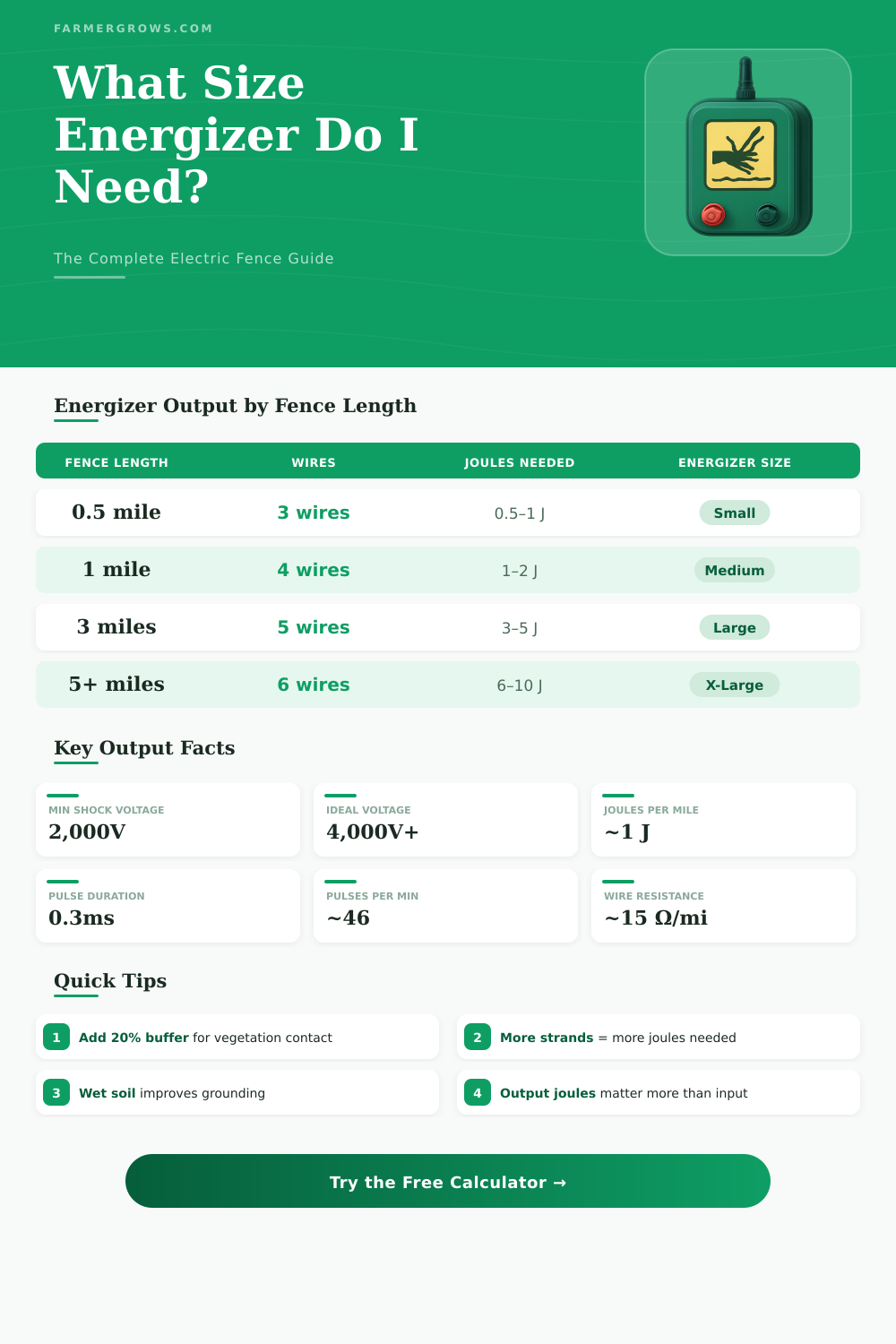
The joules in the electric fence energizer determine the strength of the electrical pulse that travels through the fence to the animals, as well as how effective the fence is in containing those animals. If the energizer has too few joules, then the fence will not have enough energy to reach the perimeter of the area to be contain by the electric fence. The electric fence wont be effective in containing the animals.
How many joules does an electric fence need
If the electric fence energizer has too many joules, the person who set up the electric fence will spend more money on purchasing an energizer with such high joule measurements. Many factors will influence the number of joules the electric fence energizer must emit. One such factor is the number of electric fence wires.
The more electric fence wires there are, the more energy the electric fence energizer must provide to those wires to charge the fence. For instance, a person who use three strands of electric fence wire will require more joules to operate the fence than a person who uses only one strand of wire. Another factor is the type of vegetation that grow near the electric fence.
If the vegetation in the area of the electric fence wire touches the wires, the vegetation will absorb the energy from the electric fence. Thus, the person will have to adjust the electric fence energizer to provide more joules if there is heavy vegetation near the electric fence wires. The type of soil in which the electric fence is erected also have an impact on the performance of the electric fence.
If the soil is wet, the electricity can travel well through the soil. If the soil is dry or frozen, the electric fence encounter resistance in the soil, which reduces the voltage of the electric fence. To account for this effect of the soil, electric fence grounding rod can be placed in the soil to allow the electrical pulses to return to the electric fence energizer.
If the soil have poor conducting properties, the voltage of the electric fence will decrease, and the electric fence will not perform corectly. The type of animals that the electric fence will contain also has an impact upon the number of joules and voltage that is provided by the electric fence energizer. For example, cattle require a certain amount of voltage to teach the cattle to respect the electric fence.
However, goats and sheep contains more voltage requirements because they have a tendency to eat the electric fence wires. Additionally, predators or deer require even more voltage and joules than either goat and sheep due to the thicker hide of these animals. A person should of include a buffer when calculating the number of joules that an electric fence energizer should provide.
A buffer of 20% can be added to the joule calculation to account for variables in the equation that may change. For instance, the growth of vegetation near the electric fence will reduce the effectiveness of the electric fence. A second calculation that consider the actual output of joules that the electric fence will emit relative to the input joules that the electric fence energizer receives from the power source.
The electrical output joules is the joules that will travel through the electric fence wires to the animals. The input rating is the energy unit received from the power source. For the electric fence to function proper, maintenance is necessary.
Vegetation near the electric fence will absorb the energy from the electric fence. Thus, you should regularly maintain vegetation to ensure that animals dont encounter the electric fence wires. Additionally, the voltage at the end of the electric fence should be tested with a voltage meter.
Testing the voltage at the end of the electric fence are important to ensure that the power from the energizer is reaching the entire perimeter of the electric fence. If a person maintain the vegetation near the electric fence and regularly tests the voltage at the end of the electric fence, it will remain effective in containing the animals.