Egg Protein Calculator
Plan protein from backyard or farm eggs by egg size, yolk and white split, servings, weekly meals, and the flock production needed to keep the kitchen supplied.
Nutrition values are practical estimates for chicken eggs by USDA size class. Farm eggs vary with breed, age, season, feed, and shell size, so weigh unusual eggs when precision matters.
Egg Protein Results
Batch nutrition, serving targets, and flock supply are calculated from the egg size and white/yolk counts you entered.
| US egg size | Minimum dozen weight | Avg shell weight | Whole egg protein | Kitchen note |
|---|---|---|---|---|
| Peewee | 15 oz per dozen | 35.4 g each | About 4.3 g | Common from very young pullets or small breeds |
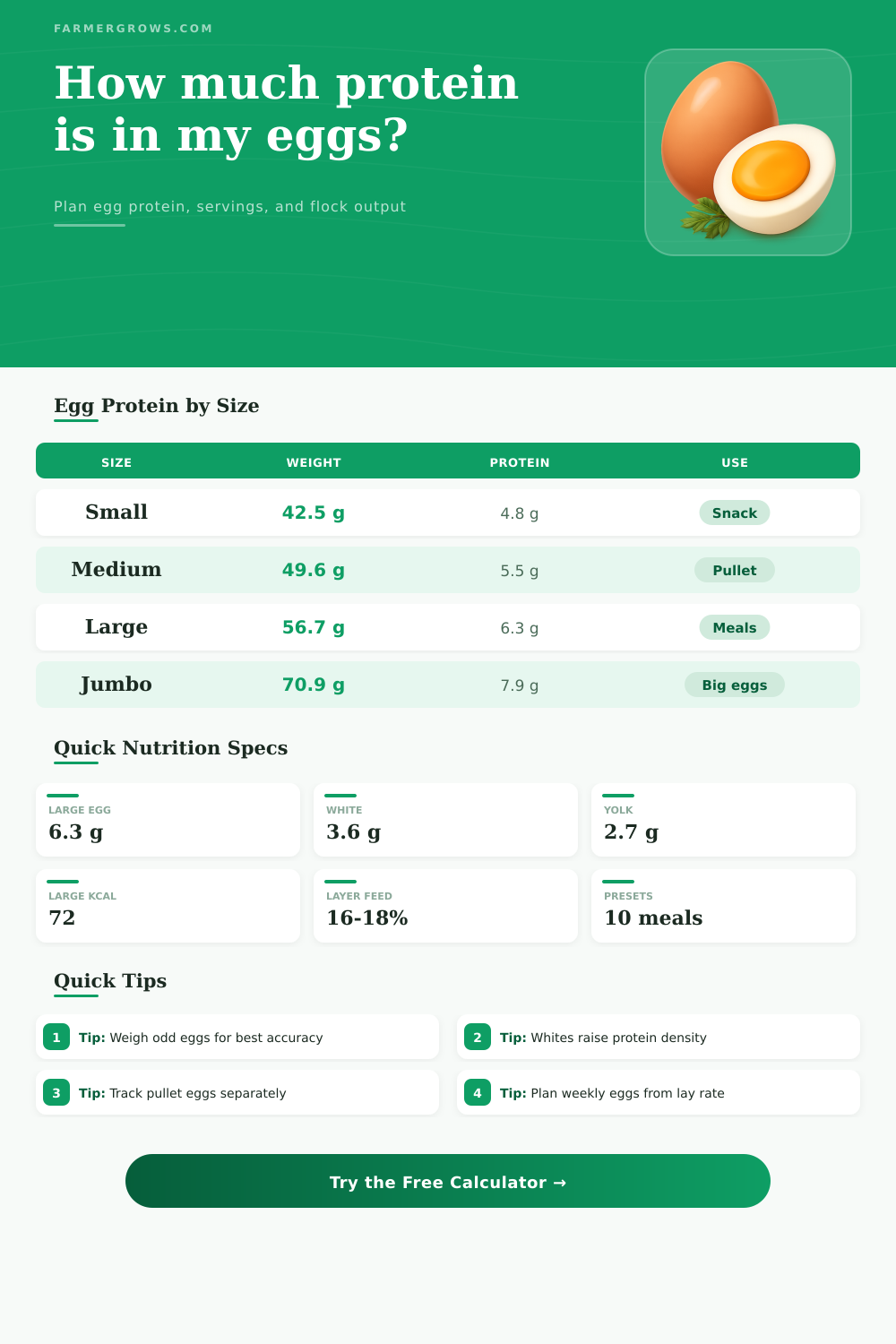
| Small | 18 oz per dozen | 42.5 g each | About 4.8 g | Useful for snacks, small bakes, and mixed flock cartons |
| Medium | 21 oz per dozen | 49.6 g each | About 5.5 g | Often close to early-season pullet eggs |
| Large | 24 oz per dozen | 56.7 g each | About 6.3 g | Standard size used in many nutrition labels and recipes |
| Extra large | 27 oz per dozen | 63.8 g each | About 7.0 g | Good when farmstand eggs run big from mature layers |
| Jumbo | 30 oz per dozen | 70.9 g each | About 7.9 g | High output per egg, but recipes may need adjustment |
| Egg fraction | Large egg estimate | Protein | Calories | Best planning use |
|---|---|---|---|---|
| Whole large egg | 1 white plus 1 yolk | 6.3 g | 72 kcal | Balanced breakfast, baking, frittatas, egg salad |
| Large egg white | About 30 g edible white | 3.6 g | 17 kcal | Raising protein while keeping fat lower |
| Large egg yolk | About 17 g edible yolk | 2.7 g | 55 kcal | Rich texture, color, emulsifying, and fat-soluble nutrients |
| Two large eggs | Breakfast plate | 12.6 g | 144 kcal | Often needs dairy, beans, meat, or extra whites for 20 g |
| Three large eggs | Omelet or scramble | 18.9 g | 216 kcal | Close to a 20 g protein meal target |
| Backyard flock pattern | Eggs per hen per week | 6 hens | 12 hens | Planning note |
|---|---|---|---|---|
| Peak laying season | 6 to 7 | 36 to 42 eggs | 72 to 84 eggs | Best time for freezing whites or batch cooking |
| Good average layers | 4.5 to 5.5 | 27 to 33 eggs | 54 to 66 eggs | Reasonable seasonal average for many backyard flocks |
| Winter or molt slowdown | 1 to 3 | 6 to 18 eggs | 12 to 36 eggs | Protein meal plans may need stored eggs or other foods |
| Mixed-age flock | 3 to 5 | 18 to 30 eggs | 36 to 60 eggs | Older hens and pullets can create uneven egg sizes |
| Heritage or broody breeds | 2 to 4 | 12 to 24 eggs | 24 to 48 eggs | Track actual nest-box counts for a better forecast |
| Feed or ration stage | Crude protein range | Typical bird stage | Egg planning context |
|---|---|---|---|
| Layer ration | 16% to 18% | Actively laying hens | Supports production, but egg protein still depends on egg size and count |
| Breeder or high-output layer | 18% to 20% | Heavy production or breeding pens | Useful when flock demand is high and body condition is monitored |
| Grower feed | 18% to 20% | Pullets before lay | Pullet eggs start smaller, so calculate by size rather than count alone |
| Chick starter | 20% to 22% | Young chicks | Not for laying hens, but shows why stage-specific ration matters |
| Scratch grain | 8% to 10% | Treat only | Dilutes the total ration if overfed and can reduce laying performance |
| Meal plan | Egg pattern | Approx protein | Servings | Flock note |
|---|---|---|---|---|
| Breakfast plate | 2 large whole eggs | 12.6 g | 1 | Uses 14 eggs weekly if eaten daily |
| High-protein scramble | 2 large eggs plus 3 whites | 23.4 g | 1 | Uses more whites and leaves yolks for baking or custard |
| Family frittata | 12 large whole eggs | 75.6 g | 6 | One dozen can feed a table but not hit 20 g per person alone |
| Egg muffin batch | 8 large eggs plus 4 whites | 64.8 g | 8 | Good for using steady weekly nest-box surplus |
| Deviled egg tray | 12 large whole eggs | 75.6 g | 12 halves | Protein per piece depends on portion count, not egg count alone |
For mixed cartons: Sort or weigh small pullet eggs separately. A dozen medium eggs can trail a dozen large eggs by nearly 10 grams of protein.
For meal prep: Extra whites are the easiest way to raise protein density, while spare yolks can be used in custards, noodles, sauces, or richer bakes.
Almost all of our meals involve eggs, but how much protein they offer depend on their size, whether they are laid by a hen that lays frequently, and if any white was left intact during cleaning. When you multiply that over several days or meals for more than one person, you will see that a dozen jumbo eggs don’t provide as much protein then a dozen small ones do.
The calculator above does all the math for you when you enter your weekly meal pattern, egg size, and how many whites and yolks each egg have. This eliminates the guesswork of needing to keep track of these rough numbers with you at all times. Why? Because no one cooks with just one kind of egg. For example, pullet eggs come first in the year and is generally on the smallish side. Full-grown hens produce bigger eggs but lay less during molt or winter.
How to Plan Your Egg Protein Intake
Sometimes you want to pull out some yolkiness and add extra white for more protein without much more calorie or fat. With this tool, you can check those tradeoffs before committing your eggs to a recipe. It will even ask how many servings you want and what percentage of that should be protein. This way, you know if a couple of egg by themselves will suffice to get you to your goal or whether you’ll have to tweak the mix.
The other factor is flock size. If it’s just you and one other person who eat breakfast most mornings, you could get by with a small handful of hens. But if you’re making a family frittata each weekend and/or baking up egg muffins a couple times a week, that same flock will fail to keep up. The calculator helps you see where there might be a shortfall, before you’ve got no more fresh eggs left in the fridge and has to break into the freezer stash.
You should also monitor another dimension: protein density. At about six grams of protein apiece and a rounded 72 calories, whole eggs pack in relatively little protein for their size; whites contains more protein per calorie, helpful if you want to achieve a higher protein count but aren’t interested in making your dish richer or larger. The output displays this density number as well so you can determine if you’re packing on bulk or just balancing things out.
Such planning isn’t optional; it’s just practical given seasonal shifts in laying habits. In springtime, for example, a flock may average five eggs a week per hen; by midwinter in the most short days, they’ll be down to two or three. Depending on how you think about timing meals (and knowing your own storage window), you might choose to stash some egg whites now and rely more heavily on other proteins later.
This doesn’t substitute for the actual egg-count in the carton, but it turns that tally into something more meaningful to the question: How much can my kitchen reasonably handle? Where this stuff starts showing its value is when you play around with various combinations of egg whites vs. Yolks, or even egg sizes within a similar meal pattern. It’s amazing how a little change to the input can swing that week’s total egg demand up (or down) a few dozen; especially if your eggs are limited and your flock size doesn’t changes. This will help you adjust your recipes to match the situation so you should of don’t have to guess at the dinner table.