
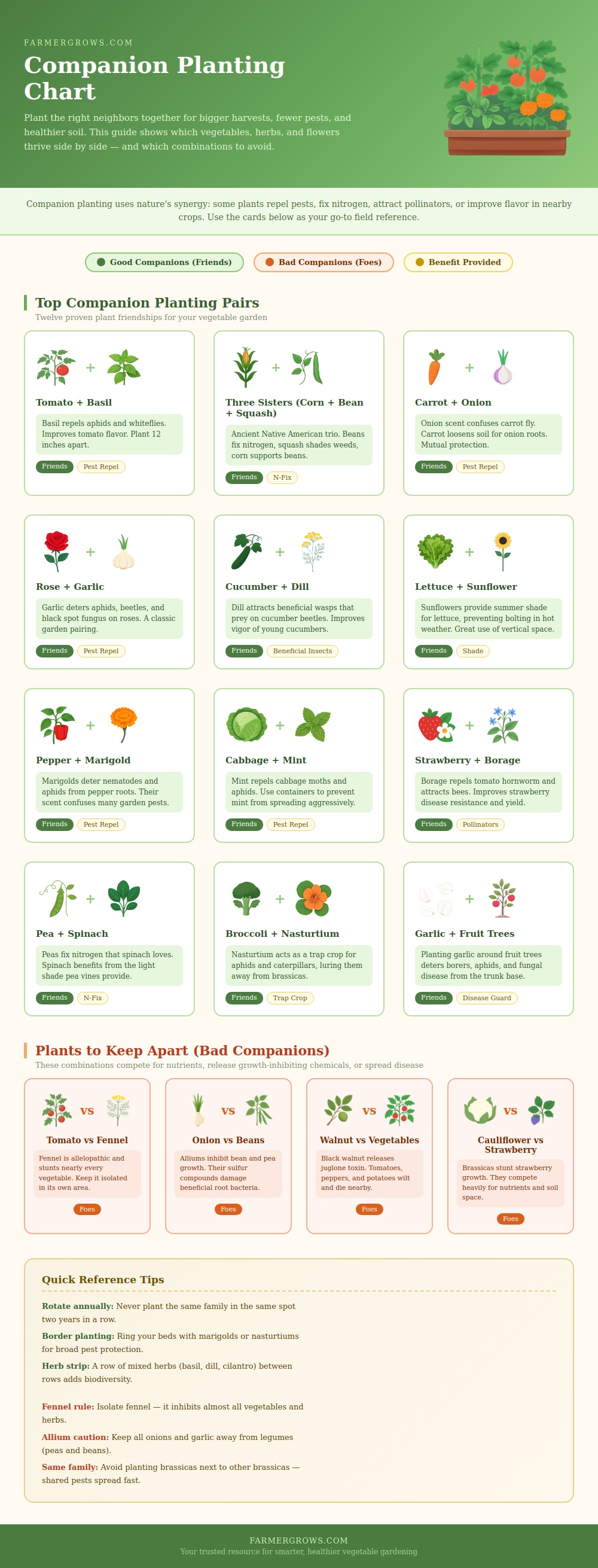
Companion planting is a gardening method where different species of plants grow beside each other for mutual help. Gardeners grow several crops close together to improve the product. Occasionally the advantage is only one-sided, when one plant gives almost everything without benefit.
Sometimes both species benefit from the partnership.
Companion Planting: Plants That Help Each Other
Method is based on centuries of observations about relations between plants in gardens. Gardeners match suitable species to optimize the space, naturally deter pests, improve the ground and reach bigger harvests. It works well for using the ground, especially in small gardens.
Good companion planting considers habits of growth for spatial efficiency and time until maturity. Quickly growing crops like radishes can be planted around more slow plants and be harvested before those shade them. Nitrogen-fixing matters, for instance by means of red clover as cover crop.
Attract or repel pollinators and pests is another part. Flowers that attract bees help raspberries beside them during pollination. Plants that attract aphids serve as shield for other crops.
Necessarily avoid plants that compete for same resources. Do not lay together two big crops that love light, or two with broad shallow roots. Competing roots inhibit good growth.
Height and size of plants also matters, so that each has enough space.
Crop of basil between tomatoes deters some pests. The basil-smell conceals the tomatoes. Marigolds do likewise for leafy crops like broccoli and cabbage.
Nasturtiums beside those attract white butterflies and move them away. Garlic gives sulphur, toxic for pests, so it works well in vegetable gardens. Lettuce and shade-loving plants benefit under peas and climbing beans.
Basil also pairs with peppers, oregano, asparagus and petunias. Do not plant it beside rue or sage.
Red cabbage with sugar snap peas on a trellis form good pair. The peas climb upward instead of take horizontal space like the cabbage. Corn stalks serve as cheap support, and big leaves of squashes keep other plants down and reduce unwanted grasses.
In regions with monoculture fields weaken the soil over time, but companion planting improves it. Advice take as hypotheses for test in your climate, ground and garden situation. Your own experiments and observations give the best results localy.