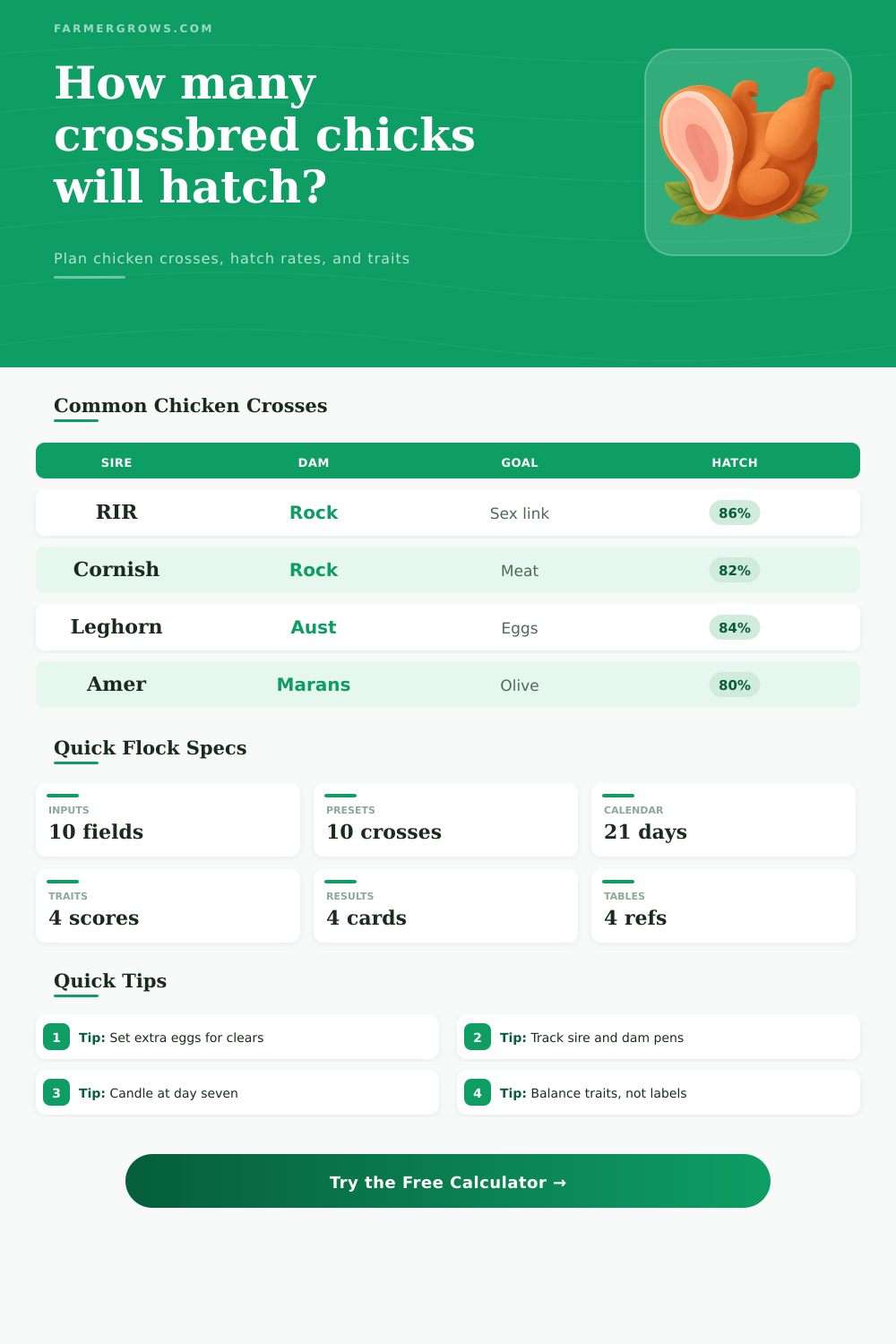
Chicken Cross Breeding Calculator
Estimate fertile eggs, hatchable chicks, pullet and cockerel counts, hybrid vigor, and trait balance before setting eggs from a planned sire and dam cross.
Use the estimates as a flock planning worksheet. Actual outcomes depend on breeder age, season, nutrition, egg handling, incubator control, and the genetics of the individual birds used.
Estimated Hatch and Cross Results
Set a sire, dam, and hatch plan to view the expected flock split.
| Breed | Egg score | Meat score | Hardiness | Best use in a cross |
|---|---|---|---|---|
| Rhode Island Red | 84 | 62 | 78 | Reliable brown egg pullets and sex link sire lines |
| Barred Plymouth Rock | 74 | 68 | 82 | Dual-purpose dams, barred sex link matings |
| White Leghorn | 96 | 34 | 58 | High-output egg genetics and feed efficiency |
| Cornish | 28 | 96 | 50 | Meat-frame sire influence for fast grow-out crosses |
| Silkie or Cochin | 36 to 48 | 34 to 55 | 64 to 72 | Broodiness, docility, natural incubation behavior |
| Cross type | Typical sire | Typical dam | Trait aim | Planning note |
|---|---|---|---|---|
| Black sex link | Rhode Island Red | Barred Rock | Layer pullets | Useful where early sex sorting matters |
| Cornish Rock | Cornish | White Rock or Barred Rock | Meat growth | Keep breeder nutrition and fertility records tight |
| Olive egger | Ameraucana | Marans | Colored eggs | Egg shade varies; select from pullet offspring |
| Dual homestead | Sussex or RIR | Australorp or Rock | Eggs and body | Best kept by selecting replacement breeders annually |
| Broody setter | Silkie or Cochin | Cochin or Orpington | Maternal behavior | Expect lower egg volume but better setting instinct |
| Incubation day | Calendar event | Target condition | What to record |
|---|---|---|---|
| Day 0 | Set eggs | Clean eggs, stable incubator, pointed end down | Egg count, pen ID, sire, dam, start time |
| Day 7 | First candle | Clear eggs removed only when confidently identified | Clear count and fertility estimate |
| Day 14 | Second candle | Developing eggs show strong veins and air cell growth | Quitters, shells, air cell notes |
| Day 18 | Lockdown | Stop turning, raise humidity for hatch window | Live embryos entering lockdown |
| Day 21 | Main hatch | Chicks dry before moving to brooder | Hatched chicks, late eggs, culls, brooder count |
| Trait priority | High weight means | Low weight means | Useful flock goal |
|---|---|---|---|
| Meat | Frame, breast, growth, table weight are emphasized | Layer efficiency can matter more than carcass | Broiler, roaster, dual-purpose meat pen |
| Eggs | Lay rate, persistence, and egg utility drive the score | Body size or broodiness may be preferred | Production pullets, selling eating eggs |
| Hardiness | Weather tolerance and general vigor carry more value | Controlled housing reduces climate pressure | Pasture, cold climates, low-input homesteads |
| Broodiness | Maternal instinct and natural setting are favored | Continuous laying without setting is preferred | Self-replacing flocks and natural hatching |
Pen records matter: A cross calculator is only as good as the sire and dam records behind it. Keep mating groups separated long enough to avoid mixed-parent eggs.
Set a few extras: Fertility and hatchability are separate losses. Add enough clean eggs to cover clears, quitters, and the pullet-to-cockerel split you can actually use.
When you decide to hatch chicks from two different breed, you must consider the trait of the offspring from those breeds. The traits of the chicks that hatch from those breeds will determine whether or not those chicks will satisfy the needs of the individuals who wish to own those chicks. For instance, a individual may desire chicks that lay brown eggs during the winter, but they may also desire chicks that will sit upon there eggs without needing to supervise those chicks constantly.
Cross-breeding allows an individual to control the traits of the chicks that is born, but only through understanding the trait of each of the breed of chickens that are to be crossed. Many individuals desire to determine their goal for there chicks prior to beginning to breed them. For instance, if an individual desires chicks that they can sort by color when they are hatched, they can use a red rooster and a hen that has barred feather.
Plan Breeding and Use a Hatch Calculator
Additionally, if an individual desires chicks that have meat, they can use a heavy rooster and a hen that grows quick. However, challenges can emerge if an individual attempts to control for many trait of chicks with there breeding efforts. For instance, if an individual breeds chicks to grow quickly, they may lay less eggs.
Additionally, chicks that lay well upon their eggs may cease to lay there eggs for several week. The calculator tool can account for the math behind the number of chicks with each trait, but the tool cannot determine what traits is the most important to the individual. The fertility and hatchability trait are two separate traits in part because each of these traits represent different aspect of the hatch of the chicks from the eggs.
Fertility is a trait that represents the number of eggs that contain a chick, while the number of those eggs that hatch in the span of twenty-one days represents the hatchability trait. Each of these traits can change with the age of the breeder chickens, the time of year, and how the eggs are collected and stored. Additionally, there will always be some loss of chicks that hatch from the eggs or that survive the first week of life.
The reserve loss trait in the tool allow for the number of chicks that may die before or during the first week of life to be accounted for in planning the incubator for the chicks. Traits can be weighted in importance in the tool. For instance, increasing the meat score will weight the traits to favor frame and growth, but increasing the egg score will weight the traits to select for chicks that produce egg.
Other traits that can be weighted include hardiness and broodiness. Hardiness weighs for the chicks that will thrive in cold climates, while broodiness values chicks that will raise their chicks that hatch from there eggs. Each of these traits is an estimate of the value of each trait, but each individual must decide what traits are to be valued above others.
If an individual plans to use planned cross breeding, they can track the parentage of each of the chicks. If the individual does not track the parentage, then it is impossible to determine which breed of chicks will result in the outcomes that is desired. By keeping the breeding pen of chicks separate from the chicks that will later hatch from their eggs for a few weeks, the individual can candle the eggs at seven and fourteen days to ensure that any clear eggs are not the result of poor breeding efforts.
The reference tables on the site show the trait of various breed of chicks. Each of these breed tables is not rules, but they are a starting point for individuals to understand the trait of each breed. For example, Rhode Island Reds and Barred Rocks naturaly produce chicks that lay brown eggs and exhibit sexing ability at hatch.
Cornish and Rock breeds exhibit characteristics in their chicks that their heritage breed lack. These breed tables highlight the trait of the breeds so that individuals can make informed decisions regarding which breeds to acquire. The calendar in the calculator tool is included in the tool for determining when the chicks will hatch from there eggs.
By placing the date upon which the eggs will be set into the calculator calendar, the individual can determine when to candle the eggs, when to stop turning the eggs, and when the chicks will hatch. Additionally, the calendar can help to determine when the chicks will reach the point of lay, or when they will begin to lay there eggs. Knowing when the chicks will reach the point of lay allows for the proper planning of the chick pens to ensure that the supply of egg is continuous.
The calculator tool is a planning worksheet for the breeder. The tool will not and should of not replace the record of the breeder or the care that is provided to the chicks after they hatch from there eggs. However, the calculator does allow the breeder to run the number in their head prior to placing any chicks into the incubator to ensure that the chicks that hatch from the eggs are the most closest to the trait that are required by the breeder.