
Blueberry plant come in many different varieties. To determine which type of blueberry plant to buy, you must consider you’re environment. If you purchase a type of blueberry plant that does not match the environment of your yard, your blueberry plants will not produce fruit.
If the soil in which you plan to plant your blueberry plant does not provide enough winter chill, your plants will not produce buds. If your yard soil contains the incorrect pH level for blueberry plants, the plants will not absorb the nutrients from the soil proper. Therefore, before purchasing any blueberry plants, you must learn about the different varieties of blueberry plant and the requirements of there soil.
Choose and Grow Blueberry Plants
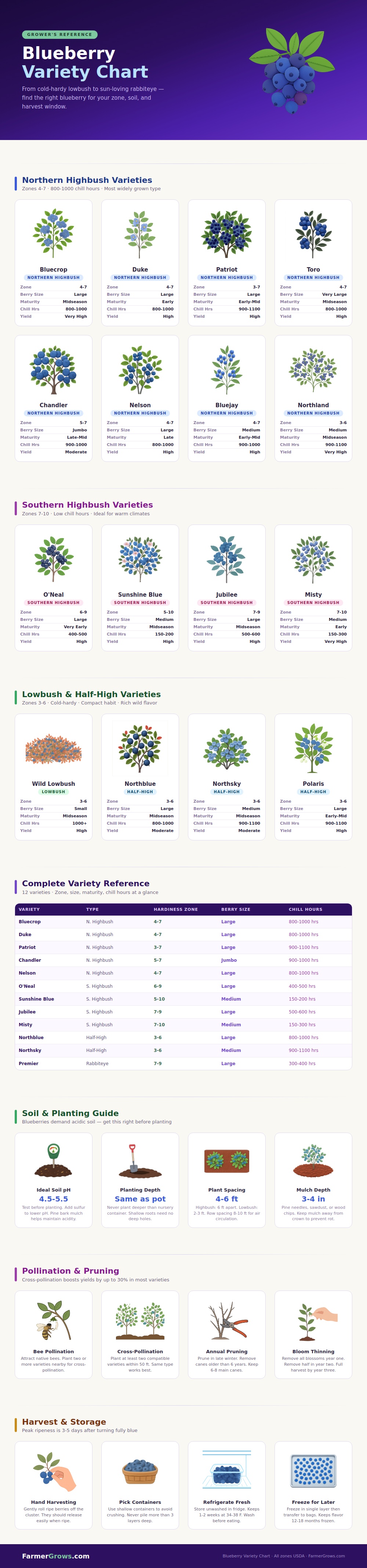
There are several different group of blueberry plants. The characteristics of blueberry plants include their growth and the amount of chill the plants require to produce fruit. Highbush blueberry plant grow upright.
Lowbush blueberry plants grow close to the ground and is used as ground cover in gardens. Half-highbush blueberry plants are varieties in between the northern highbush and an southern highbush blueberry plants. Northern highbush blueberry plants are adapted to withstand cold climate.
These plants are productive due to their ability to take cold temperature and frost. Southern highbush blueberry plants thrives in warm weather and mild winter. These plants often have their berries ripen early in the season so that the fruit will be produced prior to the hot summer month.
Your climate zone will determine the type of blueberry plants that will thrive in your yard. If you live in a cold climate region, purchase cold hardy blueberry plants. Examples of these types of plant include Patriot and Northland blueberry plants.
If you live in a warm climate region, choose low-chill variety. An example of a low-chill variety include Sunshine Blue blueberry plants. Another strategy for extending the harvest of your plant is to grow both an early ripening and a late-ripening type of blueberry plant.
Ensure that the planting location for each type of blueberry plant are within fifty feet of each other because blueberry plants require bee to fertilize their blossoms. Blueberry plants are not self-fertile so multiple plant must be planted within close proximity of each other. Blueberry plants require acidic soil to allow them to absorb nutrients from the soil.
Test your soil to determine if the pH level is correct before you begin to plant blueberry plants. The ideal situation is for the pH level of your soil to be low to allow the blueberry plants to have enough acidity in the soil. If your soil is not acidic enough for the blueberry plants, add sulfur or pine mulch to the soil.
When you plant the blueberry plants into your garden, plant them at the same depth as the original pot in which they were growing. Do not plant the plants deeper into the soil then the original pots because the roots of blueberry plants require exposure to oxygen in the soil. Space each blueberry plant four to six feet from the other plants in your garden to allow the plants to exchange gas with the air.
Add mulch to the soil in which you plant blueberry plants because mulch will hold the moisture in the soil for the plants and will prevent the roots of the plants from becoming root rot. You should regularly prune your blueberry plants to encourage the plant to continue producing fruit. Remove the old branch of the blueberry plants in the late winter.
Cut the branches close to the ground. Remove only the six to eight strongest branch from each plant. Remove only the blossoms on the first-year blueberry plants because this will allow the plants to build their strength.
Remove only half of the blossom on second-year blueberry plants. By regularly pruning the plants and tidying their growth, you will encourage them to produce larger and more sweet berries. You must ensure that the blueberries are ripe before you harvest them from the plant.
Three to five days prior to the berry becoming ripe on the plants, they will turn a deep blue color. Test each berry to ensure that it is ripe. Roll the berries off of the plants and into shallow basket.
Do not place deep pile of berries into the basket because this may cause the berries to become mushy. Allow the harvested blueberries to sit at room temperature until they are ripe. Store the unwashed berries in the refrigerator for up to two week or freeze them to preserve the berries for later in the year.