
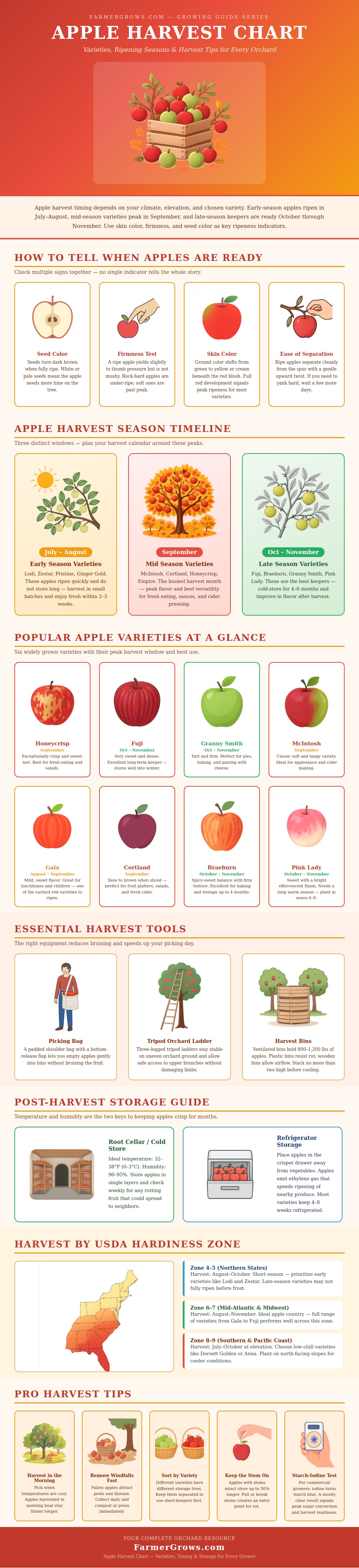
Apple harvest timing is an important process in the apple harvest because teh timing of the harvest will determine the flavors and texture of the harvested apples. Using a chart, it is possible to represent the three different times of the year for which apples are harvested, which will allow farmers to avoid guessing at the timing of when the apple should be harvested. The first time of year that apples is harvested are referred to as early apples.
Early apples include varieties like Lodi, Zestar, Pristine, and Ginger Goldapples. These are typically lighter in color with a milder flavor than other types of apple. Additionally, early apples dont stay fresh for long after they have been harvested.
When to Pick Apples and How to Store Them
These apples should be eaten quick after they are picked. Early apples will soften from the inside of the fruit if they are waited upon for too long. Therefore, farmers chooses to pick these apples in small batches so that they stay fresh for only a few days.
Mid-season apples is available between the months of July and August. Some of the varieties of mid-season apples include McIntosh, Cortland, Honeycrisp, and Empire apples. These apples are at the peak of there availability in the month of September, when many farmers are busy with harvesting apples for sauce, cider, or for eat during the month of September.
The summer heat develops the sugar content of these apples, but the apples have not yet become starchy from the cooling nights during the month of September. Therefore, farmers can observe the development of mid-season apples during the month of September to note how quickly they becomes mealy. Late-season apples are available between the months of October and November.
Some of the varieties of late-season apples include Fuji, Braeburn, Granny Smith, and Pink Lady apples. Late-season apples often become more flavorful after they are harvested from the tree. These apples take longer to grow on the tree and require cooler temperature after they are harvested.
For instance, a Braeburn apple harvested in October can be fresh and available until February; however, an early apple harvested in August will not remain fresh until February. Early apples spoil at a fasterer rate than late-season apples. Additionally, late-season apples require a different method of storage than early apples.
There are four ways to determine when an apple is ripe. One way is to look at the color of the seed in the apple. Once the seeds are dark brown in color, the apple has developed the sugars necessary to create a ripe apple.
Second, you can check the firmness of the apple by pressing the apple with the thumb next to the stem. Third, late-season apples will change from green in color to yellow and cream in color when they are mature. Finally, the fourth way is through the mechanical test for ripeness.
When an apple is ripe, it will separate from the tree if gently twisted; if additional effort is required to remove the apple from the tree, then it is not yet ripe. Storage methods for apples are important to consider in the care of the harvested apples. The chart indicates both root cellar storage methods than refrigerator storage methods.
Root cellars should be stored at a temperature of thirty-two to thirty-eight degrees with high humidity levels to store late-season apples for many months. Apples can be stored in refrigerators for short periods of time. However, apples should be stored away from other produce in the refrigerator.
Apples naturaly contain ethylene gas, which will cause other products in the refrigerator to ripening at an accelerated rate. If one apple becomes soft, it can spoil entire batches in a few days due to the ethylene gas that the apple naturally releases. The climate in which the apple is grown will impact when the apples are harvested.
The zone map for the region indicates that the northern regions of the area will have shorter growing seasons than those regions to the south and along the coasts. Additionally, the same variety of apple will have different behavior in regions of different elevations and climate zones. Therefore, the type of apple variety that is grown will depend upon the climate zone in which the area is locate.
To prevent waste of the harvested apples, there are certain habits that should be employed during the harvest. Apples should be picked in the morning. Windfalls can be removed every day.
The stems should be left attached to the apples so that their storage life is extended. Additionally, if the stem is removed, there is a chance for the apple to develop rot at the site of the stem scar. Finally, you can sort apples by variety so that varieties with short keeping periods are not exposed to long keeping apples that may spoil the batch of harvested apples.