🌿 Hedge Plant Spacing Calculator
Calculate exactly how many hedge plants you need based on hedge length, layout, spacing, and plant type
| Spacing | Plants per 10 ft | Plants per 25 ft | Plants per 50 ft |
|---|---|---|---|
| 6 in (15 cm) | 20 | 50 | 100 |
| 9 in (23 cm) | 14 | 34 | 67 |
| 12 in (30 cm) | 10 | 25 | 50 |
| 15 in (38 cm) | 8 | 20 | 40 |
| 18 in (45 cm) | 7 | 17 | 34 |
| 24 in (60 cm) | 5 | 13 | 25 |
| 30 in (76 cm) | 4 | 10 | 20 |
| 36 in (90 cm) | 4 | 9 | 17 |
| 48 in (120 cm) | 3 | 7 | 13 |
| Plant | Single Row Spacing | Double Row Spacing | Mature Height |
|---|---|---|---|
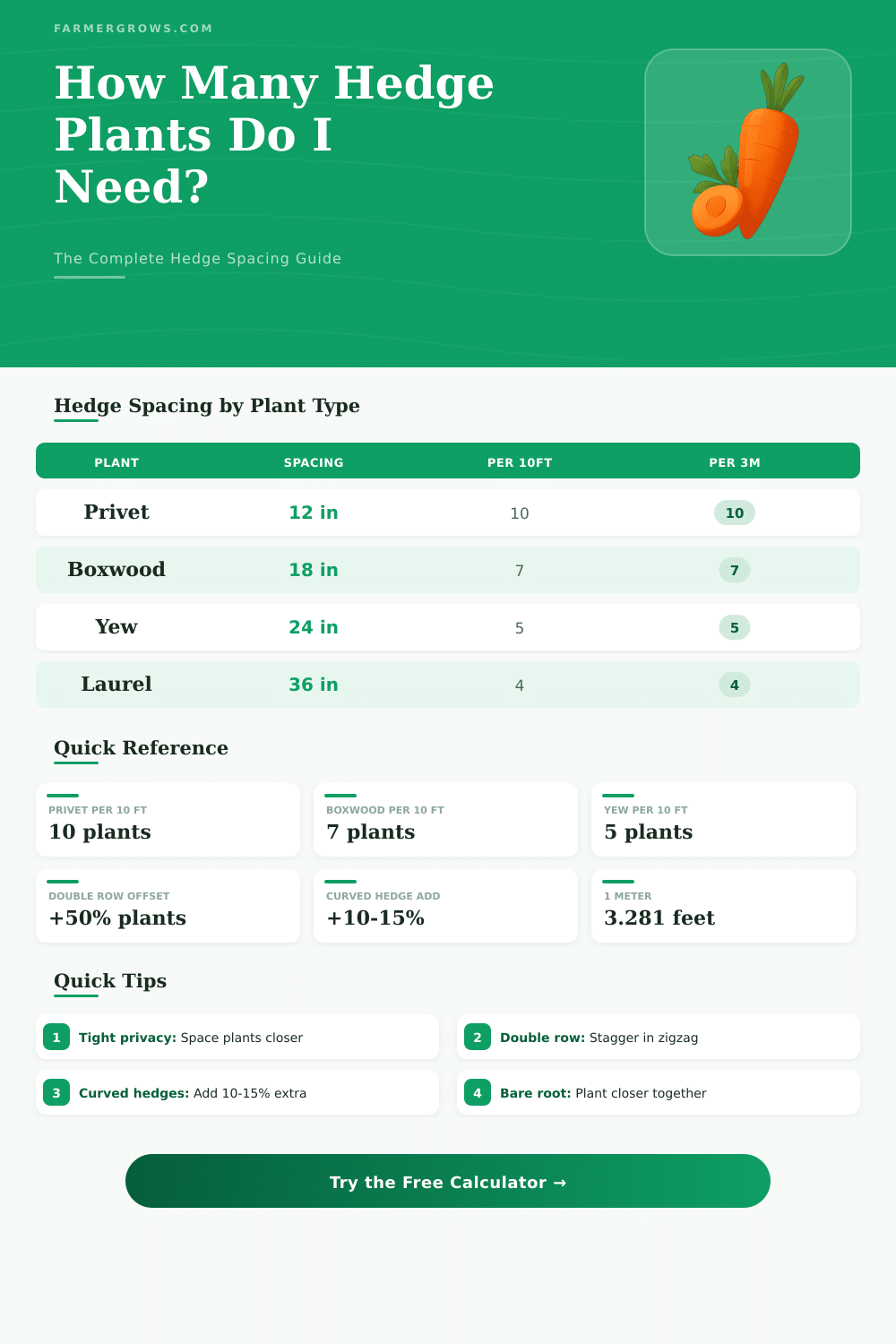
| Privet (Ligustrum) | 12 in (30 cm) | 15 in (38 cm) | 8–15 ft (2.5–4.5 m) |
| Boxwood (Buxus) | 18 in (45 cm) | 24 in (60 cm) | 3–6 ft (0.9–1.8 m) |
| Yew (Taxus) | 24 in (60 cm) | 30 in (76 cm) | 10–20 ft (3–6 m) |
| Cherry Laurel | 24 in (60 cm) | 30 in (76 cm) | 15–25 ft (4.5–7.5 m) |
| Beech (Fagus) | 18 in (45 cm) | 24 in (60 cm) | 15–40 ft (4.5–12 m) |
| Hornbeam (Carpinus) | 18 in (45 cm) | 24 in (60 cm) | 15–30 ft (4.5–9 m) |
| Thuja (Arborvitae) | 30 in (76 cm) | 36 in (90 cm) | 15–30 ft (4.5–9 m) |
| Holly (Ilex) | 24 in (60 cm) | 30 in (76 cm) | 10–25 ft (3–7.5 m) |
| Lavender | 12 in (30 cm) | 15 in (38 cm) | 1–3 ft (0.3–0.9 m) |
| Hawthorn | 12 in (30 cm) | 15 in (38 cm) | 15–25 ft (4.5–7.5 m) |
| Plant Type | Row Offset | Row Gap | Plants Increase |
|---|---|---|---|
| Privet | 6 in (15 cm) | 12 in (30 cm) | +100% |
| Boxwood | 9 in (23 cm) | 15 in (38 cm) | +100% |
| Yew | 12 in (30 cm) | 18 in (45 cm) | +100% |
| Laurel | 12 in (30 cm) | 18 in (45 cm) | +100% |
| Beech | 9 in (23 cm) | 15 in (38 cm) | +100% |
| Thuja | 15 in (38 cm) | 24 in (60 cm) | +100% |
| Hawthorn | 6 in (15 cm) | 12 in (30 cm) | +100% |
| Project | Length | Typical Plant | Plants Needed |
|---|---|---|---|
| Small Front Border | 15 ft (4.6 m) | Boxwood @ 18 in | 10 |
| Side Yard Screen | 30 ft (9.1 m) | Thuja @ 30 in | 12 |
| Backyard Privacy | 50 ft (15.2 m) | Laurel @ 24 in | 25 |
| Full Property Line | 100 ft (30.5 m) | Privet @ 12 in | 100 |
| Driveway Edging | 60 ft (18.3 m) | Hornbeam @ 18 in | 40 |
| Estate Boundary | 200 ft (61 m) | Beech @ 18 in | 134 |
| Garden Room Divider | 20 ft (6.1 m) | Yew @ 24 in | 10 |
| Low Pathway Edge | 25 ft (7.6 m) | Lavender @ 12 in | 25 |
For a quicker, denser hedge, reduce spacing by 25% from the recommended distance. For example, if the guide suggests 24 in apart, plant at 18 in instead. This uses more plants but fills gaps 1–2 years sooner. Bare root plants can also be spaced 10–20% closer than container-grown plants since they establish faster in dense plantings.
When planting a double row hedge, offset the second row by half the spacing distance so plants form a zigzag pattern. Keep rows 12–18 inches (30–45 cm) apart depending on plant type. Double rows roughly double the plant count but create a much thicker, more impenetrable hedge within 2–3 growing seasons.
hedge plant help to mark areas, mark banks and give privacy in a garden. They work as a natural fence and they also attract creatures from the wild. As stable base parts, fences define flower beds and shapes of landscape.
One finds more than 50 different species of hedge plant in various root forms, for instance bare root, with root ball, in jar grown or ready small hedge. Between popular types is boxing, duranto, privet, acalypha, holly, crocuses, ixora and ficus. Wax myrtle, cleyera and different surges belong to the best for medium until very long fences.
Hedge Plants: Uses, Types and How to Plant
Boxing is a slowly growing evergreen hedge plant. The hybrid Green Mountain-boxing is known because of its cone shape and dark green leaves during every season. It works for common fences and shaped forms, fitting itself to various landscapes.
The yew Taxus baccata works for higher evegreen fences, reaching until six or even nine feet height. English yew leaves itself well cut for formal fence, although it grows a bit slowly.
Some hedge plant grow very quickly. Some types reach more than one foot per year, and some even until four feet in good surroundings. One can even so trim them regularly to keep them dense and in any wanted height.
Some stay evergreen, while others drop leaves. The privet is a famous quickly growing tree for fences, easily created and friendly too pollinators.
Arborvitae is a liked hedge plant. This straight evergreen has layers of sweet smelling yellow-green leaves. Thanks to many types, one easily finds the right form for the fence.
Plant like podocarpo or ficus can rise a lot and form a thick fence, during boxing stays between the favorites for common banks beside ways.
Beech, cherry laurel and common privet work for folks with little time, that even so want a nice and useful fence. The thorn tree is between the best for creatures from the wild, giving spring flowers to pollinators, autumn fruits to birds and dense thorny branches, that gives shelter for nesting. Because somewhat thorny and hardly passable, firethorn or surge works well, although surge grows slowly.
plant fence needs around three until four hours. The ideal times are autumn, winter and spring. The method is made up of digging a strip one metre broad, mixing garden compost or well rotting stall, laying plants in double rows with sticks spaced at 30 cm, and carefully spreading roots.
For bare root thorn tree, planting in two close lines withfive plants each metre works well.