🌱 Vego Garden Soil Calculator
Calculate exactly how much soil you need for your Vego Garden raised beds
| Depth | Sq Ft Covered | Sq Meters Covered | Liters per m² |
|---|---|---|---|
| 1 in (2.5 cm) | 324 | 30.1 | 25.4 |
| 2 in (5 cm) | 162 | 15.1 | 50.8 |
| 3 in (7.6 cm) | 108 | 10.0 | 76.2 |
| 4 in (10 cm) | 81 | 7.5 | 101.6 |
| 6 in (15 cm) | 54 | 5.0 | 152.4 |
| 12 in (30 cm) | 27 | 2.5 | 304.8 |
| 17 in (43 cm) | 19.1 | 1.8 | 431.8 |
| Bag Size | Volume per Bag | Bags per Cu Yd | Coverage at 3 in |
|---|---|---|---|
| 1 cu ft (7.5 gal) | 0.037 cu yd | 27 bags | 4 sq ft |
| 1.5 cu ft (11.2 gal) | 0.056 cu yd | 18 bags | 6 sq ft |
| 2 cu ft (15 gal) | 0.074 cu yd | 13.5 bags | 8 sq ft |
| 3 cu ft (22.4 gal) | 0.111 cu yd | 9 bags | 12 sq ft |
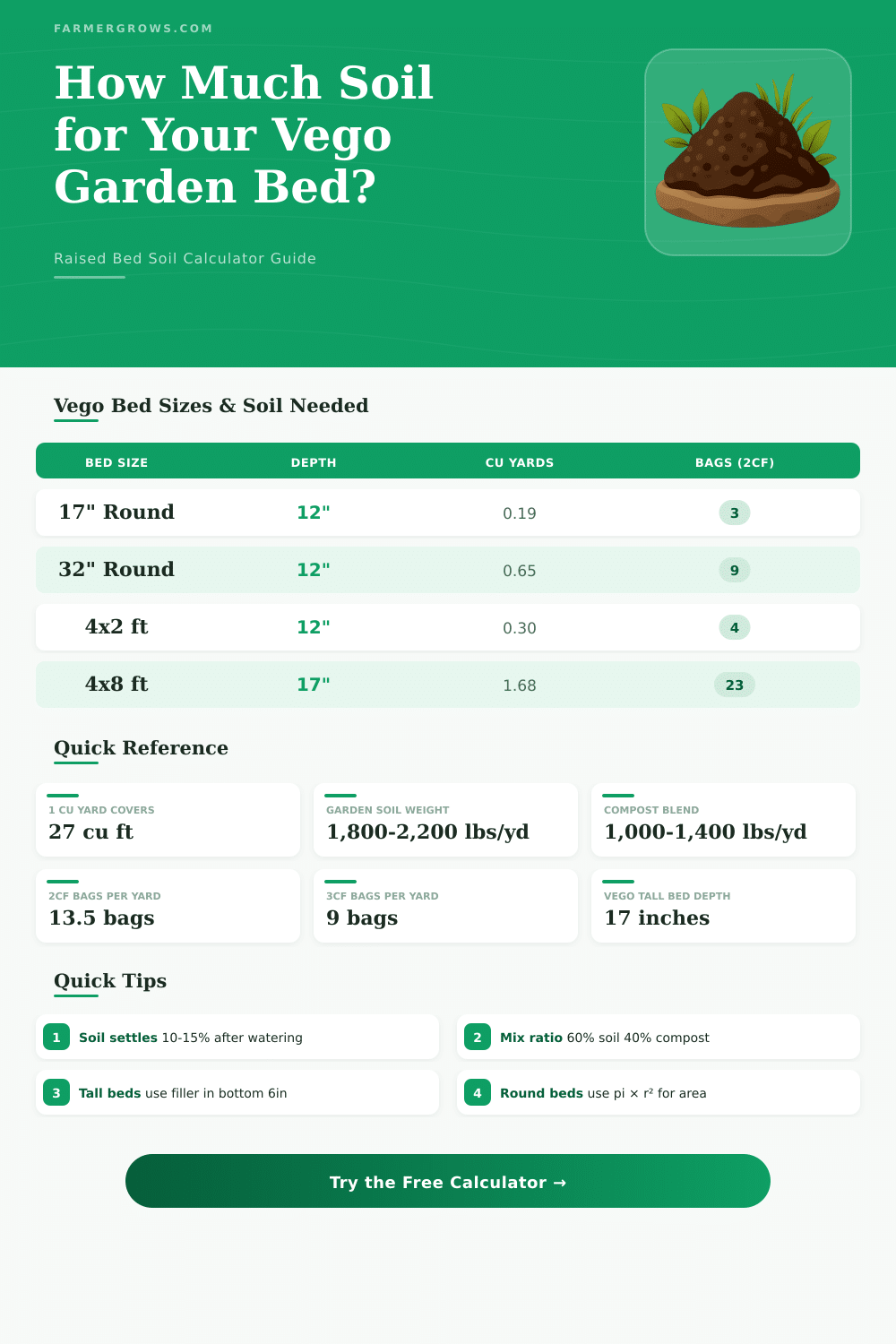
| Vego Bed Size | Area (sq ft) | Cu Yards (17 in) | 2 cu ft Bags (17 in) |
|---|---|---|---|
| 17″ Round (1.4 ft dia) | 1.5 | 0.08 | 2 |
| 32″ Round (2.67 ft dia) | 5.6 | 0.29 | 4 |
| 2 ft × 4 ft (17″ tall) | 8.0 | 0.42 | 6 |
| 2 ft × 8 ft (17″ tall) | 16.0 | 0.84 | 12 |
| 4 ft × 4 ft (17″ tall) | 16.0 | 0.84 | 12 |
| 4 ft × 8 ft (17″ tall) | 32.0 | 1.68 | 23 |
| 3 ft × 6 ft (17″ tall) | 18.0 | 0.94 | 13 |
| 4 ft × 12 ft (17″ tall) | 48.0 | 2.52 | 34 |
A 4×8 Vego tall bed at 17 inches eats through about 1.68 cubic yards of soil, which is roughly 23 bags of the 2 cubic foot size. Thats way more than most people expect. Raised bed mix (that 60/40 soil and compost blend) weighs somewhere around 1,400 to 1,800 pounds per yard, so one bed can weigh over 3,000 pounds filled.
The info below is based on real growing experiences, forum changes and community garden practices from various websites; not on any computer program or automatic translator.
How to Choose and Care for Soil in Raised Beds
garden soil sits exactly in that right range between natural topsoil and potting mix. It is made up of stuff that holds moisture, mixed with material that allows good drainage of water, so it works for beds and raised beds. Here the key point: if you plan to grow a lot of plants, search in local garden stores or buy big bags from big stores.
That costs much less, and also one gets advice made for the local soil in your region.
Loam probably is the best choice for garden soil. Healthy ground base depends on three things in balance: mineral grains, organic material and living creatures. Sand helps drain, especially with heavy clay.
Silt keeps moisture without tipping the roots. Clay particles themselves are useful, because they absorb nutrients and keep them. Compost ties everything, adding organic matter that improves the whole function.
Even so, only compost does not work as basic soil. It feeds the plants, sure, but real garden soil needs compost together with other parts, for nutrition and structure. A popular mix for example combines compost with local loam, coconut fibers and pumice, for better airflow and moisture keeping.
You do not need tricky steps; simply mix compost with topsoil for a good base.
For raised beds I found that one takes the cheapest topsoil available, later cover it with around four inches of good compost, that works well. About food, grasses apparently benefit from nitrogen-rich dressing, around a spoonful per plant. Vegetables favour balanced 10-10-10-typical dressing in same amounts.
Bagged soil does not pay off, except for a few jars. Buying in big amounts saves money.
Adding compost into tight soil loosens it, allowing more air and water, and making the access of nutrients easier. Cover plants or mulch protect the topsoil. Escape chemicals, possibly.
Rotate the crops yearly this helps to keep soil healthy. Worms and there tunnels? They are signs of good soil.
Real treasures.
Lead can come from old paint or pipes, and sadly it stays long after the removal of the source. Local service from the authorities can test and find the place and amount of dirty stuff. Gardening with lead present is possible, but needs carebefore.
Here where many mess up with heavy clay: do not mix sand directly in it. That only makes bricks. Rather, add compost, dressing and a bit of peat moss.
Cover the surface with thick layers of dug stone wool, that also helps. The best for vegetables is soil full of compost and old organic matter, like set sheets or ground bark, rich in nutrients.