
Why don’t your tomatoes taste as good as they look? Why’s the lettuce so bland? It would of been better if it were just poor water or bad soil. It is more likely geometry. Meaning, how you set things up vertically (before dropping a seed into the ground) were wrong.
Yes, most gardeners plant in straight level rows, like filling out a spreadsheet on paper. It was as if garden were two dimensional. It was as if sun never moved and no shadow ever got longer. Long before those leaves touch sky, roots is fighting each other for real estate.
Think in Three Dimensions
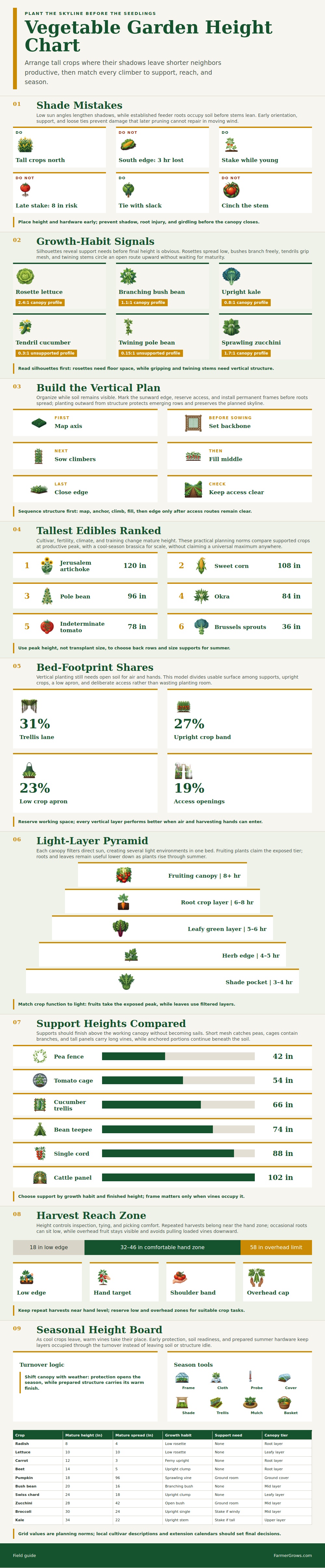
And thinking this way, in three dimensions, from early spring onward will reward you with harvest worthy of all the effort. It’s a simple rule: If you are in the northern hemisphere, plant your tallest things on north side of bed (the opposite is true for those in the southern hemisphere). That way shorter crops don’t get long-shaded by their taller neighbor, which would happen as sun moves around the day.
See? The chart above make that crystal clear. A south-facing bed with tall beans or corn can rob light from leafy greens planted behind it.
And size isn’t the only thing that matter. Canopy shape does, too. A pole bean uses no ground space and climb vertically; a sprawling zucchini bush stays low and takes up horizontal space. Knowing those silhouettes allow you to calculate how much floor space to set aside, and what kind of support you’ll require.
The danger of staking things once the plants has started to flop is that their stems are now too thick, or even worse, their roots are so tangled. Better (as with everything) is to put up your teepees, cages, trellises when ground was empty and seedlings still baby-small. Sounds silly in spring, but saves root damage. And means no one has to untangle a mad jungle come July to get at the thing they want to eat.
You’re creating the skeleton of the garden, but adding its muscle later. Also helps prevent damage from wind, as a young tomato tied loosely to a sturdy cage can bend without breaking, but one that is staked late, or not at all, will likely snap under weight of its own fruit or force of a summer storm.
Consider your garden a pyramid of light (layered vertically). Full, blazing sun at the top layer; that’s where fruiting crops go. That high-intensity energy help them set fruit and get flavorful. Herbs and leafy greens is tolerant of some shade (filtered light); grow those under fruits. Root vegetables (beets, carrots) don’t give a hoot about overhead light, they want good loose, airy soil near the ground, down toward the bottom of the pyramid.
Stacking it up this way let you grow more food on every square foot without crowding things out. It is efficient, not just pretty to look at.
And then there’s what we humans need to be comfortabley with, which is part of design of garden: Plan to grow most crops right at chest or waist level, as this save your back while making them easy to inspect. Use the lower levels for things you’ll dig up just once (at season’s end). The very top for really tall climbers that don’t need regular hands-on attention. Like cucumbers, squash, beans and the like. It is a little ergonomic touch, but it can make all the difference in how much fun an outdoor gardening session becomes.
The garden’s skyline changes with seasons. Lettuce and radishes are cool-season crops that mature fast and get harvested first. They then make room and light for warm-weather plants, such as squash and cucumbers, to climb up a trellis.
Plan ahead. Trellises set in place before the warm-season seeds is sown; and no more scrambling when things start to grow faster! It’s all about structure and timing, not just seed-planting.
All this to say: A good vegetable garden has far more to do with having your head on straight than having a green one. It’s about imagining what will come into being before it ever gets here. It is about thinking ahead to where sun shines and giving each plant its due.
By planning out your skyline before those seedlings show up, you’re not battling nature but joining forces with it. And that makes for a garden that looks and feels like it knows what it’s doing (and produces). It is serene amid all that livig.