
Spring promises flowers. They promise fruit. Pink and white blooms on trees; oh, you think it will be apples and cherries? Think again.
First bloom isn’t everything. Pollination is next, which is where all the action take place. How’s that for a process? It goes from anther to stigma, with pollen transfer as its goal. And it is oh so delicate. One cold night, one misplaced hive, and…pollination fails.
How to Help Fruit Trees Make Fruit
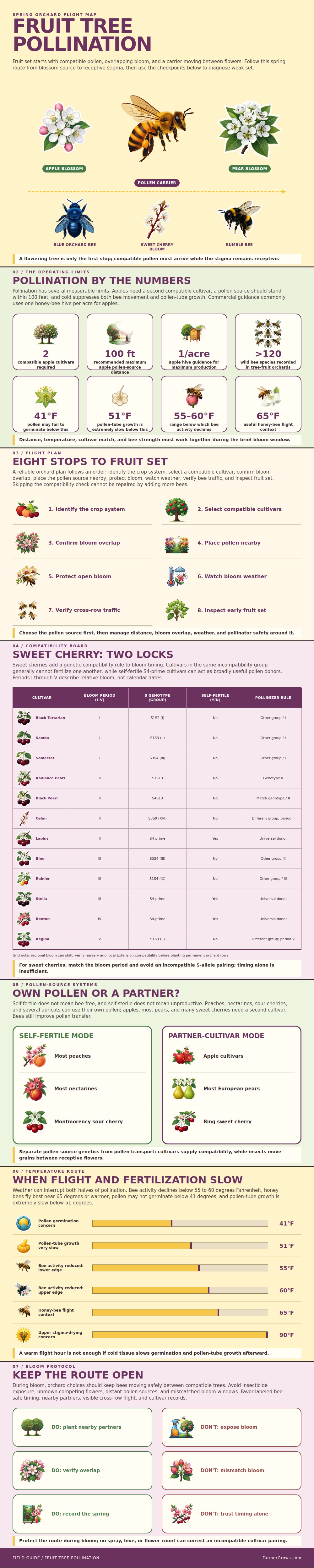
For many gardeners, the hard part of growing a tree are getting it in the ground. Not true. Getting it to produce flowers and then fruit is what matter most. On the graph, it is clear: Pollination isn’t left to chance; it’s organized management of biological materials supply chain.
The first order of business: Not all trees is self-pollinating. Nectarines and peaches tend to do so. Most pear need a partner tree, as do apples. That doesn’t necessarily translate to just any two apple trees. To do the job, they must be compatible types, meaning their bloom date needs to match up. (If one opens three days earlier, the window shuts by the time transfer happen.)
And this is where most folks go off track. They plant multiple varieties a long distance from each other and hope the bees handle things. Sure, bees are diligent workers, but only so much can be expected. A hundred-foot radius is a reasonable limit to keep the pollen source in reach, and guarantee good fruit set.
Planning can only go so far: weather complicates things. The infographic highlights a critical thermal threshold that often goes unnoticed. When it gets colder then about fifty-five to sixty degrees bees are less effective at their job. Yes, even though there’s a bee, she might not be able to do her thing, because the pollen doesn’t cooperate. Below forty-one degrees, nothing germinates. Below fifty-one degrees, the pollen tube just grows too slow. By the time it has finished growing, the stigma goes dry. You can’t make up for a cold night with a nice warm day. Tissue is as important as air temperature. So lower your yield expectations if spring is cloudy and cool. Biology slows down.
Cherry trees are even pickier because of genetic compatibility. Each have specific genes that tell them who is in their clan. If two cherry tree are genetically incompatible they may both open right on time, but there will be no fruit. Connection failed. Even if you have warmer weather and lots more bees. It won’t work.
Before planting permanent rows, consult your local extension’s record. No, you don’t get another chance with this one. Got it wrong? Genetic groups does not match.
So how do you help? Protecting the pollination route is the answer. That means making sure the orchard is a safe place at bloom time. Don’t spray any insecticides, whether they are safe or not. Remember that stress on the bee colonies add up. Clear the way for their flight path. Eliminate any competing flowers that lure pollinators away from your crop. This takes friction out of the process. You don’t want the bee to hesitate as it moves from one flower to another.
Pollinating fruit trees is one of those coordination challenges: you have to get everything, weather, behavior, biology; to line up in that narrow window called now. That tiny little green thing growing on the branch? That’s the plan coming together as you see it. That’s the green kernel of fruit forming. This is the result of working hard when it matters most. It should of been a easy process.