
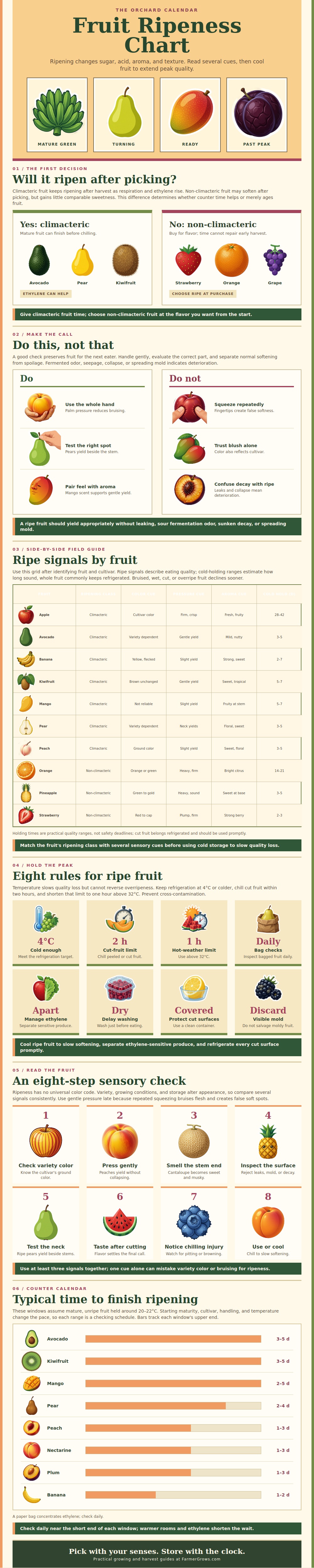
If you don’t know what to expect when the fruit ripens, how it’s supposed to taste, you are often let down. Why? Because color is an unreliable clue. What realy counts is type of fruit itself. To get better acquainted with your produce, read up on fruits that ripen after being picked versus those that do not, and understand why that distinction affect storage and purchase.
Some fruits, including kiwifruit, pears, and avocados, are climacteric. That means they’ll continue to get riper even once picked. They produces ethylene gas and convert their internal starches to sugar as time passes on your countertop. For instance, you might purchase a hard avocado and then enjoy eating it a few days later.
How to Pick and Store Fresh Fruit
On the other hand, fruits that aren’t climacteric, including grapes, oranges, and strawberries, no longer does anything to ripen once harvested. Time will only make them older. To know if you want to wait or not for a fruit to soften up, look it up first (is it a climacteric fruit?).
The red is a blush (from the sun) so look at the ground color instead, which might be green-yellow: check that background color rather then the red. However, the green-yellow is more reliable sign of readiness than the red. Another clue are texture. It is not about color, because color can lie. Gently squeeze the fruit between first two fingers and thumb of one hand, using the palm side, not the tips of fingertips.
Bruising will make the fruit look damaged or rotten. Press at the neck of a pear; it should of give just a bit when ready for eating. Its flavor will be coming along. With melons and mangos, smell stem end. It shouldn’t have the sour or fermented odor of a spoiled fruit; it should smell sweet.
When the fruit has reached peak ripeness, storage becomes key: now we want to slow down its deterioration, not help it ripen anymore. A fridge’s coolness will certainly delay rotting process, but it won’t turn back the clock. There is nothing worse than waiting too long and then having your fruit rot in the fridge.
Keep your fridge around four degrees Celsius, it’s chilly enough to stop the clock, but not so much as to harm soft fruit. Moisture stored alongside the fruit also hastens mold; wash fruit just prior to consumption. Finally, store ethylene-producing fruits (apples, bananas) separately from leafy vegetables, which is more prone to aging caused by the gas.
Don’t keep cut fruit for more than a couple of hours, as it will turn brown and be prone to bacterial growth after its skins are broken. If it’s hot outside, reduce that time frame to an hour; warmth increases spoilage rate. Toss any leaking or visibly moldy fruit; not worth risking your health.
There’s a trick to ripe fruit: It requires both patience and senses… Stop picking by sight alone (though that’s often the only thing we can go on) and feel for tender firmness and smell for sweet fragrance. For non-climacteric berries like strawberries, pick when perfectly ripe; for other fruits such as pears, let them ripen on the counter first before refrigerating. A simple shift in behavior makes a big difference in flavor, in fact, it’s fresh rather then old-tasting.