
If you’ve ever bought a piece of fruit that looked fine on the outside but was watery inside, you’re not alone in your dissapointment. It’s probably because you didn’t quite understand how fruit ripen, specifically citrus. Non-climacteric fruits stops producing sugar once stem is cut off. What you’re tasting was what was on tree when you picked it.
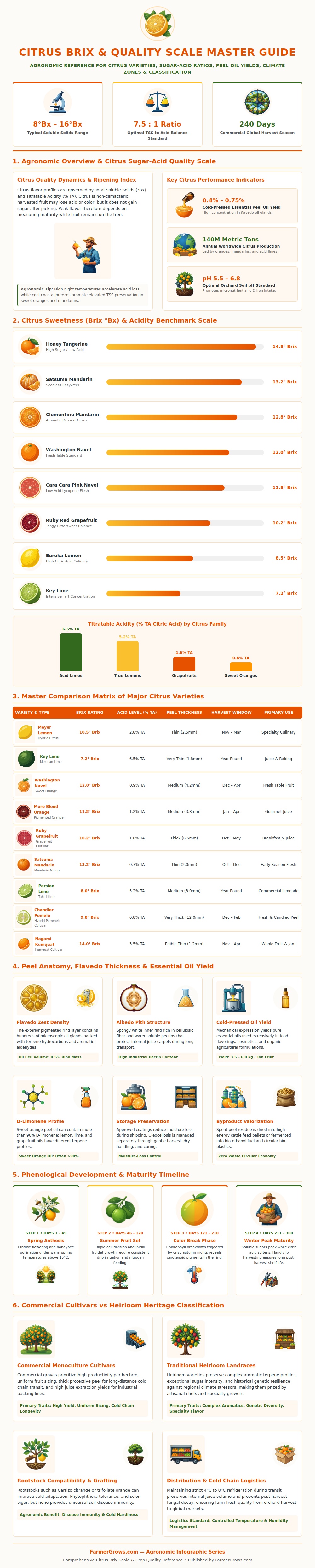
This timetable help you track the cycle to get best flavor. It also reveals how the sugar and acid content change throughout season, as illustrated below. Titratable acidity plus total soluble solids (that’s the kicker). It’s what farmers call Brix levels (sugar content). High Brix equals sweetness. But again, there has to be some tartness to it or you’re not going to like it. That’s where high Brix count can go wrong. The perfect balance is usually around a 7.5 to 1 ratio. You’ve got strength of flavor but not so much sourness that it’ll burn your mouth.
How Citrus Fruit Gets Its Flavor
Climate realy factors into it. Sugar gets made during the day when it’s warm and acidity holds up better on cool nights. When nights are too warm, the acidity will burns out fast. All you have is sugar, and fruit that’s all sweet with no bite. Time and temperature creates flavor.
Not all types is alike: At one extreme of sweetness (with almost 14.5 degrees Brix) is the Honey Tangerine, which is intended to be eaten as a dessert. On the other end of the spectrum is Eureka Lemon, which contains very little sugar but plenty of citric acid. No one eats lemons more than oranges, and no one’s going to slice up a navel orange to serve as citrusy bite in a ceviche. These nuances gets sorted out in chart, which explains why some fruits belong on your plate and others in your glass.
And even among the oranges there is a divide. The pink-fleshed Cara Cara has lower acid levels then the Washington Navel, making it milder and sweeter. That nuance affects how a fruit might play in smoothie or salad.
What’s all that good-for-nothing peeling, anyhow? Turns out the colorful outside part, called flavedo, is packed with oil glands loaded with essential oils, the ones you get in zesting. And within each species there can be variation in how thick skinned things are. Grapefruits has tough skin to keep segments from jiggling apart during shipment. Kumquats have paper-thin skins meant to be eaten whole. These variations in structure affects keeping quality. Fruits with tough rinds fare better being tossed around en route and surviving a long journey. So commercial oranges tend to have sturdy rinds. Thinner-skinned heirlooms (which don’t ship well) tends to remain closer to home.
That leaves the harvest window as the final piece of the puzzle. No one fruit ripen all at once. Satsuma Mandarins ripens in early fall. Ruby Grapefruit lasts through winter. Generally, if you try to pick out of the window, the fruit won’t be good. It may have color, but internally, the fruit has not yet completed its chemistry. One key word in business of managing an orchard is patience. That last cool week could of make a better crop. You learn to respect the necessity for accuracy when you realize that once it’s off, there is no going back. And it goes back to what was happening with that fruit on tree before you cut it.