
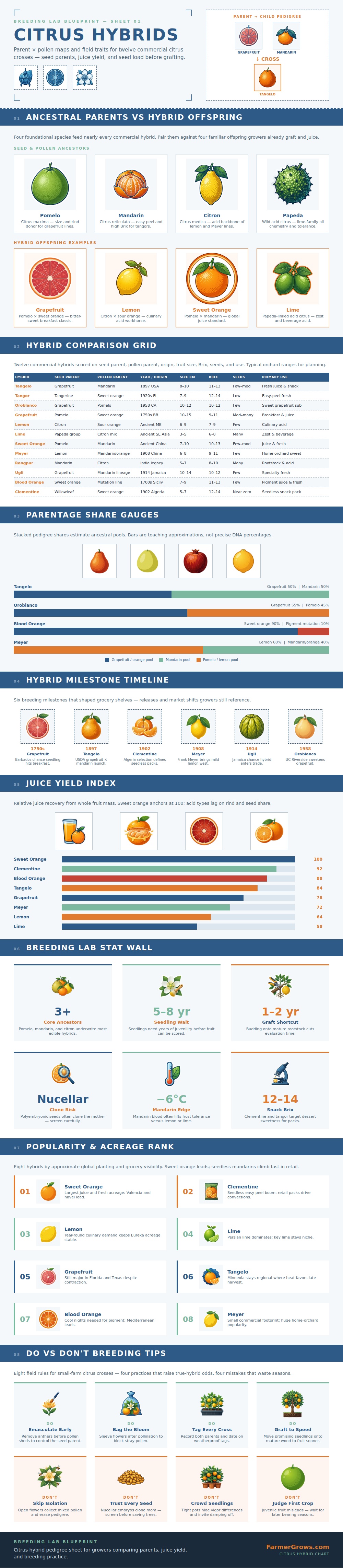
Next time you enter a grocery store to buy piece of citrus fruit, pause for a moment and think. Thousands of years of plant breeding have produced the orange you will grab off the shelf. Nearly all commercial types is hybrids… A combination of traits from ancient species. Knowing their history alters not only how we breed our trees but also how we grow them and even juice them.
A seemingly simple fruit are really a complex mix of genetic traits. Almost every citrus item lining your grocery store’s produce section derives from the underlying genetics of those original four species. The key is pomelo (for thick rinds and big fruit shape); mandarin (for high sugar and easy peel); citron (for that sharp acidic flavor in lemons); and papeda (for lime’s all-important acid chemistry).
The Secrets of Citrus Fruit
Once you understand what each brings genetically, you can have an idea where any particular new cross will go. Want sweet? Head toward mandarin. Looking for acid? Citron’s your girl.
Good hybrids need a period to be validated; the timing of large-scale releases is no coincidence. It took nearly 100 years from the arrival of the tangelo in the late nineteenth century before clementine appeared shortly thereafter. Why weren’t they overnight hits? Because they went through tough tests, they were benchmarks of demonstrated stability that growers today still use as examples.
The sweet orange continues to dominate world juice industry because it consistently provides a volume yield. Consumers’ demand for convenience is driving the clementine’s popularity at retail. Convenience sells, but old leaders are still volume drivers.
When trying your own crosses, isolation is key. To control the seed parent, you have to remove its flower’s anthers early, before pollen sheds (so you can control it). Next you bag the blossom to exclude any stray pollen from bees or the wind.
Every cross has to be tagged. No tagging means no record, and without the date and parentage of each, you’re left with a bunch of random seedling.
If some of those seedlings look promising, graft them on mature rootstock to speed up the wait until they fruit. A seedling might fruit in five to eight years naturaly. Grafted, that wait will be just one or two. You should of saved seasons of guesswork.
Another misconception is that all seeds in a polyembryonic seedling are true hybrids. This mistake wastes time for amateur breeder. Many times nucellar embryos will clone the mother plant instead of forming new genetics. Before you save any tree, be sure to screen carefully. Vigor differences can hide when seedlings are crowded into small pots inviting damping-off disease. When you give them space, they shows their stuff.
Don’t judge a hybrid based off its first crop. The juice may mislead with uneven flavor or size in the young fruit. Wait until later bearing seasons to have a good picture of what the tree can do.
What about all those different types of fruit? The juice yield index explains that some fruit is better suited for cooking than other varieties. For example, sweet orange scores one hundred percent recovery; there’s no waste when juicing. Limes and lemons score lower, more space is taken up by rind and seeds. And Meyer lemons fall somewhere in between: offering a compromise between acidity and juice volume.
Knowing this means you can plan your orchard accordingly. For fresh eating, prioritize peelability and sugar content. For juice, prioritize low seed count and high volume. Blood oranges needs cool nights to create their color, so they rely on certain climates. This knowledge helps you make purposeful planting choices.
Genetics also matter when it comes to frost tolerance. Generally speaking, citrus trees with mandarin genes is more cold-resistant than those of lemons or limes. That’s just enough difference to mean the difference between freezing and surviving in a grove. It’s not something you’ll see on the tag at the nursery, but it will make all the difference about where it goes in the ground.
All this makes clear that what we call citrus is a living system. Every cross are an experiment. Every crop yields results, data. So go easy: Start small and take good notes.
Who knows? Your back yard may hold the next successful hybrid, if only you have the right genetic mix.