
Think of squash, perhaps, AS one thing. Then behold all those different types at garden center, or even the supermarket. Why does one variety last for months (like the butternut) while another cook up fast (such as a zucchini)? It is about biology.
Understanding the species you’re growing make a difference. When it come time to sow seeds, and again when it is time to harvest. And not least, it makes a difference in your eating habits.
How to Choose the Right Squash for Your Garden
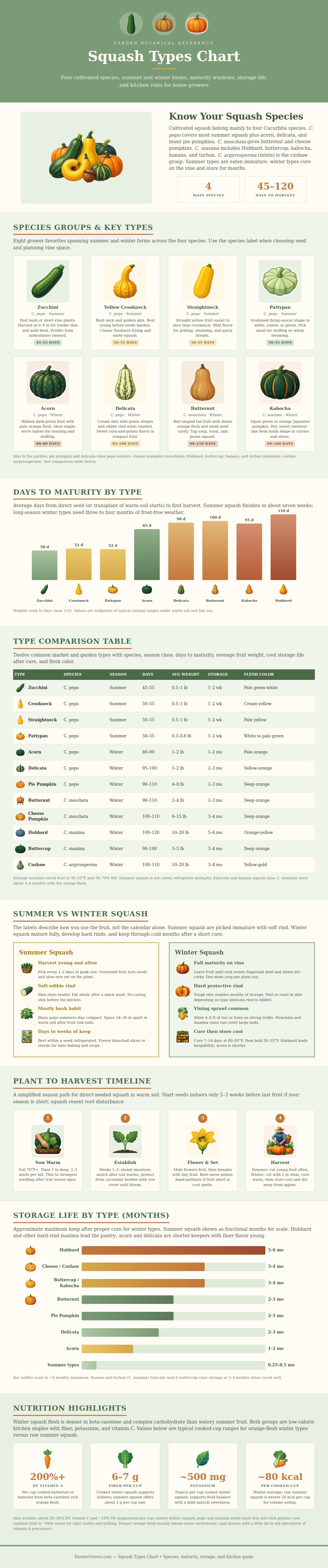
There are four main species of squash that we grow, as shown on the chart: Cucurbita pepo includes most summer varieties, as well as some winter variety like delicata and acorn. Pepos is nice for beginning growers, since they’re relatively compact plants that does well growing in small spots. Winter squash that has long vines are another story. *C. *C. Moschata* includes butternut. Maxima* contains Hubbard and Kabocha, and *C. *C. Argyrosperma* includes cushaw squash, among others.
It’s good to know which species your variety is because that tells you how big its vine will get, planting something like a *maxima* in a tiny pot won’t work out so well.
The other tricky transition that confuses new gardeners is the shift from summer form to winter form. With summer squash, you pick it when it’s still immature. The skin can be eaten; it’s tender. Pick regularly (like daily or every couple of days) so the plant continue to produce. When a zucchini is overgrown, seeds will get tough and the flesh go all spongy. At this point, the plant tapers off, not producing any more fruit. Success require hard work (regular picking pays off).
With winter squash, you let it stay out there on vine till the rind has gotten hard. Wait till you can’t poke through it with your fingernail. This lets shell harden and the insides sweeten up for storage.
But what about storage? The answer is that you cannot store much summer squash (a week or two in the fridge), but you can store plenty of winter ones (pantry staple). Why? Because summer squash is fresh and watery, it should be eaten right away. But winter squash are cured well before storage. This is why they’ll keep for five or even six months, depending on variety. According to the chart, heavy-rinded ones like Hubbard has the longest shelf life.
To cure: Stash harvested squash in a warm, dry location for a few weeks. It will heal any minor cuts in its skin. Then stash it in a cool, dark place. Acorn squash don’t keep quite as long than Hubbard, lasting only a month or two.
That’s the trade-off to keep in mind when you’re planning your garden. For fresh snacks in July, think summer types; for January eats, think winter.
The varieties do make a nutritional difference. The deeper color of the flesh, the higher the amount of beta-carotene and complex carbs. Deep-orange winter squash like butternuts contain more than 200 percent of your recommended daily allowance of vitamin A per cup (cooked).
That said, summer squash have more water and are less dense than their winter cousins. With fewer calories, these guys is ideal for grilling or for quick sautéing. You’ll get vitamins C and fiber, but not as much as with the winter varieties. Actualy.
But match the squash up to your objectives: For the early spring, start with one of the 60-day-or-less summer squash varieties if your growing season is brief. For keeping what you grow in mind? Plant *maxima* or *moschata* varieties, which tend to stay fresh longer, and learn how to cure them.
You should of planned for this. Not all types are required. Choose just the ones for you, your cooking style, and your climate.
Everything clicks when you match the squash species to their storage life and time-to-maturity, and the garden no longer seems like a guessing game but a plan. It’s more moddern than it used to be. You’ll recieve good results. Naturaly.