Ginger Growth Time Calculator
Estimate how many days ginger needs from planting to baby or mature harvest using ginger type, rhizome piece size, sprouting status, soil warmth, depth, shade, moisture, fertilizer, and days already grown.
Load a common ginger growing setup, then adjust the temperature, shade, moisture, depth, and harvest goal to match your bed or container.
Ginger Growth Time Estimate
Your ginger timeline will appear here after calculation.
Buds swell, roots begin, and shoots emerge. Cool soil or dry media can double this stage.
Leaves build energy while roots fill the container or bed. Even moisture matters most here.
Rhizomes are tender, pale, and mild. Harvest before thick skin forms for fresh market quality.
Rhizomes bulk, skin firms, and tops may yellow. This is the storage ginger finish window.
| Ginger type | Typical sprout time | Baby harvest window | Mature harvest window |
|---|---|---|---|
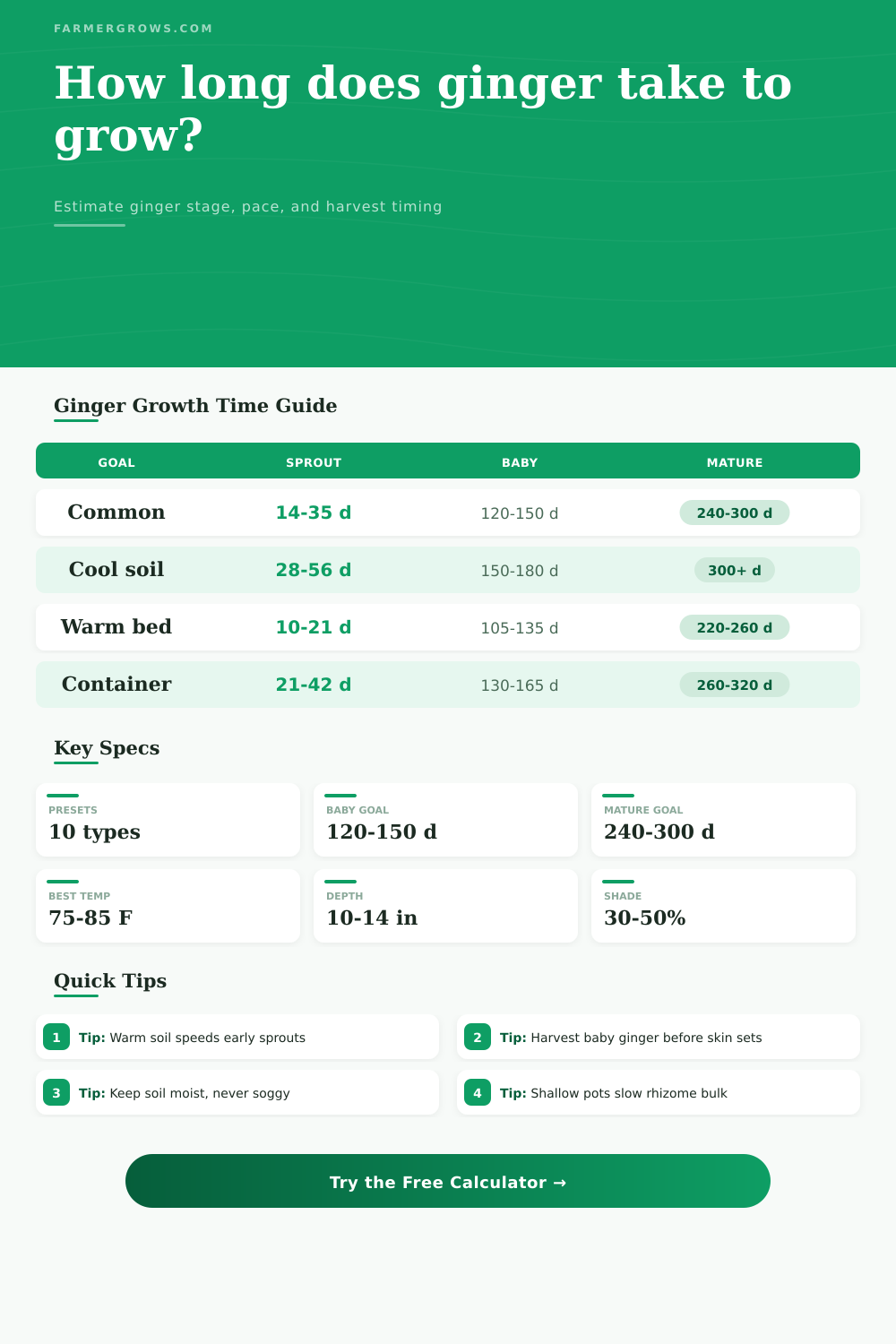
| Common culinary ginger | 14-35 days | 120-150 days | 240-300 days |
| Baby ginger variety | 10-28 days | 105-135 days | 220-270 days |
| Hawaiian or tropical ginger | 10-24 days | 110-140 days | 230-280 days |
| Galangal style rhizome | 21-45 days | 150-190 days | 300-360 days |
| Myoga ginger shoots | 14-35 days | 90-130 days for shoots | Not usually grown for rhizome |
| Ornamental edible rhizome | 18-42 days | 140-180 days | 270-340 days |
| Average soil temperature | Growth pace | Likely effect | Practical note |
|---|---|---|---|
| Below 60°F / 16°C | Very slow | Adds 35% or more | Use bottom heat or wait for warmer soil. |
| 60-69°F / 16-21°C | Slow | Adds about 20% | Sprouting is uneven but possible. |
| 70-74°F / 21-23°C | Moderate | Adds about 8% | Good for steady home garden growth. |
| 75-85°F / 24-29°C | Fast | Baseline timing | Best balance for leaves and rhizomes. |
| 86-92°F / 30-33°C | Warm stress risk | Adds about 7% | Increase shade and water consistency. |
| Above 92°F / 33°C | Heat stress | Adds 18% or more | Leaf scorch can reduce rhizome bulking. |
| Growing factor | Fast range | Slow range | Calculator adjustment |
|---|---|---|---|
| Container or bed depth | 10-16 inches | Under 8 inches | Shallow depth adds 8-18% time. |
| Shade level | 30-50% | 0% hot sun or 70%+ shade | Extreme light adds 8-14% time. |
| Moisture | Consistently moist | Dry swings or soggy soil | Poor moisture adds 10-25% time. |
| Fertilizer | Steady moderate feeding | Low feed or salt excess | Nutrient stress adds 6-16% time. |
| Rhizome piece size | 2-4 oz with eyes | Small one-eye pieces | Small seed pieces add 8-14% time. |
| Harvest goal | Days after planting | Rhizome feel | Top growth clue |
|---|---|---|---|
| Early sample pull | 90-120 days | Small fingers, mild flavor | Several healthy shoots established. |
| Baby ginger | 120-165 days | Tender skin, juicy texture | Vigorous green canopy still growing. |
| Fresh mature ginger | 220-270 days | Larger hands, stronger flavor | Lower leaves may begin to yellow. |
| Storage ginger | 270-320+ days | Firm skin and dense rhizome | Tops yellow, dry down, or slow. |
Warm-start tip: If soil is below 70°F, pre-sprout rhizomes in a warm, barely moist tray before planting. This shortens the quiet early stage and reduces the chance of rotting in cool media.
Harvest-timing tip: For baby ginger, check early once the calculator shows the crop inside the harvest window. For mature ginger, allow plants to keep growing until the tops naturally slow or yellow.
Ginger: Plant it in spring, keep watering it, then watch it grow, underground. By the time leaves emerge, the rhizome is hiding. When’s it ripe for stashing long-term, or pulling off babies to use now? Dig too soon and the harvest is scant; wait too late and the flesh gets all fibrous and tough.
The calculator tell you when by factoring in your own conditions. That makes planning precise (as opposed to guessing).
How to Grow Ginger Successfully
A good ginger crop rely most heavily on heat. A tropical plant, ginger requires warmth. Soil under 60° F are cold and slows down sprouting quite severly. This tool use your local soil warmth to set the planting schedule. Warmer soil lead to faster growth because it promotes cellular activity in the rhizome eyes. Cooler soil hold them asleep. It’s not only a matter of survival but also momentum. Starting with bottom heat (or even pre-sprouted pieces) shorten the early growth period. This is good if you has a short growing season.
Ginger Rhizomes also require physical space. They want room to stretch out. Pots that is too shallow do not provide that space. The plant has only one choice: focus on surviving instead of growing big. That is what depth input in the tool represents. For example, a six-inch deep pot will yield less than a 12-inch deep bed. That’s why we sometimes notice a poor yield when growing it in a shallow window box. It reach its growth ceiling. To avoid failure and save the crop, the calculator might recommend baby ginger, or adjust the time frame to be longer.
To control plant stress, use both moisture and shade. Under a forest canopy, ginger receive filtered light. In full sun, its leaves may burn, hindering photosynthesis. Slow growth result from too much shade. The tool adjusts growth rate according to both factors: moisture consistency, and shade percentage. Soil should of be kept consistently moist but not sodden. Rot will result from excess water, halting growth. Is the watering inconsistent? The calculator will add time to the estimate. The plant will pause while recovering from wet or dry spells. This adjustment take into account how poorly ginger tolerate stress.
You need to track the harvest date window, its current stage, and the harvest pace. A slow pace might mean something in your environment is slowing it down. Adjust water or add compost? Or perhaps you want baby ginger instead. Baby ginger has thinner skin, and a milder taste. It’s also ready earlier then full-grown roots. Variety affects timing as well, which you can see from the reference tables. Common culinary ginger take less time than galangal, for instance. Knowing this will help you get more realistic with your expectations.
As with any plant, growing ginger is also a matter of expectations. And soil. There’s no making the thing develop ahead of its natural schedule. But you can clear away things that slow progress. The primary ones are warmth, room, and regular water. That last one makes the wait more bearable when you realize how they all work together. Then the calendar stop being so much of an obstruction and starts to feel like a roadmap.
By the time the expected harvest date rolls around, you’ll recognize the signs. The skin on the rhizomes will have set, and the roots will be firm to the touch. The foliage might even start to turn yellow. Time to dig in.
Then comes the payoff: your own stash of hot reward, worth every minute of patience.