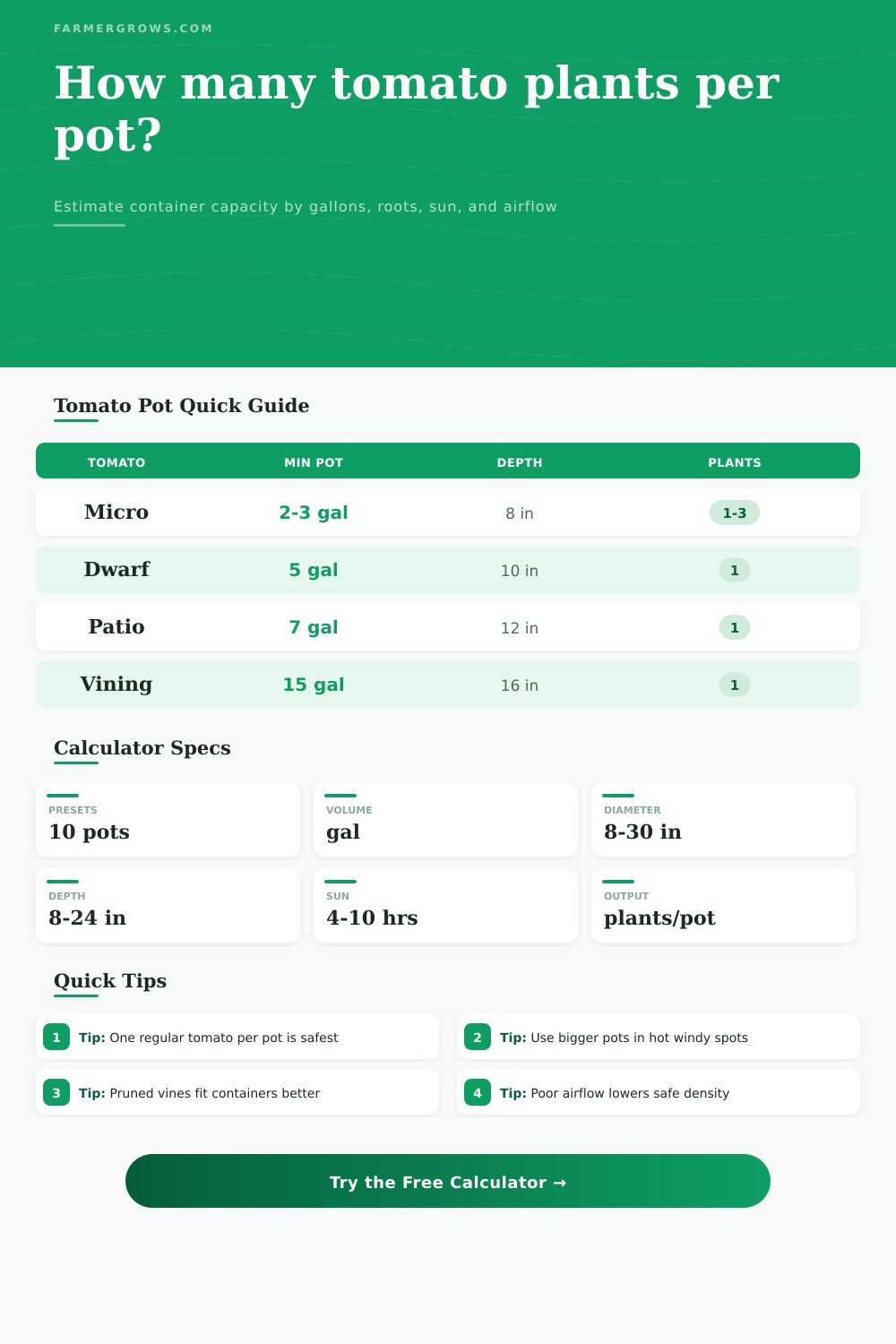
Tomato Plants Per Pot Calculator
Estimate how many tomato plants fit in one container using pot diameter, depth, actual gallons, tomato habit, pruning, support, root-volume target, sun, watering rhythm, and airflow.
Choose a common container tomato setup, then adjust the pot size, tomato habit, pruning, support, and care conditions for your patio, balcony, greenhouse, or yard.
Tomato Pot Capacity Result
Your tomato pot plan will appear here.
Best for micro dwarf tomatoes, short crops, or indoor windows with careful watering.
Can hold one dwarf or compact patio tomato, but large vines dry out fast.
Good for patio determinate types and a more forgiving root zone than a bucket.
A practical minimum for one pruned cherry, slicer, paste, or other vining tomato.
Better buffer for paste tomatoes, hot weather, and longer fruiting windows.
Strong choice for beefsteak plants or heavy fruit load with cage or trellis support.
Allows a large single tomato to stay cooler and steadier between waterings.
Can hold two compact tomatoes only when volume, airflow, and support are generous.
| Tomato type | Target gallons per plant | Useful depth | Container note |
|---|---|---|---|
| Micro dwarf tomato | 2 to 3 gallons | 8 in or deeper | Can share a wide shallow bowl if airflow is good. |
| Dwarf tomato | 5 to 7 gallons | 10 to 12 in | Usually one plant per pot; two only in a large tub. |
| Patio determinate tomato | 7 to 10 gallons | 12 to 14 in | Compact fruiting plants need steady moisture. |
| Full determinate tomato | 10 to 15 gallons | 14 to 16 in | One plant per pot keeps fruit sizing and airflow cleaner. |
| Indeterminate cherry tomato | 12 to 15 gallons | 15 to 18 in | Pruning and vertical support make containers easier. |
| Paste or plum tomato | 14 to 18 gallons | 16 to 18 in | Heavy fruit sets benefit from a deeper water reserve. |
| Indeterminate slicer tomato | 15 to 20 gallons | 16 to 20 in | One pruned plant is the normal container limit. |
| Beefsteak tomato | 20 to 25 gallons | 18 to 22 in | Give the largest single pot available for stable fruiting. |
| Setup | Capacity effect | Best use | Container caution |
|---|---|---|---|
| Single-stem pruning with string | Raises canopy control | Indeterminate vines in smaller patios | Needs frequent pruning and tying. |
| Two-stem pruning with stake | Balanced root and leaf load | Cherry, paste, and slicer tomatoes | Still keep one large plant per pot. |
| Cage with light pruning | Moderate footprint | Determinate and patio tomatoes | Choose a wide pot so the cage does not tip. |
| Unpruned with no support | Lowers safe density | Only very compact bush tomatoes | Dense foliage can trap humidity and disease. |
| Condition | Good range | What it changes | Planning response |
|---|---|---|---|
| Direct sun | 6 to 9 hours | Below 6 hours reduces fruiting; above 9 hours raises water demand. | Use fewer plants in hot exposed containers. |
| Watering frequency | Daily check or drip | Small pots swing from wet to dry quickly. | Upsize the pot if watering every 2 to 3 days. |
| Airflow | Good to excellent | Foliage dries faster and disease pressure drops. | Lower plant count in corners, walls, and enclosed balconies. |
| Root volume target | Standard or roomy | More soil buffers nutrients and moisture. | Use tight mode only for compact tomatoes and careful care. |
| Pot plan | Typical volume | Recommended plants | Best tomato habit |
|---|---|---|---|
| 8 to 10 in tabletop pot | 2 to 4 gallons | 1 to 2 plants | Micro dwarf only. |
| 12 in patio pot | 5 to 7 gallons | 1 plant | Dwarf or patio determinate tomato. |
| 18 in grow bag | 10 to 15 gallons | 1 plant | Patio, cherry, paste, or pruned slicer. |
| 22 to 24 in tub | 20 to 25 gallons | 1 large plant | Beefsteak, slicer, or long-season vine. |
Count the pot by usable soil, not rim size alone. A tall decorative pot may hold less root volume than its diameter suggests if it tapers sharply, has a false bottom, or is only partly filled.
When in doubt, plant one tomato per pot. Extra seedlings look harmless early, but mature tomato roots, leaves, fruit load, and watering demand usually make crowding the limiting factor.
There you stand, five-gallon bucket in hand, looking down at a tray of six tomato seedling at the garden center. If you use your brain, you’ll divide the volume equally and figure that math adds up. But your gut knows: You can’t plant six giants in such a small space as that one bucket. Their roots will tangle; the soil will dry out in an hour; and the tomatoes will remain no bigger than marbles.
That’s where tomato plants per pot calculator comes in. No more guesswork; instead, it’s a realistic estimate based off root space, not just surface area. How does it work? It works by creating balance among unseen forces.
How to Use a Tomato Plants Per Pot Calculator
While we tend to think only about pot size (diameter), depth are equally important. Tomatoes is deep-rooted plants, and they require vertical space not only for anchoring themselves but also to seek out moisture. So the calculator do the math for us. It translates your depth plus diameter measurement into an actual gallons-of-soil-you-have-to-work-with number. Then it cross-references that with the specific appetite of the tomato variety you intend to grow. Two gallons may be plenty for a micro-dwarf tomato, but not enough for a beefsteak plant at all.
And no, it’s not just a matter of scale. It has everything to do with expected fruit load and the energy it need.
Then there’s pruning: A leafy jungle of an indeterminate cherry tomato will steal every ounce of water. Prune it to a single stem and you’ll have drastically less foliage mass. Less foliage means less transpiration; less water is being drawn from the soil. The calculator take all of this into account, factoring in how much space you’re creating for plants based on your pruning routine. It knows a pruned vine takes up far less room different than an unpruned bushy one.
Treating them right also depends on the kind of support structure you use. With a tight trellis, the canopy stays open, letting air flow between leaves. Good airflow prevents fungal diseases, which love crowded, humid conditions.
The last stress test is the sun and watering regimen. Does it have four hours of sun on the balcony? Go ahead and pack things a bit closer together because they’ll be smaller and not need as much water. Or maybe there’s really no breeze at all, and it’s hot hot hot? The soil will dry out fast and so will plant. This is flagged by the calculator because a stressed plant fights harder for resources.
In shade, maybe you can squeak by with two plants in that ten-gallon pot. Two plants in the blazing sun? Those guys wouldn’t of made it; they’d be fighting each other for life. The output score considers such balances. It’s telling you yes/no: can I sustain this setup, or am I livig dangerously?
It looks lush at first so it’s tempting to overdo it in containers. Seedlings take up little space, and seeing a full pot feels productive. But no: Tomatoes don’t stand still. They expand. As they push the fruit upward, their root systems explodes both downward and outward. They reach the container sides where they circle and tangle. This creates root binding that limits water uptake, making the plant vulnerable to heat stress.
That’s explained clearly in reference table on the page, showing that a fifteen-gallon grow bag is typically the practical minimum size for a serious vining tomato. Less than that: compromise. The pot is the plant’s pantry. A tiny pantry means out-of-food quickly. Constant watering is required so the plant doesn’t wilt. Bigger soil equals bigger pantry. More soil holds onto moisture and nutrients longer. This means you can go more time between waterings, plus it gives you a buffer when you forget to check in on them (which, let me tell you, we all do).
Upsize your pot. Nearly every time, this is an excellent investment. You will have less everyday maintenance and more time.
Growing tomatoes in containers means setting the right expectations. Make sure you know what’s naturaly possible with a big plant versus a small one. Use calculator to make sure your container matches your plant. Remember: Less is often more. One really good tomato in the appropriate-size pot will always beat three sad specimens in too-small-a-bucket.
Don’t try to buck nature; let the tool do the work. Take what the numbers tell you, and enjoy the reward of providing your plants with the room they require. Really, really want.