2 Cubic Feet of Mulch Weight Calculator
Estimate the weight of 2 cu ft mulch bags using bag count, mulch type, moisture, density, compression, dyed or natural finish, waterlogged factor, tare, carry limit, and project depth.
Pick a named 2 cu ft mulch bag condition, then fine tune moisture, density, bag count, and project depth for the load you are actually moving.
2 Cu Ft Mulch Bag Weight Results
Weights are estimates for planning loads, trips, and coverage. Actual bags vary by brand, chip size, settling, and storage weather.
Best for standard landscape beds where dry bag handling and organic breakdown matter more than long-term color.
Colorant and moisture retention can add a few percent, especially when bags sit outside before spreading.
Fine particles hold water, so calculate with higher moisture and a lower bags-per-trip target.
Rubber mulch starts heavier per cubic foot but does not swing as sharply after rain as shredded wood.
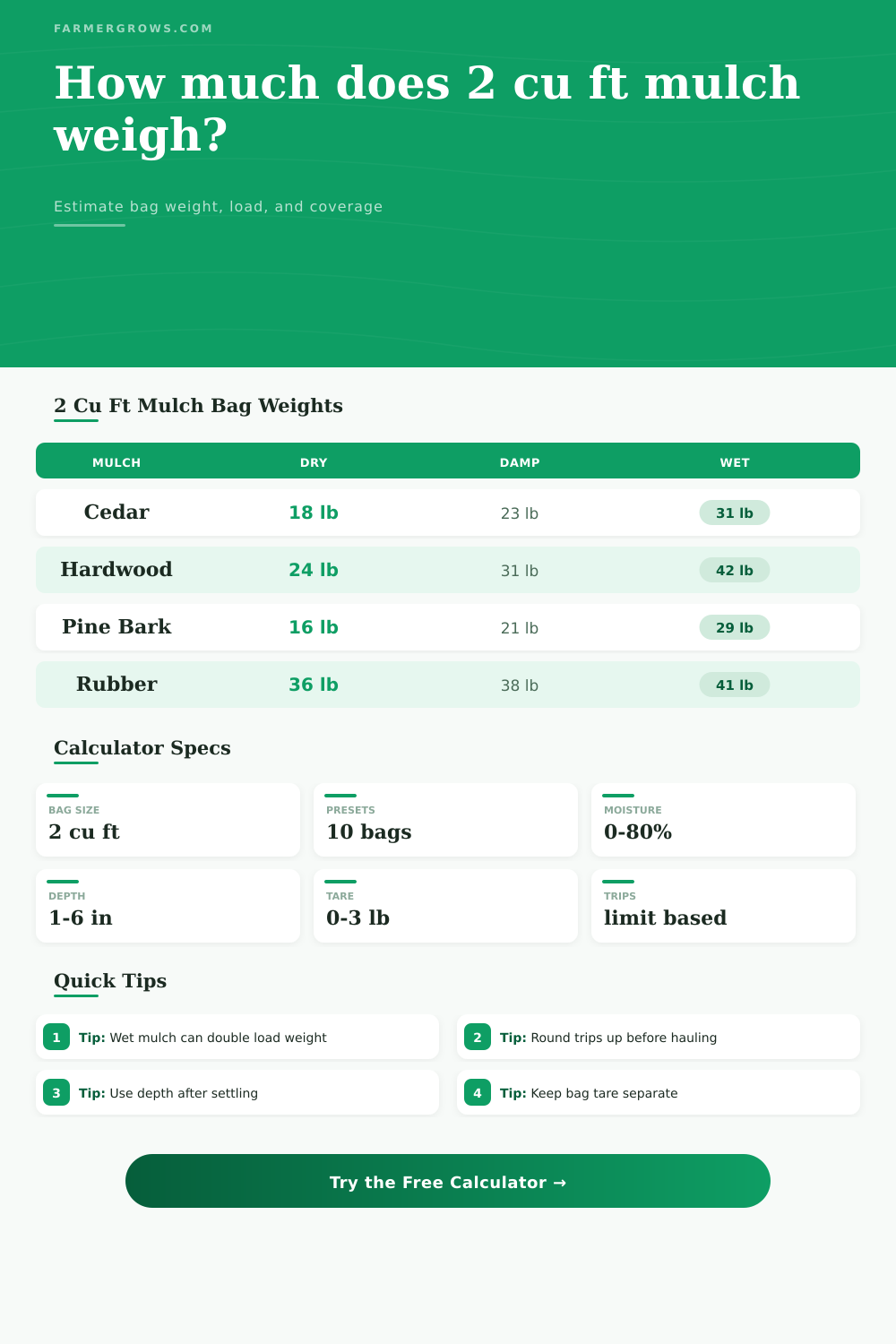
| Mulch type | Typical density | Dry 2 cu ft bag | Damp 2 cu ft bag | Wet 2 cu ft bag |
|---|---|---|---|---|
| Cedar mulch | 8 to 11 lb/cu ft | 16 to 22 lb | 20 to 29 lb | 27 to 39 lb |
| Shredded hardwood | 11 to 15 lb/cu ft | 22 to 30 lb | 29 to 39 lb | 38 to 53 lb |
| Pine bark nuggets | 7 to 10 lb/cu ft | 14 to 20 lb | 18 to 26 lb | 25 to 35 lb |
| Cypress mulch | 9 to 13 lb/cu ft | 18 to 26 lb | 23 to 34 lb | 32 to 46 lb |
| Straw mulch | 4 to 6 lb/cu ft | 8 to 12 lb | 10 to 16 lb | 14 to 21 lb |
| Compost mulch blend | 14 to 20 lb/cu ft | 28 to 40 lb | 36 to 52 lb | 49 to 70 lb |
| Rubber mulch | 18 to 22 lb/cu ft | 36 to 44 lb | 38 to 47 lb | 41 to 51 lb |
| Depth | Coverage per 2 cu ft bag | Bags for 100 sq ft | Typical use |
|---|---|---|---|
| 1 inch | 24 sq ft | 5 bags | Fresh top dressing over existing mulch |
| 2 inches | 12 sq ft | 9 bags | Annual bed refresh and weed shading |
| 3 inches | 8 sq ft | 13 bags | New landscape bed coverage |
| 4 inches | 6 sq ft | 17 bags | Paths or thicker ornamental beds |
| 6 inches | 4 sq ft | 25 bags | Play area cushion layers |
| Measure | Volume | 2 cu ft bag equivalent | Coverage at 3 in | Planning note |
|---|---|---|---|---|
| Single bag | 2 cu ft | 1 bag | 8 sq ft | Good for small touch-ups and tree rings |
| Half cubic yard | 13.5 cu ft | 6.75 bags | 54 sq ft | Round up to 7 bags for retail buying |
| One cubic yard | 27 cu ft | 13.5 bags | 108 sq ft | Common bulk delivery comparison unit |
| Two cubic yards | 54 cu ft | 27 bags | 216 sq ft | Often a pickup or small trailer load |
| Full 65-bag pallet | 130 cu ft | 65 bags | 520 sq ft | Check vehicle payload before loading |
| Bag weight | 40 lb limit | 80 lb limit | 120 lb limit | Best handling note |
|---|---|---|---|---|
| 20 lb dry bag | 2 bags | 4 bags | 6 bags | Easy hand carry or small cart |
| 30 lb damp bag | 1 bag | 2 bags | 4 bags | Use a cart for long walks |
| 40 lb wet bag | 1 bag | 2 bags | 3 bags | Keep loads lower on slopes |
| 55 lb soaked bag | 1 bag | 1 bag | 2 bags | Drain bags before moving if possible |
Moisture tip: If bags were stored outdoors, weigh one sample bag or use the waterlogged factor. A rain-soaked pallet can exceed vehicle payload even when bag count looks ordinary.
Depth tip: Calculate coverage at the settled depth you want after spreading. A fluffy 3 inch layer can settle closer to 2.5 inches after watering and foot traffic.
At the hardware store you pick up a bag of mulch and don’t think again: Sure, that doesn’t seem too heavy; an easy-to-lift eighteen pounds of cedar chips or whatever it is made from, right? You stack ten bags on your driveway, ready for the weekend project.
And then it rains. Moisture change the weight of what is now a very heavy load, suddenly making those same bag feel as if they are filled with lead. Most gardeners count bags (not weigh them) when planning their garden projects. That is mistake number one. Mistake number two is assuming that all mulch weigh the same.
Why You Need a Mulch Weight Calculator
That is where the calculator comes into play. You don’t have to guess anymore. It knows how many bag you want to pick up and what kind of mulch you need. It also factors in weight of plastic bag and whether the mulch is compressed and moist.
Why? Because a bag of shredded hardwood when wet is a whole lot heavier than a bag of pine bark is when it’s wet. Because pine bark contain big nuggets that allow the bag to be airy. Hardwood chips are sponges for water. So when you combine the two, and get the chips wet, it gets realy heavy.
The tool allows you to input the moisture content. And if you had the bags sitting out for a week, bump that moisture number up a bit. It won’t just feel better… It will be safer.
And then there’s the question of coverage. You’ll purchase more bags than you think you will, as most gardeners don’t realize how much less area a given quantity of mulch will cover when spread at deeper depths. That two-cubic-foot bag may seem like a lot of mulch, but only if applied very thinly. Spread to a typical depth of three inches (for moisture retention and weed suppression), the same bag will only cover maybe eight square feet. Your big flower bed? Expect to go through far more bags than your eyes tells you to get. Enter your desired depth in the calculator, and it will translate that number of bags into actual coverage area. No over-ordering; no running out halfway home between trips.
Keep in mind that there is actual labor involved. Twenty pound bags are no problem. Forty pound bags? Not so much. Enter the tool’s trip planner function. Enter the maximum weight you want to carry in your wheelbarrow or under your arm, and it will calculate how many bag fit into one load. This way, you can plan out how hard you’re going to be working. Can I only make five trips, or do I have to make ten? Plan accordingly. Pace yourself. And, this way, you can determine whether to rent a cart or not. Saving money on a cart rental may end up costing you a strained back if you don’t factor in total bag weight.
On the page, the reference tables breakdown material type differences. For example, even when dry, rubber mulch is heavy and dense. Though it doesn’t swell up as it gets wet (like wood), it still has a high baseline weight. Then there are compost blends. Oh boy. They’re dense and hold onto moisture aggressively. A compost-filled bag will probably require fewer bags per trip than any other. But that’s a small price to pay. What compost gives back in return makes it worthwhile; the benefits to your garden outweigh the extra effort, but know the weight. Respect it.
You will see what its tare weight (weight of empty bag) is when you are looking to purchase. Seems trivial until you add it all up and realize that for a pallet of sixty bags, it’s a couple pounds that you’ll be unnecesarily picking up. If you need to figure out how much actual material weight there is, the calculator takes that off. If you’re figuring out how much total weight you can fit in your car, the calculator puts it right back on.
Accidents happen when things get sloppy. Don’t forget about hidden weight from packaging when you overload a tiny car. But then again, that’s what mulch is all about: planning and patience. It’s not just laying down a bit of dirt. You’re providing a protective barrier for your plants. Make sure it is weighted and covered correctly so you don’t get sore backs or leave projects half-finished. Let the math do the heavy thinking, and make the numbers work for you.
Measure twice, lift once, and garden.