Water for Herbs Calculator
Estimate weekly herb watering from herb type, bed or container area, plant count, pot diameter, soil drainage, sun exposure, weather, rainfall, mulch, and harvest pressure.
Choose a common herb setup, then edit the bed, pot, rain, sun, and harvest values to match the actual planting. The calculator treats rain as useful only for open beds and outdoor containers.
Herb Watering Estimate
Results update from your herb, container, weather, rain, mulch, and harvest choices.
Best with even moisture and quick watering after hot windy afternoons.
Likes consistently damp soil, especially in pots with many runners.
Steady moisture slows stress bolting during bright spring weather.
Deep taproots handle beds well but containers still need regular checks.
Prefers even water while young; too much wet soil can weaken stems.
Clumps tolerate short dry spells but produce softer leaves with steady moisture.
Flavor concentrates in leaner, slightly drier soil once established.
Needs excellent drainage and less frequent watering than leafy herbs.
Small leaves and woody growth make it suited to gritty, drier mixes.
Water deeply, then allow the root zone to breathe before the next irrigation.
| Herb | Baseline depth | Moisture target | Container caution |
|---|---|---|---|
| Basil | 1.15 in/week | Evenly moist, not soggy | Wilts fast in small black pots |
| Mint | 1.25 in/week | Moist root zone | Runner-filled pots dry quickly |
| Cilantro | 1.00 in/week | Consistent moisture | Heat stress raises demand |
| Parsley | 0.95 in/week | Moderately moist | Deep pots perform better |
| Chives | 0.85 in/week | Moderate and even | Dense clumps need splitting |
| Dill | 0.80 in/week | Moderate, never swampy | Tall stems dislike waterlogging |
| Oregano | 0.65 in/week | Slightly dry between watering | Avoid rich, wet mixes |
| Sage | 0.60 in/week | Drying upper layer | Needs sharp drainage |
| Thyme | 0.55 in/week | Lean and lightly dry | Best in shallow gritty media |
| Rosemary | 0.55 in/week | Deep water, then dry-down | Terracotta helps prevent soggy roots |
| Input | Low setting | Middle setting | High setting |
|---|---|---|---|
| Soil drainage | Clay or self-watering: less frequent | Loam or potting mix: steady | Sandy/gritty: more frequent |
| Sun exposure | Under 4 hr: reduce demand | 5-7 hr: normal herb growth | 8+ hr: increase water loss |
| Season/temp | Cool or winter: slower use | Mild/warm: active growth | Hot spell: check daily pots |
| Weekly rain | 0 in: full irrigation needed | 0.5 in: partial credit | 1+ in: beds may skip a watering |
| Mulch | Bare mix loses water fastest | Light cover reduces surface loss | Good mulch keeps beds steadier |
| Harvest | Light snips: normal demand | Weekly harvest: modest boost | Heavy cuts: regrowth needs support |
| Water depth over 1 sq ft | Gallons | Liters | Best use |
|---|---|---|---|
| 0.25 inch | 0.156 gal | 0.59 L | Light top-up for small pots |
| 0.50 inch | 0.312 gal | 1.18 L | Typical container watering event |
| 0.75 inch | 0.467 gal | 1.77 L | Moderate bed irrigation |
| 1.00 inch | 0.623 gal | 2.36 L | Common weekly herb target |
| 1.25 inch | 0.779 gal | 2.95 L | Leafy herbs in warm weather |
| 1.50 inch | 0.935 gal | 3.54 L | Hot week or thirsty mint |
| Setup | Area | Typical water | Notes |
|---|---|---|---|
| One 10 in basil pot | 0.55 sq ft | 0.4-0.7 gal/week | Split into 2-4 waterings in heat |
| 12 in rosemary pot | 0.79 sq ft | 0.3-0.5 gal/week | Deep soak, then allow upper mix to dry |
| 2 ft mint box | 2.0 sq ft | 1.6-2.4 gal/week | Demand rises as runners fill the box |
| 4 x 4 ft herb bed | 16 sq ft | 7-12 gal/week | Rainfall and mulch strongly affect total |
| 3 x 8 ft raised herb bed | 24 sq ft | 11-18 gal/week | Drip line keeps leaves drier |
| Indoor 8 in pot | 0.35 sq ft | 0.15-0.35 gal/week | Water by soil feel, not calendar only |
Container check: Small pots can need water even when the weekly total looks modest. If the top inch is dry and the pot feels light, water until a little drains out, then empty saucers.
Herb grouping: Keep rosemary, sage, thyme, and oregano in sharper-draining zones. Basil, mint, parsley, and cilantro are easier to manage together because they prefer steadier moisture.
Wrong: Most all of our kitchen herb woes stem from bad watering practices, good intentions gone wrong. You purchase a basil plant at the store, carry it home, and put it in house, and because the tag says “don’t drown my roots,” you treat this thing as if it were a cactus. So it wilts. Or else you’re trying to make it happy and overwater it so its leaves goes yellow (drowning the roots).
The problem isn’t that you don’t care; it’s that you misunderstand how thirsty each of these particular plant are. Their needs vary depending on type of soil they are growing in. They also depend on what kind of pot you use, the size of the pot, and amount of heat your windowsill produces.
How to Water Herbs Correctly
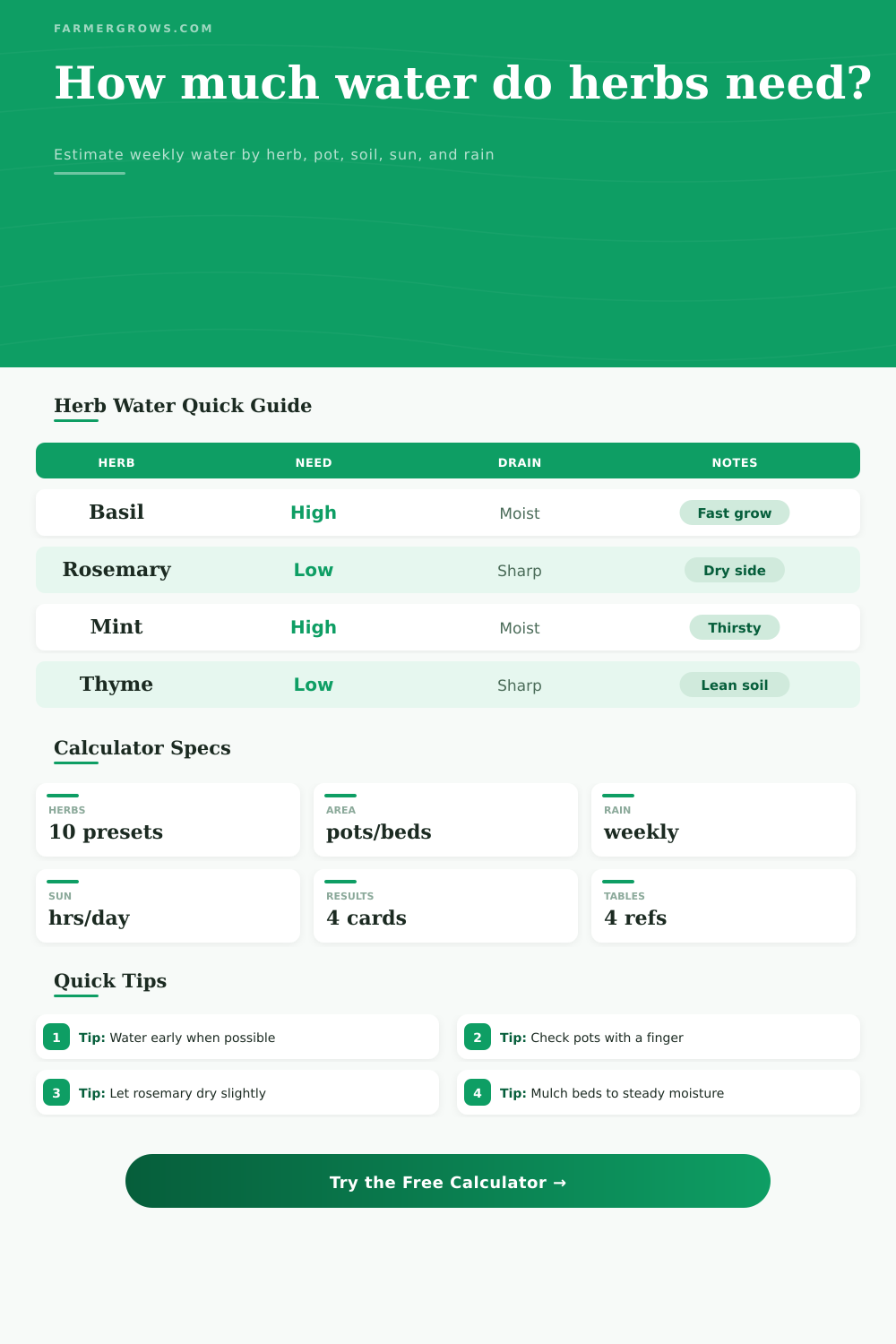
To figure out how much, use this handy calculator (above) by entering what kind of herb you’re growing, and whether it’s drought tolerant or thirsty. The calculator divides herbs into two categories: drought-tolerant ones such as thyme and rosemary, and thirstier types like mint and basil.
This matters because their roots is adapted to live in very different conditions. Basil likes a consistently moist growing environment, like a houseplant in a humid house. Rosemary comes from dry hillsides and wants to be allowed to dry out between drinks. You can’t treat them equally or one will die while the other thrives.
Why? How often you need to water depends mostly on volume. A few inches of soil in a tiny six-inch pot will dry fast in a sunny window or under kitchen growlights. A big twenty-four-inch planter will hold enough moisture to tide you over when you forget to fill it.
The formula takes that into account and also does the math depending off whether you’re growing something in a pot (as most people do) or in ground (where many don’t). That is another factor, a small thing, but an important one. Season and sun exposure are other factors that affects rate of water loss (springtime sun versus summer heat, for instance); the tool considers them all.
Another thing few gardeners note: You can get some rainfall credit if your herbs (or anything else) spend time outdoors. Even a little rain in a week counts toward herb’s need. The calculator takes into account any such helpful rainwater and doesn’t count it against you when watering a bed that’s already wet. No rain? That’s an issue only for indoor plants, who don’t recieve it at all.
It also factors in mulch, which slows evaporation on the surface. Air flow dries out top couple of inches of bare soil fast, but mulch holds the lower levels moist longer.
Water requirements also fluctuate based off how much you are harvesting. If you’re cutting your parsley or basil back heavily, those plants needs to use energy making more leaves, which means they have increased surface area through which to lose water. To account for this, the calculator adjust upward slightly to accommodate the healing process. It’s telling you that water is your friend when it comes to recovering from harvest.
The result is an estimated amount of water needed per week. It also includes a suggested schedule, such as whether to wet things every couple of days or go a full week. Knowing what goes in allows watering to become a strategy, not a chore. It’s no longer guesswork; it’s observation.
See the difference between chive and sage? It’s easy to compare them: just look at reference table on the page. Yes, every house has its own microclimate, so always test with your finger before following any schedule. But now you have a calculated baseline to work from, a good place to start.
Water with confidence, understanding that you’re matching the plant’s need, more different than yours. Basil likes to be moist; Rosemary prefers to dry out. No more second-guessing; everyone gets along.