Water For Bell Pepper Plant Calculator
Estimate weekly water, per-watering gallons, rain credit, and emitter runtime for bell pepper plants in beds, grow bags, raised beds, or containers.
Pick a common bell pepper setup, then adjust the plant count, stage, soil, mulch, heat, rain, and emitter flow to match the actual planting.
Keep the root ball evenly damp while new feeder roots move into the surrounding soil.
Steady leaf growth needs consistent moisture without keeping the crown soggy.
Moisture swings can reduce bloom hold, so smaller regular irrigations usually work best.
Young fruit expands fast and benefits from even soil moisture through the root zone.
Loaded plants often need the highest weekly volume, especially during hot afternoons.
Bell Pepper Water Plan
Adjust the fields above to calculate a weekly water plan.
| Stage | Baseline water | Usual frequency | Calculator adjustment |
|---|---|---|---|
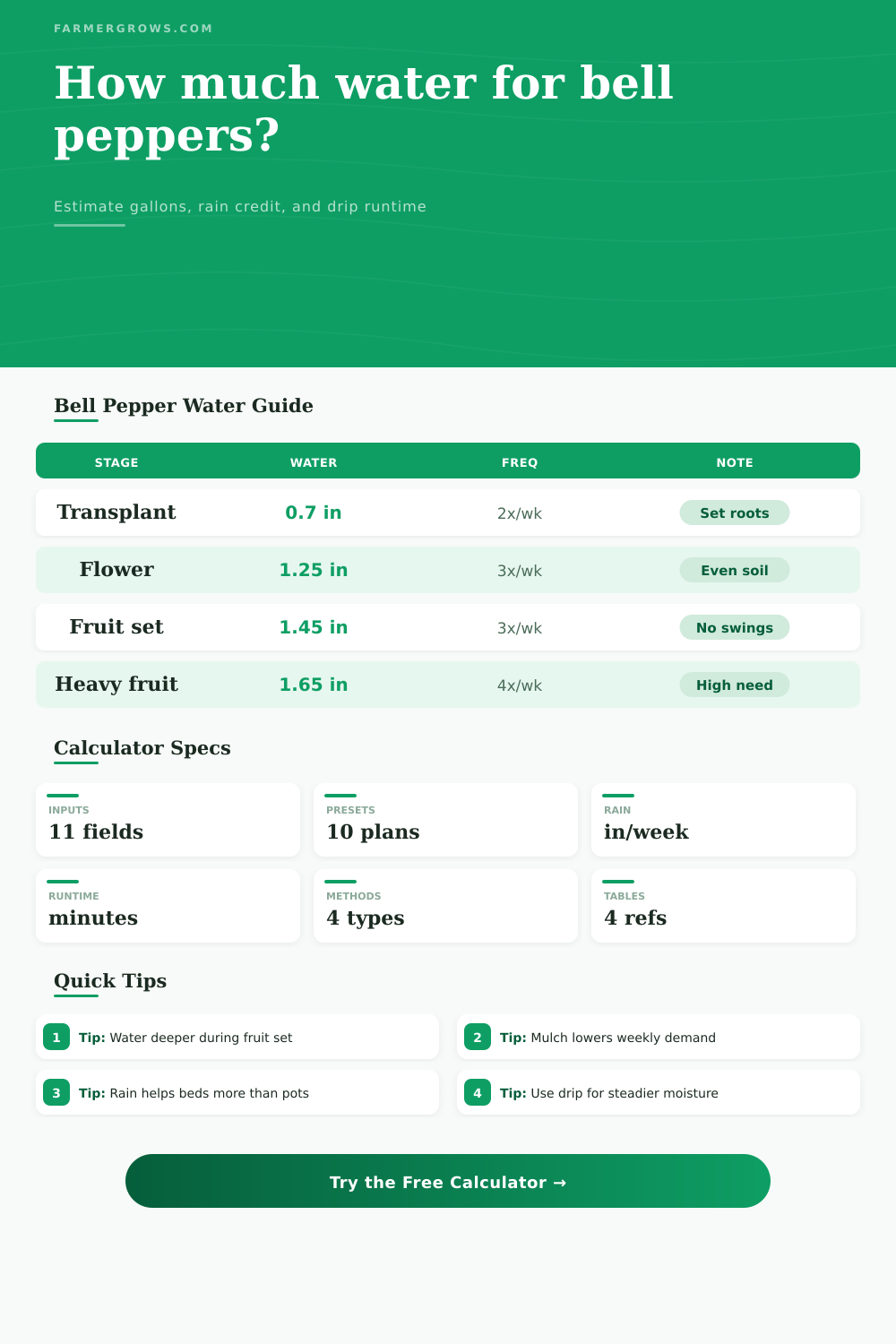
| Transplant establishment | 0.7 inch per week | 2 light to moderate waterings | Lower volume, avoid drying the root ball |
| Vegetative growth | 1.0 inch per week | 2 to 3 waterings | Moderate demand with expanding leaves |
| Flowering | 1.25 inches per week | 3 waterings | More even moisture to support bloom hold |
| Early fruit set | 1.45 inches per week | 3 waterings | Higher demand as small bell peppers size up |
| Heavy fruit load | 1.65 inches per week | 3 to 4 waterings | Highest demand, especially above 90°F |
| Late harvest maintenance | 1.35 inches per week | 2 to 3 waterings | Moderate demand after the main fruit load eases |
| Condition | Water factor | Moisture behavior | Practical note |
|---|---|---|---|
| Sandy soil | 1.15x | Drains quickly and dries fast | Use smaller, more frequent irrigations |
| Loam or raised-bed mix | 1.00x | Balanced holding and drainage | Good baseline for most garden beds |
| Clay or silty clay | 0.90x | Holds water longer but wets slowly | Water deeper and less often |
| Container potting mix | 1.18x | Warms and dries faster than beds | Check daily in hot weather |
| Organic mulch | 0.82x | Reduces surface evaporation | Keep mulch off the pepper stem |
| Plastic mulch | 0.75x | Strong evaporation control | Watch for dry edges outside the tape |
| Weekly condition | Calculator factor | Bell pepper response | Watering note |
|---|---|---|---|
| Below 75°F | 0.90x heat factor | Lower transpiration | Allow the top inch to begin drying |
| 76–84°F | 1.00x heat factor | Normal warm-season growth | Use the stage baseline |
| 85–92°F | 1.18x heat factor | Higher daily use | Do not skip fruit-set waterings |
| 93–100°F | 1.35x heat factor | Rapid drying and possible wilt | Increase frequency before soil is dry |
| Over 100°F | 1.55x heat factor | Stress risk rises sharply | Pair irrigation with shade if needed |
| Steady rain | Up to 85% credit | Beds benefit most | Containers receive only partial credit |
| Method | Efficiency used | Best use | Runtime note |
|---|---|---|---|
| Drip emitters | 95% | Beds, rows, containers | Runtime uses emitter flow times emitters per plant |
| Soaker hose | 88% | Mulched beds and rows | Measure output if the hose flow is unknown |
| Hand watering wand | 75% | Small patio plantings | Move slowly so water enters the root zone |
| Overhead sprinkler | 65% | Large beds when drip is unavailable | More water is lost to leaves, wind, and paths |
| Setup | Typical plants | Root-zone size | Starting weekly water |
|---|---|---|---|
| Patio pots | 2 to 4 plants | 5 gal per plant | About 1.6 to 2.8 gal per plant in heat |
| Grow bags | 4 to 8 plants | 7 to 10 gal per plant | About 2.0 to 3.5 gal per plant in heat |
| 4×8 raised bed | 8 plants | 32 sq ft | About 25 to 40 gal per week before rain |
| Double row bed | 10 to 16 plants | 45 to 80 sq ft | About 35 to 90 gal per week before rain |
| Greenhouse containers | 6 to 12 plants | 5 to 10 gal per plant | Little rain credit, steady drip preferred |
Bell peppers dislike big wet-dry swings during flowering and fruit set. Use the calculator result as a weekly plan, then confirm moisture 3 to 6 inches deep before adding more water.
Emitter labels are only a starting point. If possible, catch water from one emitter for 15 minutes, multiply by four, and use that measured hourly flow in the calculator.
There is no strict schedule. Instead, you manage soil moisture. Roots needs to be consistently moist (but not swimming!).
Even watering throughout the season are critical; uneven watering can affect quality of what you get. No more guessing at how many gallons actualy make it to root zone. The calculator does that math for you when you put in your number of plants and growth stage.
How to Water Bell Peppers
“Remember that a bell pepper has particular watering requirements depending on its stage of development: Transplanting, Maintain moisture around the rootball until it is established; do not overwater or the seedling will rot. Don’t underwater, either, because it will stop growth. Once it enters the vegetative state (as the leaves develop), the need for water intensifies. Why? As the foliage grow, it cools the plant by shedding moisture. This happens because there are now more leaf surface to shed water from. The greater the plant size, the greater the basic requirement.”
Watering is most critical during fruit set. That’s when the plant feeds the pepper its nutrients plus water. If moisture is inconsistent, you’ll get blossom end rot or fruit splitting. Why? Soil that gets dry and then soaks up a lot of water can cause the fruit skin to burst because it cannot expands fast enough.
When there’s heavy fruit growth on the plants, the tool increases the weekly target. It takes into account heat, which drives up transpiration (a.k.a. How thirsty they are); a week of ninety degree afternoons will need more water then an otherwise-mild week, though you may have received same amount of rain.
How’s the soil? Watering is different based off texture: sandy soils dry out fast; water them more frequently with smaller amounts to avoid deep leaching. Clay soils is slow to soak in and retain moisture longer (but also tend to bake hard when dry); make your irrigation sessions less-frequent but deeper. The calculator knows that and adjusts the amount of water per session accordingly.
If it isn’t mulched, each time you walk across the soil it cooks dry again. Many people gets tripped up by the rain credit. Just because an inch fell doesn’t necessarily mean there’s no need to water. Some soaked into the root zone, some ran off, some evaporated, and some stayed on surface in the top inch where it couldn’t help anyway. Because plants in pots dry out more quickly than things growing in open ground, the calculator also discounts rain (particularly for containers). That way you can judge whether the rain served a purpose or if you should of activated that drip system after all.
Efficiency depends on delivery type: Overhead sprinklers (above) waste some water in wind and through evaporation; drip emitters applied directly to base of plant keep foliage dry while minimizing waste. The calculator factors that less-efficient hand-watering into it’s equation. You don’t need to guess how long to let the tap run; the calculator uses your emitter type to figure out how many gallons you need.
By doing this, you’re creating a consistant environment in which to grow the roots. It’s science-backed and gives you a baseline plan. Then you use your fingers to test the dirt. Is it three inches up and dry? Adjust the plan accordingly. Is it soggy down there? Back off on water. The calculator is your baseline; now use your senses to confirm it.
When you know what the plants are asking for, watering becomes intuitive. It’s not guesswork anymore. It’s moisture management, and moisture management is what gets you to harvest.