Pounds of Corn Per Acre Calculator
Estimate shelled field corn pounds per acre from ear counts, row spacing, kernels per ear, kernel weight factor, grain moisture, test weight, harvest loss, and field acres.
Load a scouting pattern, then replace the numbers with your own counts. The calculator reports market-basis corn at 15.5% moisture and also shows wet harvest weight.
Corn Yield Results
Your loss-adjusted pounds per acre will appear here.
| Kernel condition | Kernels per bushel | When to use | Yield effect |
|---|---|---|---|
| Large, dense kernels | 75,000 to 80,000 | Excellent fill, long grain-fill period, strong test weight | Raises lb/ac for the same ear count |
| Average grain fill | 85,000 to 90,000 | Normal scouting estimate for many dent-stage checks | Balanced field estimate |
| Small late-stress kernels | 95,000 to 100,000 | Heat, drought, disease, or early frost trimmed kernel weight | Lowers lb/ac for the same kernel count |
| Severe stress estimate | 105,000 to 110,000 | Poor grain depth, tip-back, or very light kernels | Conservative low-weight estimate |
| Row spacing | Approx 1/1000 acre row length | Stand count shortcut | Good sampling note |
|---|---|---|---|
| 15 inch rows | 34.8 ft | Count x 1,000 | Use several rows because counts vary quickly |
| 20 inch rows | 26.1 ft | Count x 1,000 | Useful for narrow-row grain systems |
| 30 inch rows | 17.4 ft | Count x 1,000 | Common field corn scouting length |
| 36 inch rows | 14.5 ft | Count x 1,000 | Shorter length needs more repetitions |
| Market yield | Pounds per acre | Tons per acre | 1,000 bu bin acres |
|---|---|---|---|
| 120 bu/ac | 6,720 lb/ac | 3.36 tons/ac | 8.3 acres |
| 160 bu/ac | 8,960 lb/ac | 4.48 tons/ac | 6.3 acres |
| 200 bu/ac | 11,200 lb/ac | 5.60 tons/ac | 5.0 acres |
| 240 bu/ac | 13,440 lb/ac | 6.72 tons/ac | 4.2 acres |
Sample by zone: Run separate estimates for hilltops, low areas, irrigated spans, headlands, and strong zones before averaging the whole farm.
Count real ears: The formula depends heavily on harvestable ears per acre, so exclude blanks, nubbins, and ears likely to stay below the head.
Change kernel factor late: Early estimates often overstate kernel weight. Use a higher kernels-per-bushel factor if grain fill turns shallow.
Separate wet weight: Wet harvest pounds are useful for hauling, but market pounds per acre should stay on the 15.5% moisture basis.
The air in the cornfield feel different in late August. The leaves are starting to curl; the tassel dust is settling. It’s no longer “is it alive?” but “how many ears make it to elevator?”
You can feel them on your way down the row, but that won’t get you into pounds per acre. That requires converting physical plants into standardized weight and that is where most of us trip up in the math. Not all yield estimates is so simple. A 30,000-plant-per-acre field won’t necessarily weigh twice as much than one with 60,000 plants. This is especially true if late summer heat stress grain fill or if the plant were crowded.
How to Estimate Your Corn Yield
You have to enter your kernel data and ear counts into the calculator which then does the math for you. That means no more guesswork when converting kernels into bushels. You won’t have to fumble around with coefficients to bridge the gap between what’s happening in dirt and what gets weighed at the local co-op.
Plant stand is always where most growers begin; but stand is only starting line. The true variable are how many of those plants went on to produce a harvestable ear. Count what happens in end. Count the plant that actually has ears with decent grain on them. Don’t count the original population. This is why the tool allow for a row sample or for direct ear count.
How long the row is make a difference when sampling. A row fifteen inches wide requires a different measurement distance then a thirty-inch wide row to cover the same fraction of an acre. Get the fraction wrong and all numbers that follow will be thrown off.
Next is the kernel work. Counting how many rows around the circumference, then counting all the way down the length yield your theoretical maximum. Rarely does any crop reach its theoretical maximums. Hot spells cause tip-back; disease or birds will take out significant amounts of individual kernels reducing the weight. Your fill percentage. What the corn calculator calls it, can be difference between a reasonable guess and something wildly optimistic.
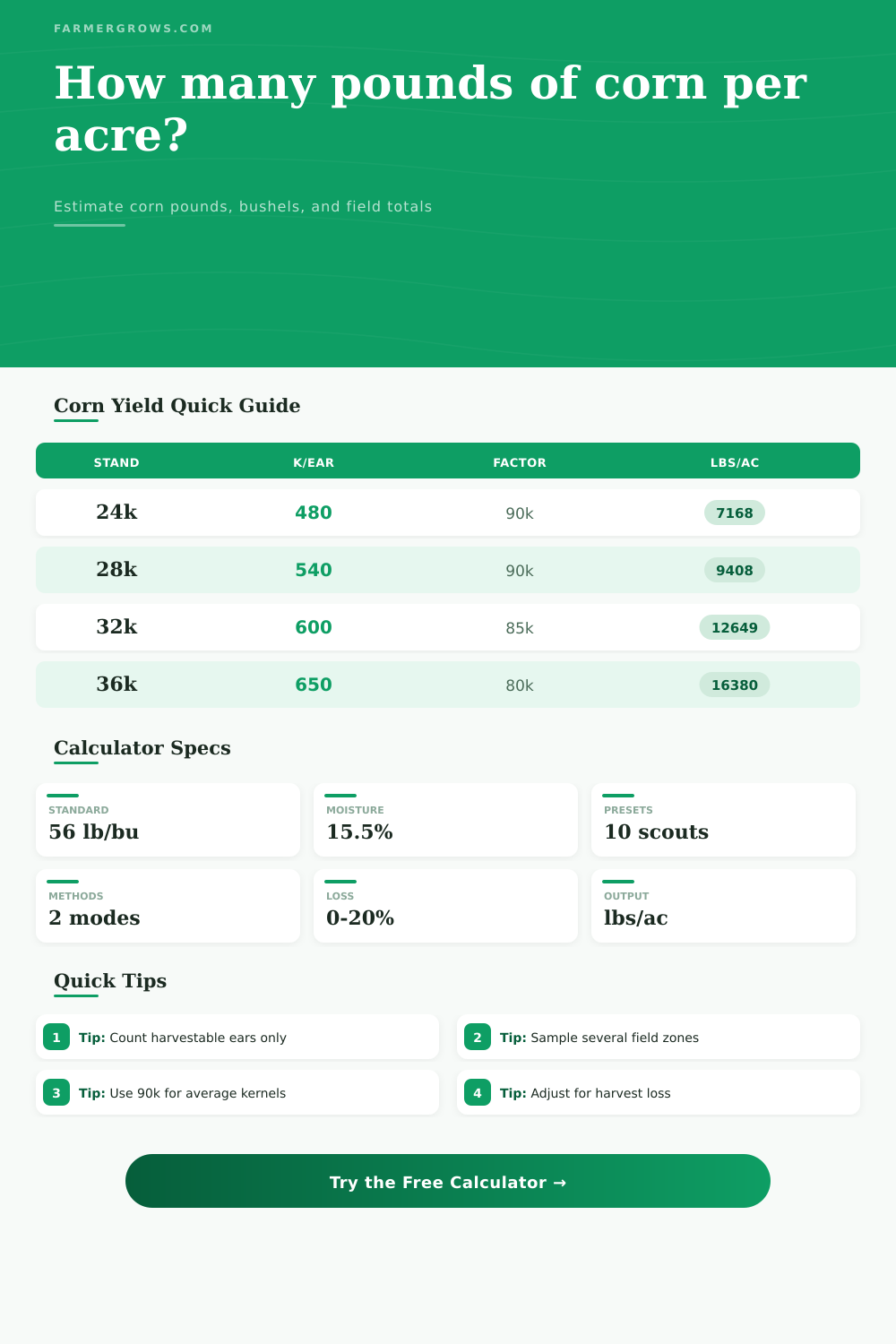
By default the calculator figures based off ninety thousand kernels per bushel, the standard industry figure. Bump it up to a hundred thousand if your ears are looking chalky or small. Fewer kernels mean more space inside, which make a full bushel by weight.
Another trap is moisture. Wet corn doesn’t sell; it sells based on dry corn. The market wants your grain at 15 percent moisture, but when you haul it from field, that grain is full of moisture. The tool adjusts your harvested weight accordingly. Why? A ton of twenty-five percent moisture corn isn’t equal to a ton of market corn. Hauling based on wet weight means you’ll overestimate what’s sellable if you plan to put it in bin. The output splits those two numbers. This lets you plan your sales based off the market weight and your logistics based on the wet weight.
We often overlook losses at harvest (and by then it’s too late). That three percent loss may not seem like much, but on a high yield field that equal thousands of pounds of grain in dirt or spilled. By subtracting this first with the calculator you’ll have a better idea of what realy ends up in the truck.
It’s half math, but more than that, it’s learning how to manage expectations with yield estimation. Plug-in your actual counts and adjust for reality, loss and gain, and you goes from guesswork to informed planning. You should of used these tools earlier. Do I have enough room in those bin for another field? Do I need to call for a grain cart?
The math doesn’t lie if you give it the truth of what’s coming up out of the ground.