Pea Microgreen Soak Time Calculator
Estimate pea microgreen soak hours, water volume, drain timing, sowing window, rinse checks, seed swelling, and readiness risk from pea type, batch size, temperature, seed age, and tray plan.
Load a pea shoot scenario, then adjust seed weight, soak temperature, water ratio, drain style, and sowing schedule to match the tray in front of you.
Pea soak plan
Enter a pea seed batch to calculate soak timing.
Peas should look plump and firm, with most seed coats still intact before sowing.
Change water if it smells stale, foams, warms above room temperature, or turns cloudy early.
Seed should be moist inside but not dripping when spread across the tray surface.
After sowing, weight or stack pea trays until roots anchor and shoots push the cover upward.
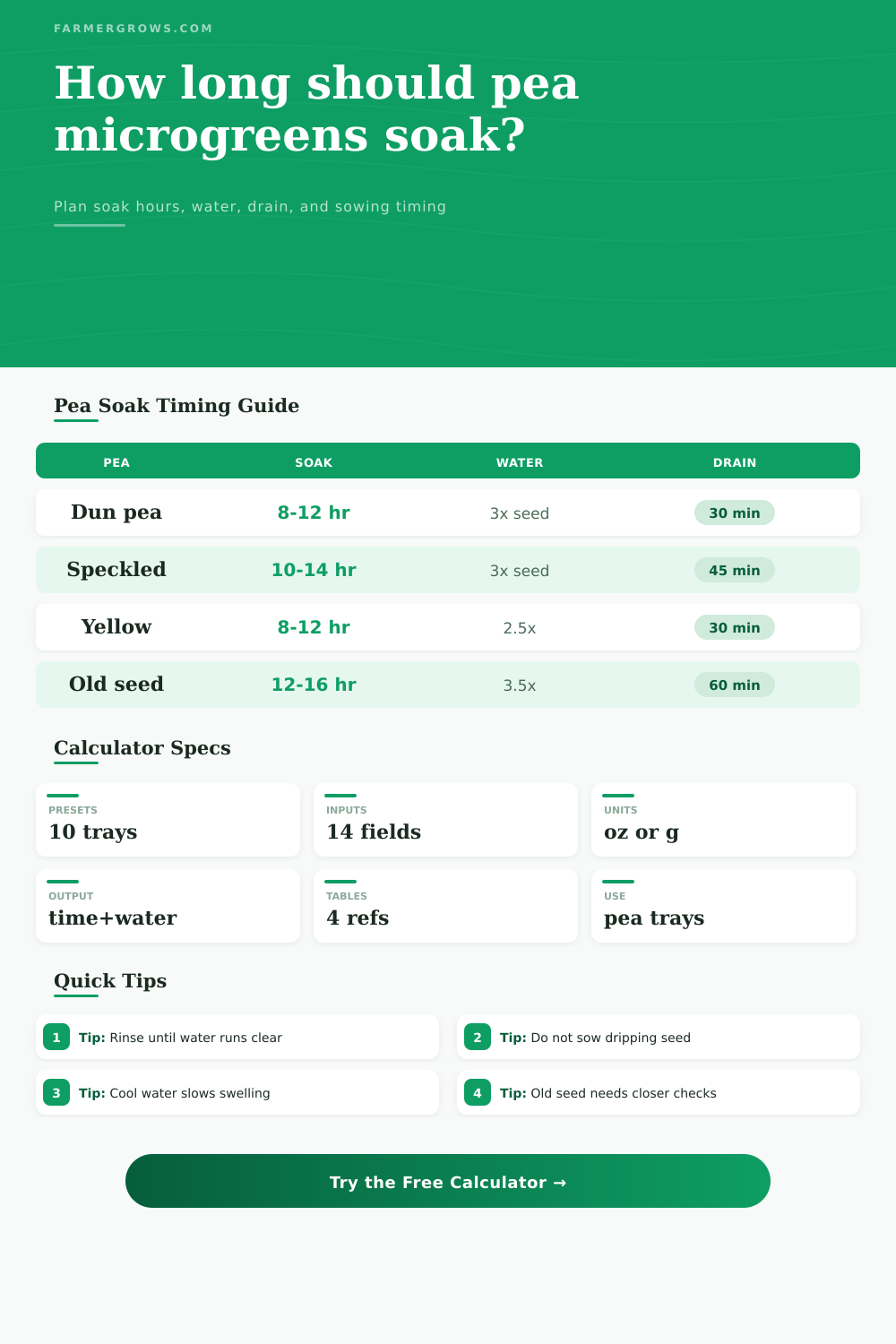
| Pea seed type | Typical soak | Best water ratio | Ready-to-sow cue |
|---|---|---|---|
| Dun peas | 8 to 12 hours | 3 parts water per 1 part seed volume | Swollen, firm peas with few split coats. |
| Speckled peas | 10 to 14 hours | 3 parts water per 1 part seed volume | Fully plumped seeds, no sour smell. |
| Yellow field peas | 8 to 12 hours | 2.5 to 3 parts water per 1 part seed volume | Even swelling with light coat wrinkling gone. |
| Tendril pea shoots | 10 to 14 hours | 3 to 3.5 parts water per 1 part seed volume | Large peas hydrated through the center. |
| Older pea seed | 12 to 16 hours | 3.5 parts water per 1 part seed volume | Plump but not fermented; sow only clean-smelling seed. |
| Dry seed for 10 x 20 tray | Approx seed volume | Water for 3x ratio | Container note |
|---|---|---|---|
| 6 oz / 170 g | 1.1 cups | 3.4 cups / 0.8 L | Use a bowl with room for swelling. |
| 8 oz / 227 g | 1.5 cups | 4.5 cups / 1.1 L | Fits most home pea shoot trays. |
| 10 oz / 284 g | 1.9 cups | 5.7 cups / 1.3 L | Dense market tray, watch drainage. |
| 12 oz / 340 g | 2.3 cups | 6.8 cups / 1.6 L | Use a deep tub or split the batch. |
| Soak condition | Effect on time | Watch point | Planning action |
|---|---|---|---|
| 60 to 72°F room | Normal soak window | Clean water and steady swelling | Use the calculated target time. |
| Below 58°F | Add 1 to 3 hours | Slow hydration through the center | Check firmness before sowing. |
| 73 to 78°F | Shorten slightly | Water can cloud faster | Change water once and avoid over-soaking. |
| Above 80°F | Higher souring risk | Foam, odor, split coats | Use cooler water or shorter checks. |
| Tray style | Dry seed range | Soak aim | Density caution |
|---|---|---|---|
| Home 10 x 20 tray | 6 to 8 oz / 170 to 227 g | Even plump seed | Easier airflow and fewer wet pockets. |
| Market 10 x 20 tray | 8 to 12 oz / 227 to 340 g | Full hydration, good drain | Dense trays need careful drain time. |
| Half tray | 3 to 5 oz / 85 to 142 g | Same soak, smaller container | Spread seed in a single crowded layer. |
| Bulk rack prep | Scale by tray count | Split into manageable tubs | Large masses warm up and drain slower. |
Use the calculator as a check window, not a blind timer. Pea seed size, age, and room temperature change the exact finish, so confirm the seeds are plump, clean-smelling, and not mushy before sowing.
Drain before the tray, not after problems show up. Dripping pea seed can leave wet pockets under the blackout weight, while a short surface drain gives roots oxygen and keeps the tray more even.
Growing peas as microgreens depend on accurate timing (where intuition fails). It begins innocently enough: dry seeds which look harmless enough but require careful attention when it comes time to soak them. Soak them too-long, and they’ll start fermenting. Not-soaked-enough, and they will be rock-hard and won’t want to cooperate. Success or failure can hinge on just inches, and therefore it pay to think of soaking as a targeted soak, not a loose approximation of it.
The calculator takes the seed weight and ambient room temp, then turns those into solid goal. Why are the numbers different? That’s what helps you rescue the crop. A pea is a big seed with a tough hull. Water doesn’t soak into the seed immediately. It takes long enough to get through the hull and hydrate embryo, but not so long that the seed coat becomes soggy and prone to rot.
How to Soak Pea Seeds Correctly
That timing vary greatly by seed age. An eight-hour soak may be just right if you got fresh peas from a responsible seed company; two-year-old seed kept warm may require 16 hours to plump up. By selecting the seed age, the tool set the range accordingly. There’s no point wasting seed or rushing them, which are both all too easy to do. It is a little variable but it leads to higher success rates.
Temperature matter too. As with all things plant-related, it’s important. Osmosis happens more slowly in cold water; therefore, the seeds will need longer to draw up moisture. In other words, if your kitchen is cool in the wintertime, expect to give them an extra few hours then you would on a warm summer’s eve. To account for that, the calculator considers both the water temperature and the room temperature, adjusting the time frame appropriately. No need to freak out if the soak feels sluggish on a chilly day.
Avoid over-soaking in warmth which can happen easily. While warm water speeds germination, it also speeds up bacterial action. Soak those peas in hot water too long, and you set yourself up for a moldy situation before you’ve even begun growing.
The other problem with guesswork is how much water to use. Use enough to thoroughly wet the seeds, so each one can drink up evenly and float around freely, but not too much to drown them or leave any dry spots where seed won’t plump up. There’s less danger of drowning from using a lot of water; it’s just a bit more trouble. A bowl would work fine if there weren’t many seeds in it (the chart says what ratio to use depending on how much seed weight).
This also affects frequency of rinsing: When the water turns foamy and cloudy, swap it out. Those are signs the seeds is letting go of their sugars and starches, and those get gobbled by bacteria. The process also includes draining, which is equally important. (You don’t want dripping-wet seeds on the tray.) Any excess moisture form an airless pocket below the blackout cloth, and that’s where you get mold and slimy roots.
The device calculates drain time according to seed mass, so you’ll know realistically how long to let things go before moving to sowing. Often I’m in such a hurry to sow that I skip this step, but it could of mean the difference between rotten roots later and saving the whole lot by letting them drip-dry for a little longer.
All those elements are then combined into one: The readiness score is your ultimate reassurance… Or red flag if something went wrong. Maybe you soaked too long, or it’s still too warm out; a lower number may indicate you need to rinse again…or slow down.
Soaking pea seeds is all about the time-and-water dance, about giving them just enough (and no more) of each. But soaking is where the guessing stops; with the calculator, there’s not much to do except wait for later stages of their lives. A repeatable system replace a variable one. You’ll get to know what good water smells like, how clear it should be, and how much a seed should swell at any given time.
Once you see the math behind the numbers, your seeds won’t need constant checking; you’ll check them for progress instead. That’s when gardening becomes a matter of faith: a matter of trust. From the very first drop, you respect the biology of the plants you’re growing. You watch them grow. You reap what you sow.