
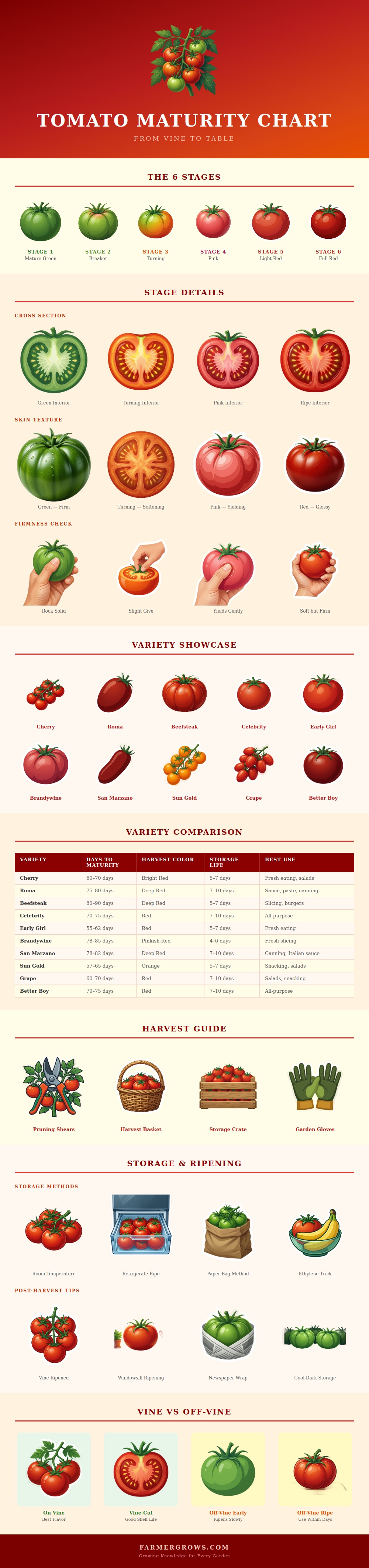
Harvesting tomatoes always involve a certain kind of nervousness. Is this one ripe? Or does it look fine on the outside but not yet inside? Will it have developed its full flavor potential inside, even if it looks perfect on the outside? Visual clues aren’t everything. What about green shoulder, which hasn’t ripened yet, although the rest of fruit is now fully red? Knowing different stages of maturity helps sort all this out. And it makes picking process more exact then a guessing game.
Above is a chart with six levels of development, from rock-solid mature green to glossy full red. Where your tomato fall along that path determines what happens next. But don’t be fooled by appearances: Even an apparently rock-hard green tomato is just at a stage of development and isn’t necessarily ripe yet. Look at it, so firm it seems more suited to a store shelf than a bowl. And guess what? That’s okay.
How to Pick and Store Tomatoes
Pick your tomatoes at that point when they’re showing a bit of color around their stems (known as the “breaker” stage), and then bring them inside to finish developing their colors, with little loss in flavor. At this point the flesh start to go soft. This is also main time to save your crop from early frost or insect infestation. Don’t assume you have to wait until they’re starting to lighten up with pink or even reddish tones if things look dicey outside. As long as they’ve had some color change by the time of first color break, it’ll keep going off the vine, finishing out its development of acids and sugars.
Planning your crop by variety also has huge bearing on timing: some tomatoes is very fast; others take weeks longer to reach readiness. Early Girl sorts will be ready in more than a month, but thick-fleshed Beefsteaks commonly require three months or longer to fill out. The chart makes the range clear: A cherry tomato, which ripens quickly, may already have set fruit ready to pick while your late-season Brandywines remain green (and firm) on the vine. That’s why it’s important when planning garden: For a steady diet of fresh-eating fruit, you plant both early varieties alongside longer maturing ones. That way, you’ll get a staggered harvest, not one great gush of something that all rots simultaneously.
Another potential pitfall is how you store things. For example, most people’s first instinct when a tomato gets ripe is to put it in the fridge (but that will kill its flavor). The cold will cause the cells to break down, washing away some of those active substances that give the tomato its tomato-y taste. Letting them be on your countertop maintains both its aroma and texture. To hurry along ripening if you’re overwhelmed with slightly-ripe ones, try putting them in a brown paper bag (because the bag traps ethylene gas). That’s all you need to do, and it works. When storing for a long time, you can also let your unripe green tomatoes sit in a cool dark spot, letting them gradualy ripen over weeks.
After all, nothing tastes as good as homegrown fruit picked ripe right off the vine. When we cut the stem, those last sugars and nutrients don’t get passed along from the plant to the fruit the same way. But of course, things don’t always go as planned: A downpour, or attacking squirrels or birds, can destroy your beautiful bounty before it has time to fully ripen to the desired red color. This is why picking tomatoes early, at the breaker stage, is such an important lesson. You’ll be missing out on a little extra sweetness but you are also keeping whole fruit rather than nothing at all. A slight loss in flavor between a vine-ripened tomato and one finished indoors should of been worth it just to have some tomatoes instead of none at all.
Knowing the stages means knowing when to pick. No guessing anymore, but control. For canning sauce or growing tomatoes for summer salads, what you want is the same thing: peaking fruit. And that’s when the plant has reached peak flavor. As the green fades to red, it isn’t only a matter of colors. It’s a map toward how flavor develops. And if you pay attention and pick them at the right time, you’ll have tomatoes that taste like a tomato. Every one of them.
Which is why garden rewards not just patience, but precision, too. That knowledge makes the difference between a casual gardener and someone who realy knows their crop.