
The perfectly shaped tomato was red as a ripe one should of be and had just the right texture, but it was flavorless.
From your garden! What happened? Was it the weather? Maybe; maybe not. Is it the variety? Perhaps. But most of all, did it have enough juicy sweetness in its juice?
How to Grow Sweeter Tomatoes
That’s what’s being measured by metric called Brix, dissolved sugar in the liquid. This number will change everything about what you plant, where you grow things, and how you grow them. It also explain why some tomatoes is shining stars, while others fall flat.
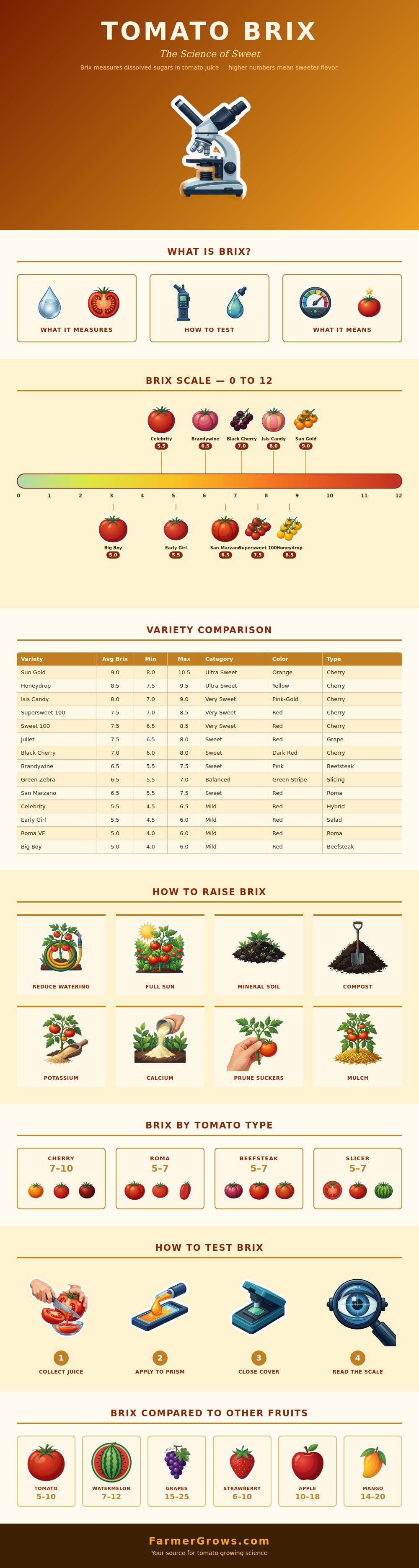
Check out chart below to see where your tomato selections stack up in terms of sugar content. I’m just talking about sugar here; it’s not everything! The chart shows that not all tomatoes is created equal when it comes to flavor.
Topping the list with a reading around nine on the chart are cherry types such as Sun Gold and Honeydrop, and yes, they’re super-sweet when you pop them in your mouth, compared to bigger slicing varieties. That’s biology, not magic. Cherry tomatoes can packs more flavor into each bite because there isn’t as much space to fill. Sweetness doesn’t come for free, but why work harder different than necessary? Plant one of these high-sugar varieties.
The other side of that story is that beefsteak tomatoes tends to hover around the five mark (Big Boy; Early Girl). Why? Because they’re bred for substance over intensity. They’re mild, watery varieties. Nothing wrong with that; just a tradeoff. You want something textural and sizable for a hearty burger so you’re going to sacrifice some sugar. And guess what? You’ll be disappointed if you try to make beefsteak taste like a cherry tomato.
The graphic’s visual comparison help explain. It helps you decide if you are growing this tomato for your salad or your sauce.
To get that number higher, however, you have to think in an unexpected way. Most people overwater their gardens because they assume larger fruit mean more water, but really, too much water dilute sugars. How do you increase Brix? By stressing the plant a little. Starting when the fruit has set, cut back on the watering, and let things go slightly dry between waterings. That forces the plant to concentrate its resources in the tomatoes (not expand them with tasteless water).
Full sun is a huge factor. Photosynthesis is powered off sun; the more sunlight there is, the more sugar the plant produce as it turns light into tomatoes. No matter how much you fertilize, if your plants aren’t getting full sun you won’t close the flavor gap.
That all starts with healthy soil. Ideally you are working with soil that has a lot of minerals in it. It should have plenty of good compost and certain other nutrients like calcium and potassium. These contribute to the plant’s internal chemistry, helping it turn energy into flavor.
Another thing many people don’t do is suckering. When you remove excess shoots from the plant, it redirects its energy to fewer fruits, making each one sweeter. Quality, not quantity.
The infographics suggests those techniques, but execution is everything. That’s when things get interesting, because you need to know how to tune yourself to your plants: How does the soil feel? What do they look like? What changes you make on a daily basis?
The good news: It’s not as hard as you may think to test the Brix level of your own fruit. Purchase a simple refractometer, gather a drop of juice, place it on the device, and seconds later you can read right off the scale. This gives you a starting point, which means you’ll be able to adapt what happened this year to next season’s plan. If your Big Boys came up short, perhaps you should switch varieties (or maybe rethink how you water?).
Putting your tomato Brix into context by comparing it to other fruits is also helpful. Tomatoes will never match apples and mangoes which have far more naturaly occurring sugars. But then there’s a huge range among tomatoes themselves. Five points is much different than nine.
Start with the right variety for what you’re hoping to achieve in terms of flavor. Manage your water wisely, and be sure to offer them lots of sun. What do you get? A tomato that tastes like a tomato is supposed to. It will be sweet, complex, and worth the wait. Remember, that’s why you planted it.