
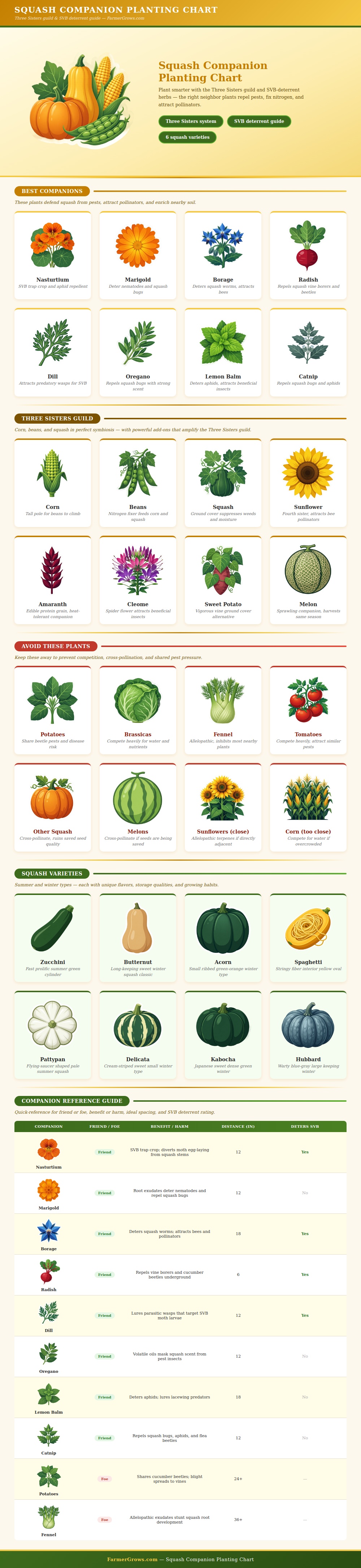
Squash is a defense-minded plant: When it comes to pest control in the vegetable garden, companion planting can make it a self-managing system. By planting particular plants near it (to attract good guys or repel bad guys) you don’t have to reach for chemical spray bottle. These are preventive tactics against things that commonly attacks squash, such as aphids and squash vine borers. But it’s not chance that the list of companions is so carefully chosen.
Take the nasturtiums, for instance. They’re a trap crop. The squash vine borer moth will target them instead of your squash vines by laying her eggs on nasturtium stems. That’s why the bugs stay off the squash. This is biological bodyguard duty and it helps if you would of hope to prevent an entire harvest from being ruined.
How to Grow Squash with Other Plants
Herbs also help with pest control. The pungent aroma of things such as catnip, lemon balm, and oregano will help mask odor of the squash. Plants’ scent is how pests locate their victims; without smelling the squash, they won’t get on it as much.
Another trick: marigolds emit anti-nematode compounds from their roots, stopping these plant-wilting soil parasites. Dill invites in predatory wasps who eats the vine borer larvae, another kind of cleanup crew.
Another good system is that of the Three Sisters guild. Beans, corn, and squash are mutually beneficial: The beans grow up the cornstalks; the beans fix nitrogen in the soil, feeding both the corn and the squash; and the squash spreads out low to the ground, suppressing weeds and keeping the soil moist. To further lure bees but not compete with the plants’ roots you might add some sunflowers. Some gardeners also adds amaranth or sweet potatoes to keep the ground covered longer.
But not all plants like squash company. Tomatoes really go at it for food and water, competing heavily with squash and also attracting many of the same insects. Fennel is a bad neighbor; it emits alleopathic compounds that stunt neighboring plants’ growth. And potatoes have the same pests as squash (cucumber beetles), and growing them in close quarters will only make pest pressure worse.
Be sure to grow tomatoes and other type of squash and melons separately if you’re saving seed. Cross-pollination between these relatives changes the genetic makeup of your seed stock.
The tactics do depend on spacing. Don’t plant indiscriminately, but at precise intervals from others. You can use close-in companions. For example, radishes mature early and will deter beetles underground so it’s nice to keep them near squash. Since potatoes and squash share many of the same pests, they’re better kept further apart. Good timing (and good spacing) help make the ecology work in favor off the crop.
It’s all about knowing your plants’ relationships. Knowing which ones are harmful and which ones is helpful makes for a self-regulating garden. The ecosystem takes care of pest control; you plant the good guys (the protectors) and honor their space. The vines grows thicker, the leaves stay green. All of that makes growing squash less stressful.