
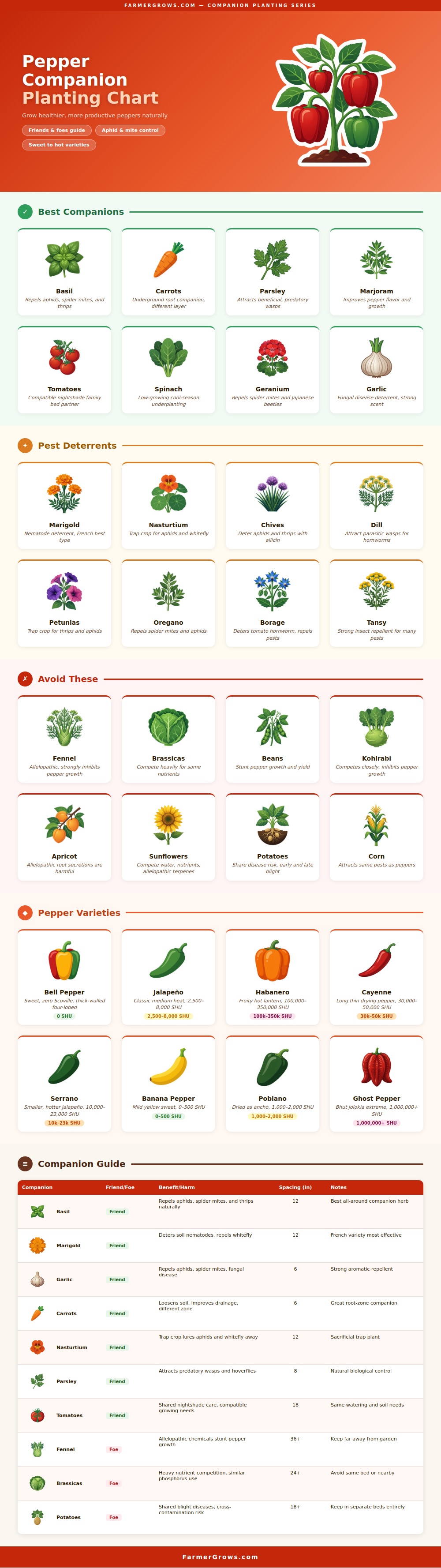
If you’re seeing aphids in the garden, or perhaps seeing curling leaves on your peppers in high summer, you may ask: Bad luck? No, it’s usually bad placement of the plants. Vegetables don’t live alone. They need water and sun, but they also doesn’t make good neighbors. Next to your peppers, other plant send signals with scent and root secretions. They affect flavor, and pest pressure. Here is a look at who is helping and who is not in the chart above.
Basil is an ally and not just decoration; plant basil in about a foot from your peppers to give them sensory perimeter. The pungency throws off both thrips and aphids (who use their sense of smell to locate their dinner), but it also obscures the scent of pepper leaves. It’s all good: You have a cleaner-growing pepper plant plus a great-flavored herb that makes everyone happier.
Best and Worst Neighbors for Peppers
Other things that play well in a row with peppers include carrots (which grow down deeper, loosening up the soil but not stealing any of the top-level nutrients). It make good use of space. Also good: flowers such as nasturtiums and marigolds. French marigolds emit substances to stop root-knot nematodes, which can does bad things to your root system. Nasturtiums attract whiteflies, diverting them from the peppers. You sacrifice the nasturtium, letting the bugs have at it to save the stars of the show, and biology helps you along.
There are some toxic neighbors for peppers. Fennel is one notorious culprit, emitting harmful chemicals that stops other plants from growing. It’s not competition for resources; this is chemical warfare. To get a crop, don’t plant fennel in the same bed. Similarly, cabbage family plants (such as broccoli or kale) is troublesome; they’re heavy feeders who suck up nitrogen and phosphorous from the soil, leaving nothing but starvation for your peppers. Don’t place these in the same bed.
Similarities in families can be a challenge, too. Potatoes and peppers both belong to the nightshade family, which means they shares a vulnerability to blight. To avoid giving diseases a path of entry, don’t plant related species together. One goes down? Probably it’s time for the other to go. You’ll want to separate your beds for each of these plants.
The infographic shows these challenges and what we can learn from them: Just because two things look alike doesn’t make them a good match. It’s about choosing the right variety of pepper; the principles for companionships apply regardless. Whether hot or not hot, they don’t change the soil chemistry. They aren’t attracted to pests one way or another. It’s all about the supporting cast, the system around the pepper, and less so about what’s in the pepper itself.
Create a layered garden: Root vegetables, flowers, and herbs that work together. Eliminate the heavy plants and the neighbors that block growth with chemicals. Get the neighborhood set up properly and the peppers will shine. Growing wholesome produce is based off diplomacy, not force.
You should of planted them better to avoid this moddern problem. Wait actually, if you’re seeing aphids in garden, or perhaps seeing curling leaves on your peppers in high summer, you may ask: Bad luck? No, it’s usually bad placement of the plants. Vegetables don’t live alone. They need water and sun, but they also doesn’t make good neighbors. Next to your peppers, other plant send signals with scent and root secretions. They affect flavor (and pest pressure). Here is a look at who is helping and who is not in the chart above.
Basil is an ally and not just decoration; plant basil in about a foot from your peppers to give them sensory perimeter. The pungency throws off both thrips and aphids (who use their sense of smell to locate their dinner), but it also obscures the scent of pepper leaves. It’s all good: You have a cleaner-growing pepper plant plus a great-flavored herb that makes everyone happier.
Other things that play well in a row with peppers include carrots (which grow down deeper, loosening up the soil but not stealing any of the top-level nutrients). It make good use of space. Also good: flowers such as nasturtiums and marigolds. French marigolds emit substances to stop root-knot nematodes, which can does bad things to your root system. Nasturtiums attract whiteflies, diverting them from the peppers. You sacrifice the nasturtium, letting the bugs have at it to save the stars of the show, and biology helps you along.
There are some toxic neighbors for peppers. Fennel is one notorious culprit, emitting harmful chemicals that stops other plants from growing. It’s not competition for resources; this is chemical warfare. To get a crop, don’t plant fennel in the same bed. Similarly, cabbage family plants (such as broccoli or kale) is troublesome; they’re heavy feeders who suck up nitrogen and phosphorous from the soil, leaving nothing but starvation for your peppers. Don’t place these in the same bed.
Similarities in families can be a challenge, too. Potatoes and peppers both belong to the nightshade family, which means they shares a vulnerability to blight. To avoid giving diseases a path of entry, don’t plant related species together. One goes down? Probably it’s time for the other to go. You’ll want to separate your beds for each of these plants.
The infographic shows these challenges and what we can learn from them: Just because two things look alike doesn’t make them a good match. It’s about choosing the right variety of pepper; the principles for companionships apply regardless. Whether hot or not hot, they don’t change the soil chemistry. They aren’t attracted to pests one way or another. It’s all about the supporting cast, the system around the pepper. And less so about what’s in the pepper itself.
Create a layered garden: Root vegetables, flowers, and herbs that work together. Eliminate the heavy plants and the neighbors that block growth with chemicals. Get the neighborhood set up properly and the peppers will shine. Growing wholesome produce is based off diplomacy, not force.