
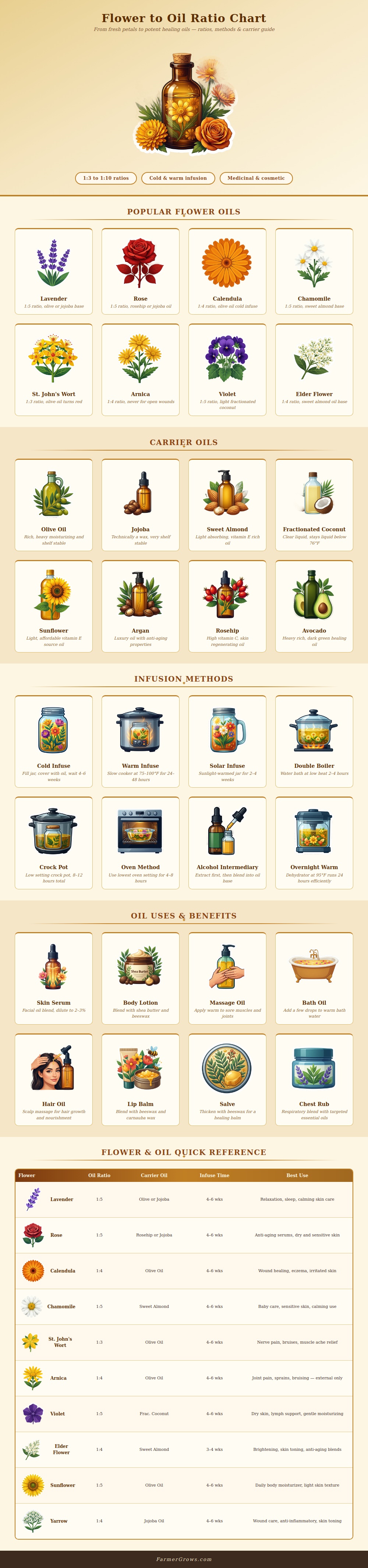
Herbal oil infusions is similar to baking bread: most of us just stare at recipe and hope for the best. Put some dried flower in a jar. Pour over some oil from your pantry. Wait. If you gets the proportions wrong, magic rarely occurs. Instead, you’re left with either thick sludge that clogs your pores, or a watery mess. The difference between waste and usable product is getting ratio correct.
Each flower have its specific needs in terms of oil: For example, lavender and rose generally requires a one to five ratio (one part dried herb to five parts oil), according to the chart. Why? Because they’re delicate flowers. If packed too tightly, moisture will be trapped which can cause oil to go rancid.
How to Make Herbal Oil
St. John’s Wort, on the other hand, require less oil to make an equally strong impression; it is fibrous and potent, so it’s often used at a one to three ratio. As the oil infuses, it change color from yellowish-amber to a rich red. This provides a visual cue that extraction process are happening.
In addition to selecting your flower, selecting your carrier oil are equally important. The most durable carrier oil is olive oil. For strong herbs such as arnica or calendula, olive oil is best. It doesn’t break down from the heat of a warm infusion. This is great if you are taking extra step of using a double boiler or slow cooker. However, if you plan on creating a facial serum, you may wish to avoid olive oil.
Another favourite for sensitive skin is sweet almond oil. Rich in vitamin E, this oil is light yet nourishing. Elder flower and chamomile infusions would of been a safe bet here. Jojoba is technicaly a liquid wax. It absorbs without leaving any oily residue behind. It is expensive and heavy, but it mimic the body’s own sebum quite nicely.
How long it take depends on your chosen method. The patient’s way is cold infusion. Place herbs into a jar, pour oil over top, seal and leave in a dark space for four-six weeks. You do not need much equipment or energy. All you need is a jar and some self-control.
To hurry things along, use the warm infusion method (in the oven/slow cooker). This will take a matter of days/hours different than four to six weeks. The key? Don’t let it get too hot; high heat will destroys the qualities you are attempting to pull out of the plants. Usually haste make waste. A good result come from patience more often then speed.
Now you’ve got your infused oil, what do you do with it? Use it as-is. Massage oil for sore muscles (especially so if you included St. John’s Wort or arnica). Combine with beeswax for an all-natural salve for scrapes and cuts. Combine with shea butter for a body lotion. Have fun! It’s a forgiving process.
If the resulting oil doesn’t work out, you can adjust it. If it’s too strong, add some carrier oil. If it’s not strong enough, add more herbs and wait a little longer. It’s a low-stakes experiment. Get a little jar of olive oil and lavender going. Watch the color change. And recall that a good infusion takes time to come together.