
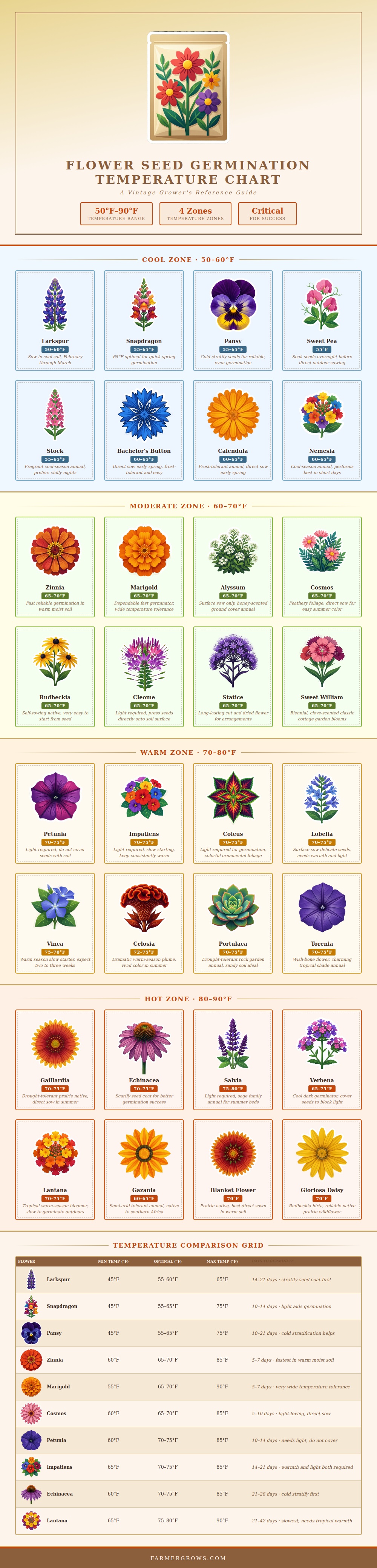
Many seed-germination failures aren’t caused by improper care or watering (they’re the result of wrong temperature). In fact, you can do everything else right and still have no seedling if the temperature isn’t right. Why? Because seeds is living switches; they need a certain message in form of heat to switch on. The necessary message are quite different than each kind of plant.
This is a cool-season seed. You can divide the garden growing sequence into four thermal zone. The idea: Treat each kind of seed accordingly. For instance, cool-season things (think pansies, snapdragons) must be chilled before they will wake up and grow. They have adapted to do so in cool weather, like earliest springtime. Putting them in a propagator that’s warm might mean they won’t try to sprout or they might just rot instead. Sweet peas is an example of such behavior. Even after soaking the seed, they will not unlock and grow unless they’re exposed to cool soil. That’s why so many beginning gardeners thinks heat is good heat for everything; it isn’t with cool-season types.
Why Temperature is Key for Seeds
For instance, marigolds and zinnias are moderate-season plant that will grow well and fast, and they can absorbs a lot of abuse (which is why I say they’re beginner-friendly). Their seeds wants a decent soil temperature, but don’t be too fussy: If it’s reasonably warm and wet, they’ll pop right up. In fact, being consistent matter more than being perfect here. There’s no need for fancy gear to sow the seed. A spot on the windowsill (even one without morning sun) where things gets good and warm by late afternoon will work. The seed just needs to be comfortabley enough to get going.
Many warm-season things (like impatiens, and also petunias) want light to germinate, and like it warmer too. Many people makes the mistake of burying these small seeds under soil. No! Put them right on top of the soil, and don’t cover them up. They can’t fight their way through the dirt. Just press them gently onto the surface; that’s all you do. It will seem crazy, but it has to be that way or they won’t survive. They’re waiting for some warmth to copy their expected tropical environment. If there isn’t enough heat, they won’t break dormancy. That’s simply how it works, a plant survival tactic, not a flaw in the seed itself.
Other hot-season things to sow: Things like salvia and lantanas does better if their seedlings grows in hot conditions; don’t try them early, or even too early into the season. They’re late-starters. When to start? When there’s something growing in the rest of the garden. And some will be a month or more before they show up. Have faith. Don’t drown the soil, and keep it warm but otherwise sit tight. It’s all happening underground.
Knowing what their preferred temperatures are will keep you from wasting seed trying to get them to go against their nature. That is time and money wasted, it makes your seed gardening more strategic than just a crapshoot. A petunia and pansy differ in they heat preferences; why wouldn’t you treat each accordingly? Temperature determines when things happen; soil supplies the where. Get that part right (the heat) and then things move forward. Don’t get that part right (wrong heat), and nothing happens. Plant with that knowledge. If you give the correct heat, those seeds is good to go.