
Why is the soil here empty in late April? Why aren’t those bulbs in yet? It’s not because we have bad luck (or bad soil). Usualy it’s just a question of timing.
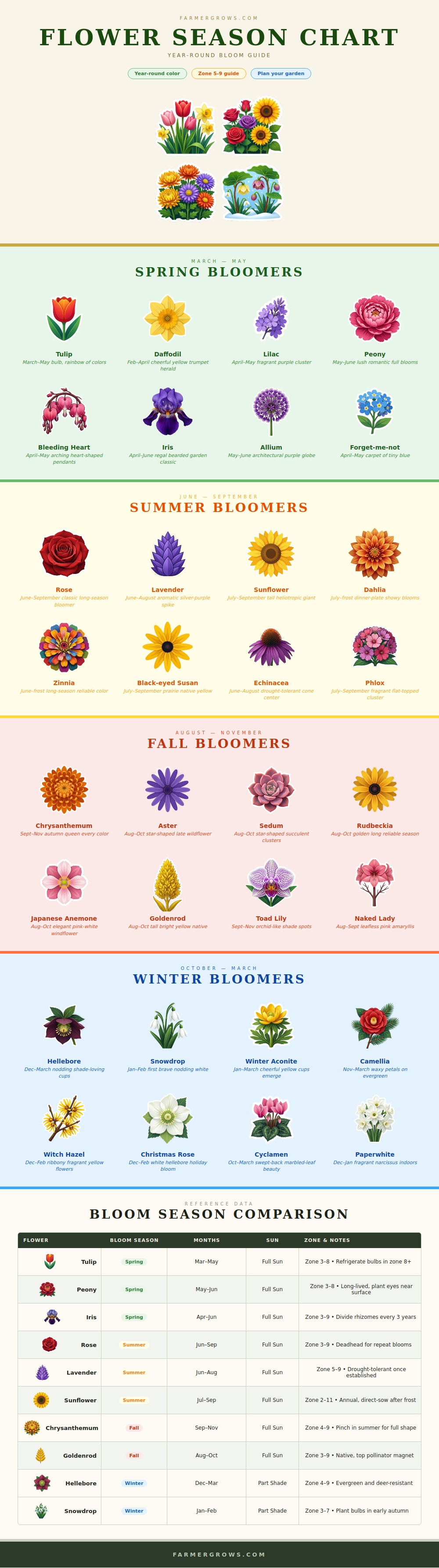
Knowing when things really want to grow, and knowing when they are going to wake up, can eliminate all sorts of gardeners’ stress, from forcing them to plant too early to giving up on a whole bed of bulbs because they’re just sleepy. Break the year down into chunks with this visual reference, and you realize it’s more about planned waiting than nonstop work.
How to Plant for Each Season
While there’s still snow on the ground, or at least chilly air, spring bloomers will be sending up color promises. Daffodils and tulips pokes their way into sight with red and yellow blooms. Add scents of hyacinth and lilac to the mix, which rely on winter chill to awaken. Unless they’re chilled first, these plants might not do well if your zone is warm. Check the chart for where each does best. Tulips are true to form and good in cool spots, but they requires attention in zones eight and nine.
It’s a small detail, but it explains why your neighbor’s tulips are magnificent while yours are leggy and sparse.
As temperatures heat up, garden changes to hardy perennials and annuals. Sunlovers like zinnias, sunflowers and roses thrives in summer and need regular feeding. They reward that effort with non-stop blossoms. The graphic above shows that roses bloom for a long season; however, roses needs deadheading or they stop flowering. Letting old blooms remain on the plant signals “no more” to the rose and it won’t make another flower. When you pinch off old blooms, the rose keep making blooms. So easy; blooms from June-September.
Echinacea and lavender adds texture and even stand up to dry conditions.
Most people assume the garden is done for the year when the air cools in autumn, but that’s a mistake. Asters and chrysanthemums gives structure and color where things get browned off elsewhere. Goldenrod and sedum also support pollinators late in the season. Bees are still out and about when the temperature is right, they require something to eat! Fall-planted color helps maintain our ecosystem locally, especially at a time when food is scarce. Rudbeckia always delivers, with a sunny head even after fading to seed.
People don’t think about winter gardening, but they notice if you do. When everything outside is quiet and gray, snowdrops, winter aconite and hellebores blooms. All of these plants thrives in shade and in cold, being tough cookies. According to the chart, hellebores are deer-resistant (rare) and evergreen (also rare). They offers visual interest in January, with green foliage and flowers. Paperwhites and cyclamens can be forced indoors for some winter spirit inside.
A garden planned around seasons’ changes becomes a rhythmic thing to work on. It becomes about working with the plants’ natural inclinations rather than fighting them and that saves you work. Every plant is in its right place to do what it does best, making landscape look well-planned. Fall bulbs go in; then it’s spring, and whoa. Summer roses are cut down and mums take over in fall. By wintertime, there are snowdrops to anticipate. And round we go again…only not exactly the same way.