
A coconut palm will take years, not months. It takes years. Its worth planting, because you’ll get the rewards of your labor for many decades to come. But you’re investing for long term. And knowing the time frame beforehand are valuable for planning and managing your expectations.
Coconut trees don’t happen overnight (most people think they should). They wants to be planted, watered and left alone. And then left alone again.
How Long Does It Take to Grow a Coconut Tree?
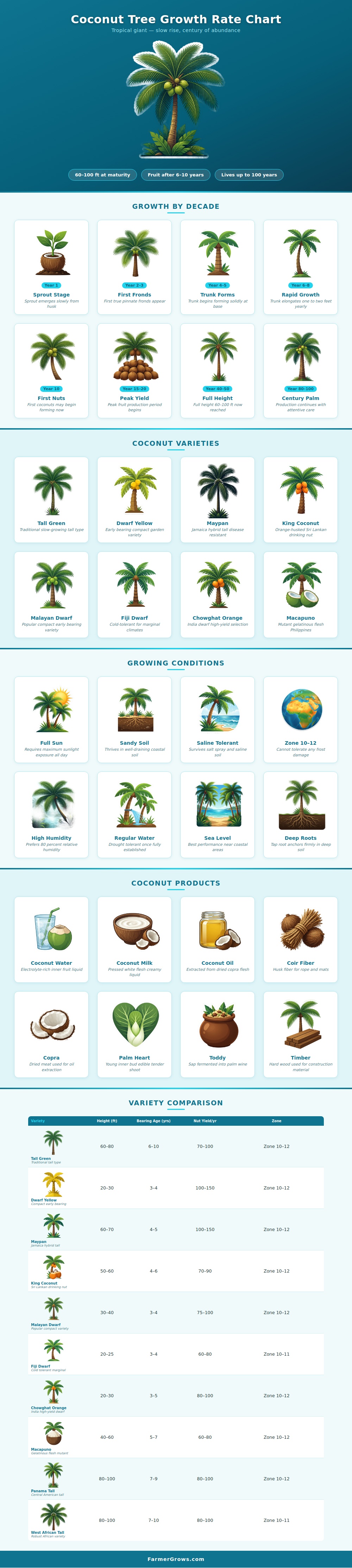
In its first couple of year, it is all about setting down the taproot. This takes time: you can see how the sprout resembles a fat, green carrot emerging from husk. At this point, not much vertical growth happen, as the taproot holds fast to ground. About year two or three, actualy fronds push up. Hooray! The plant has found its footing.
A good thing, since it’s going to live here for decades, supporting not just its own increasing height but also weight of fruit, and the force of winter winds. So: a sturdy trunk get built at base. In year six, the trunk becomes increasingly visible. It grow a foot or a couple of feet per year from then on. It’s fast growing, and tree assumes the classic palm shape.
But don’t expect it to start producing nuts just because it’s getting taller. Even at 10 years, it might still only produce sporadic nut. Survival comes first, followed by development of a strong trunk. That makes sense in nature. For home gardeners eager to see immediate results, it’s a downer.
After 15-20 years, the yield will be quite large. It’s prime fruiting season.
Some types of coconut palms (such as dwarves) begins producing fruits faster then others (tall). A dwarf type is therefore a realistic option if you don’t want to invest much time (or space), e.g., the dwarf coconut species Fiji or Malayan dwarf which fruit within three-four years. The typical green or Maypan kind grow taller, they get fruit only later (after many years), but last longer, even up to a hundred years. Instant gratification vs. Longevity, thats your selection dilemma.
How long will it take? It depends based off growing conditions. Full sun, good soil (meaning well draining), and high humidity is ideal for coconut palms. They do not like frost, nor do they like being frozen out in a young state. A young palm can dies if exposed to temperatures lower than freezing. Proper care means protecting the tree from extreme weather and giving it steady moisture while it establish its roots. Once it has grown up, the tree will become resistant to storms and even drought.
Growing a coconut tree is an exercise in patience. It’s not about waiting a few seasons; it’s about thinking in terms of decades. Whichever variety of coconut you grow, tall or dwarf. You are embarking on a decades-long endeavor. If you can wait, though, the tree will reward your patience with a hundred-year usefulness: timber, fiber, even water. If you wait until that first sprout appears, the tree should of served you well.