
Something is happening quietly in backyard orchards across the eastern United States: People are planting pawpaws, an exotic-sounding but native American fruit that tastes like a cross between banana and mango and custard. And the pawpaw is remarkably patient. Want instant gratification? Do you want to plant a pawpaw and see what happens right away? The pawpaw doesn’t get it.
The tree isn’t pushy; it doesn’t beg for your time. Instead, the pawpaw goes about its slow business, building itself up one careful step at a time. You have to be willing to take a longer view to succeed with the pawpaw. This view is longer then what is common in many moddern gardens. Know that and you’ll avoid yanking out a pathetic little stump because it wasn’t living up to expectations fast enough.
How to Grow a Pawpaw Tree
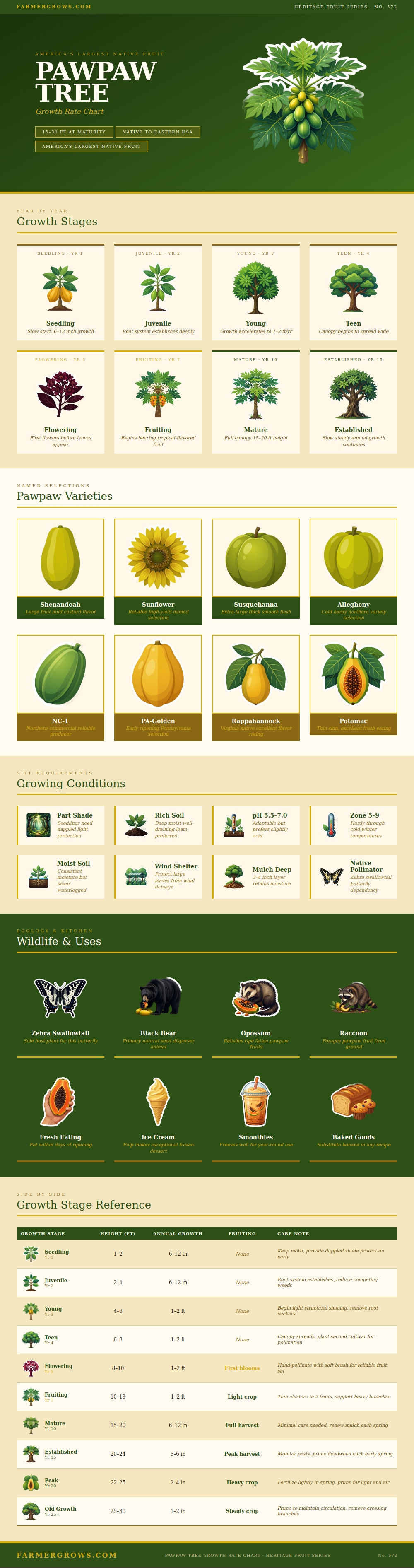
But it doesn’t grow linearly; this is where everyone screws up with the pawpaw. You’re looking at your tree most of the first year, building root systems. The growth is modest during that time, but that apparent stillness is actualy intense preparation. Vertical growth isn’t necessarily the way to measure success. Root development are most important. The tree must begin anchoring itself into the ground, storing energy for future growth. And while it does grow, maybe just a couple of inches, it won’t be much in terms of height. So yes, maybe you think nothing is happening. But there is, and that inactivity is actualy very productive work.
Years two and three, you’ll notice some more obvious results from your young tree. It will expand its canopy, growing wider and taller. Its leaves will get bigger. The shape of the tree will start to form, and you’ll have an idea what it might look like as a finished plant.
The acceleration starts becoming evident as the tree moves into its teenage years, typically the fourth year. The foliage gets thicker; the branches stretch longer. Here’s where many gardener err: They give it a shot of extra fertilizer because they believe that pushing things harder is needed. It isn’t. Let the tree do its thing. Don’t go overboard on nitrogen or else the pawpaw may grows leggy and weak, and be more prone to pest problems and wind damage. You want sturdy but slow growth instead of a burst of leafy flashiness.
In the fifth year, you may have your initial flowers. The blooms look odd and are brownish-purple. Blooming before leaves appear in springtime (another botanical oddity) is timed to appeal to certain pollinators when there’s less competition. And here’s how tricky it is: Pawpaws are also self sterile, meaning they require at least one other pawpaw tree growing close by to set fruit. But even with a neighbor, they aren’t always reliable for setting fruit naturaly. They really want you to step in and hand-pollinate them (you do it with a Q-tip or small paintbrush).
A crop. Yay! This exercise in patience is the trickiest part of the pollination process, and, yes, there’s more waiting involved. The point being: If you don’t help along by hand-pollinating the blooms, your beautiful tree won’t bear any fruit. People think it’s barren. It isn’t. Just lonely (or not well-served). Typically after seven years, as long as you have gotten past the pollination issue, your fruiting will start. The first crop will be small. That’s understandable; it takes time for the tree to grow up. About ten years old is when the tree starts getting its act together and really producing well. It grows up to between fifteen and twenty feet tall. The tree is heavily laden with fruit bunches that are so heavy sometimes the branches can’t hold themselves up and need help. The pawpaw is a large fruit on a native tree and needs the branches to stay upright.
The pawpaw has other ecological significance as well, above and beyond horticultural mechanics. It’s the sole host plant for the zebra swallowtail butterfly. That beautiful creature couldn’t exist without the pawpaws’ leaves; their larvae (the caterpillar stage) depend entirely on them. So when you plant a pawpaw, you’re doing more than simply gaining a crop of delicious fruit. You’re helping to support one particular strand in your local web of wildlife.
The pawpaw fruits are likewise loved by bears, raccoons, and opossums, and they will beat you to them if possible. Which means: Guard Your Harvest! And there’s always an extra element of play involved with this part of the growing story.
And then there’s the soil. Pawpaws like rich, moist, well-draining loam; slightly acidic soil is best. Good drainage is essential, no wet feet for this guy. But consistent moisture is required. Mulch will help hold it in place; I think a thick layer is even better for the pawpaws’ roots to stay cool on hot summer days. Once established, the pawpaw is a low-maintenance tree, but particular about where it calls home.
Growing a pawpaw, then, isn’t so much forcing nature as it is working alongside it. Offer up the soil, the shelter, and even the pollination. The tree will give you a taste of summer, all wrapped up inside a custardy pulp. A slow friend, yes, but a rewarding one. When the fruit comes ripe, be sure to inspect the branches for extra-heavy loads. And keep your eyes peeled for the zebra swallowtail up in the canopy while you’re at it. That is the real reward, anyway.