
Planting a papaya seed makes you wonder what’s going on for a couple of weeks when nothing emerges. And then, boom! High up goes the green stalk. Fast! If this is your first experience growing a tropical fruit tree, that fast growth will strike you as odd.
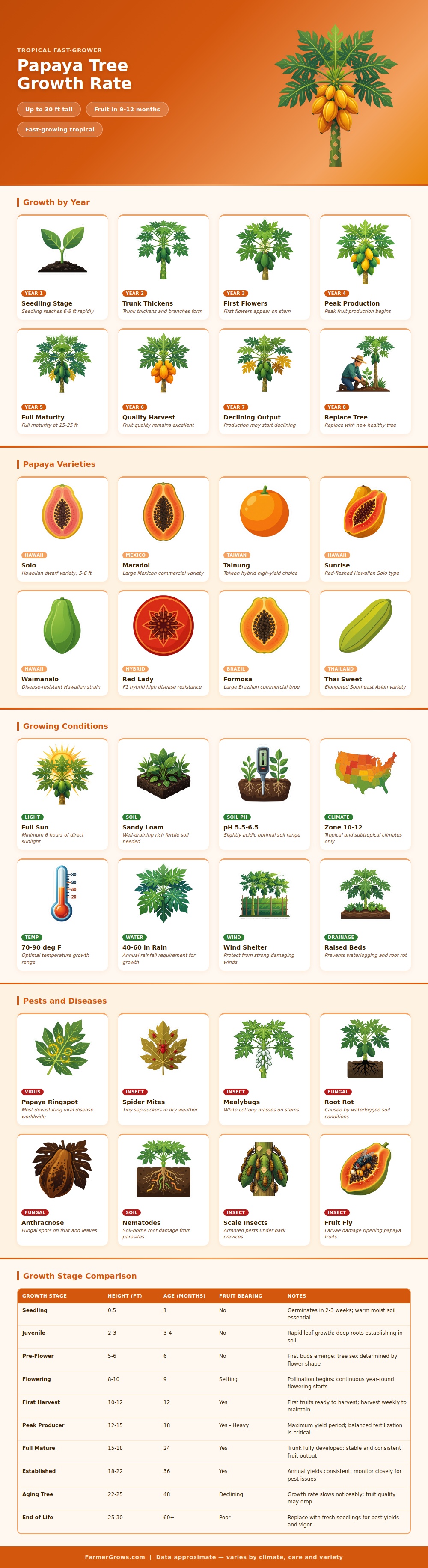
The growth chart below shows how fast and when papayas grows in distinct steps. When does big growth spurt occur? When do things gets really hard?
How Papaya Trees Grow Year by Year
Growing the tree are easy. Maintaining it as it grows can be tougher. A young tree grow quickly in its first year. Based off the graphic, it will grow as much as six or eight feet in its first year.
Why? The plant want to stretch up to grab some sunlight, it must get at least six hours of direct sun if it hopes to fruit. No sun means a leggy, weaker tree. It’s also important that the soil drain well. Sandy loam is ideal. Papayas don’t like being grown in heavy clay; waterlogged roots lead to root rot and a quick death for the tree. For most gardeners, raised beds are a winning way; they improves the drainage.
In year two, the structure take shape but growth slows down. Branches develops, and the trunk thickens. This is when variety selection realy comes into play. On the chart are different types… Large ones like the Mexican Maradol or compact ones like the Hawaiian Solo. What’s in store for you depends on what you chooses.
For example, if you select a dwarf kind that will fit in a large pot, yes, but you’ll get fewer fruits then from a tree standing in the ground (standard size). High yield vs. Is it about convenience? You must choose between convenience and high yield. One or the other. No easy way to have it all.
Typically, nine to twelve months after planting, the trees starts producing fruit. At that point you’ll see buds, and once buds emerge, you’ll also be able to see the flower shape. That tells you the sex of the tree, something most newbies don’t realize. If you planted the wrong one, no fruit.
Year three is the time to reap what you sow. If you’re a papaya farmer, that’s when it all begins. That’s the most bountiful year. The tree is strong enough to sustain itself now because its roots has spread wide. And the fruit? Delicious. It is too delicious.
So who comes calling? Pests, of course. Top of the list, the fruit fly. Also on the threat list: Papaya ringspot virus. The pests don’t give a hoot how hard you’ve worked. All they want is ripe fruit.
Your first line of defense is to check daily. Spraying doesn’t work with a virus. Prevention is your only weapon. To minimize insects, keep the surrounding space clean. There is no place for them to hide. This simple step have a huge impact on the harvest.
By about year seven: The tree begins to taper off. It loses vigor and maybe produces less good fruit as well. It is not because you did anything wrong. It is just natural progression of a papaya’s lifespan. According to the chart, it’s time for a replacement at this point.
Though I have to say: It seems like such a waste to pull out a mature tree, but an old papaya becomes a liability magnet. It doesn’t yield so well, and it has fewer defenses against illness. Time to start anew, back to the beginning, with some young seedling that promise sweetness again.
You should of provide sun and drainage, and be patient. Good things will happen, I promise.