
PLANT A ginkgo tree today and it might still be standing in a couple of generations. It’s sometimes known as a living relic; through two hundred million years, its leaves has not changed much at all. It even outlasted five mass extinctions (including when the dinosaurs was gone). Adding a ginkgo to your landscape connect you to a very long history.
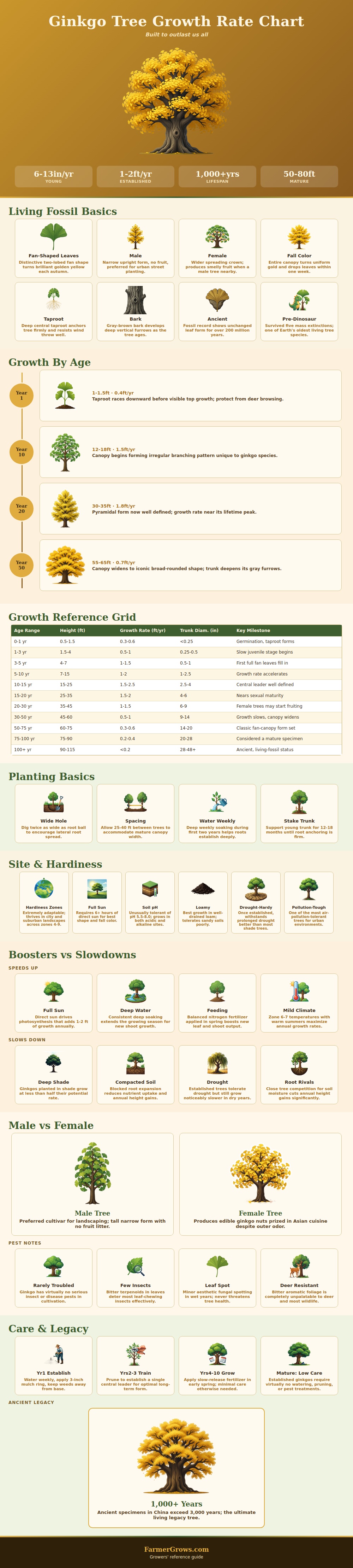
How fast does this ancient creature grow these days? This chart show how it fares with today’s growth rates. There’s a predictable timeline to the way it develops, so you know what to expect from its pace.
Why the Ginkgo Tree Is Great for Your Garden
Because young ginkgo begin life by focusing their energy underground (on developing roots) instead of up, first couple of years show little vertical progress except perhaps a foot or two. That’s maddening to a gardener conditioned to expect immediate results from saplings, so be patient through that early period. As long as the trunk remains protected from deer nibbling it will reward you with stability in time.
The trunk thicken, too, getting into stride between years five and 10, changing from juvenile phase to something more assertive. The canopy assume its signature form at this point: developing an irregular, unique branching pattern. Though its character gets better with age, it will only slow down in terms of how fast it grow as a mature tree. In fact it usually has reached full-speed in growing nearly two feet in a year by its twentieth birthday. Its structure is realy beginning to show itself now; the pyramid shape is nicely formed.
And speaking of fruit: Ginkgos are separate-sex plant (every plant is either male or female). For those who want to avoid the smelly fruit problem, stick with males if you’re putting them into an urban landscape. Your pleasure will be increased way into the future if you get this one aspect correct when choosing.
Another thing that makes the ginkgo different is how well it survive in various environments compared to other ornamental trees. The ginkgo are able to survive on poor soil and in urban environments beset by air pollution that kills off other plants. Though ginkgos do not like compacted soils, they’ll take some shade (though deep shade will stunt their growth). Once established, the ginkgo is drought-resistant. Deep shade and compacted soil actualy stunt growth far more than pests or disease ever could.
Insects stay away because of bitter substances in the leaves… You won’t be using any sprays on those leaves. It’s no wonder then that ginkgos makes a great tree for difficult areas where other trees simply can’t hack it.
Unlike many trees, proper planting is much more important than regular care later. A large hole (wide, not deep) promotes lateral root development, essential for resisting winds. Water heavily through the first couple of years to get those roots going. Once they have established then the ginkgo is self-sufficient.
Early pruning involve shaping the main stem in the early years to form a good trunk structure. Otherwise, it’s low-maintenance from there: A glorious golden color in fall and the leaves drop all at once in one week.
It’s faith in the future that drives me to plant a ginkgo. Over decades, it reaches maybe fifty to eighty feet tall, but not quickly. The tree take its time and doesn’t need much care along the way. As it gets older, it just keeps on keeping on, growing wider and more grand with each passing year.
The chart above is a reminder: A long-lived tree is one that grows slowly. This is what you will leave behind; you’re growing a tree that will far outlast than you. Through all seasons and changes, the ginkgo holds steady.