Tulip Bulb Shelf Life Calculator
Estimate how long stored tulip bulbs remain worth planting from class, storage temperature, humidity, packaging airflow, defects, sprouting, ethylene exposure, and forcing chill needs.
Choose a real bulb-storage situation, then adjust the dates, defect level, temperature, and planting goal to match the bulbs in front of you.
Tulip Bulb Shelf Life Estimate
Enter storage details to estimate remaining dry shelf life and planting risk.
Good airflow and moderate temperatures make this the standard short-term setup before fall planting.
Works when the bag is loose, dry, and checked often; avoid warm laundry rooms.
Useful for forcing or short holding, but keep bulbs dry unless already potted.
Traps moisture around the tunics and can turn one bad bulb into a batch problem.
These tables summarize practical planning ranges for home gardeners. They estimate quality risk; discard bulbs that are soft, moldy, foul-smelling, or badly damaged.
| Storage temperature | Shelf-life effect | Best use | Watch for |
|---|---|---|---|
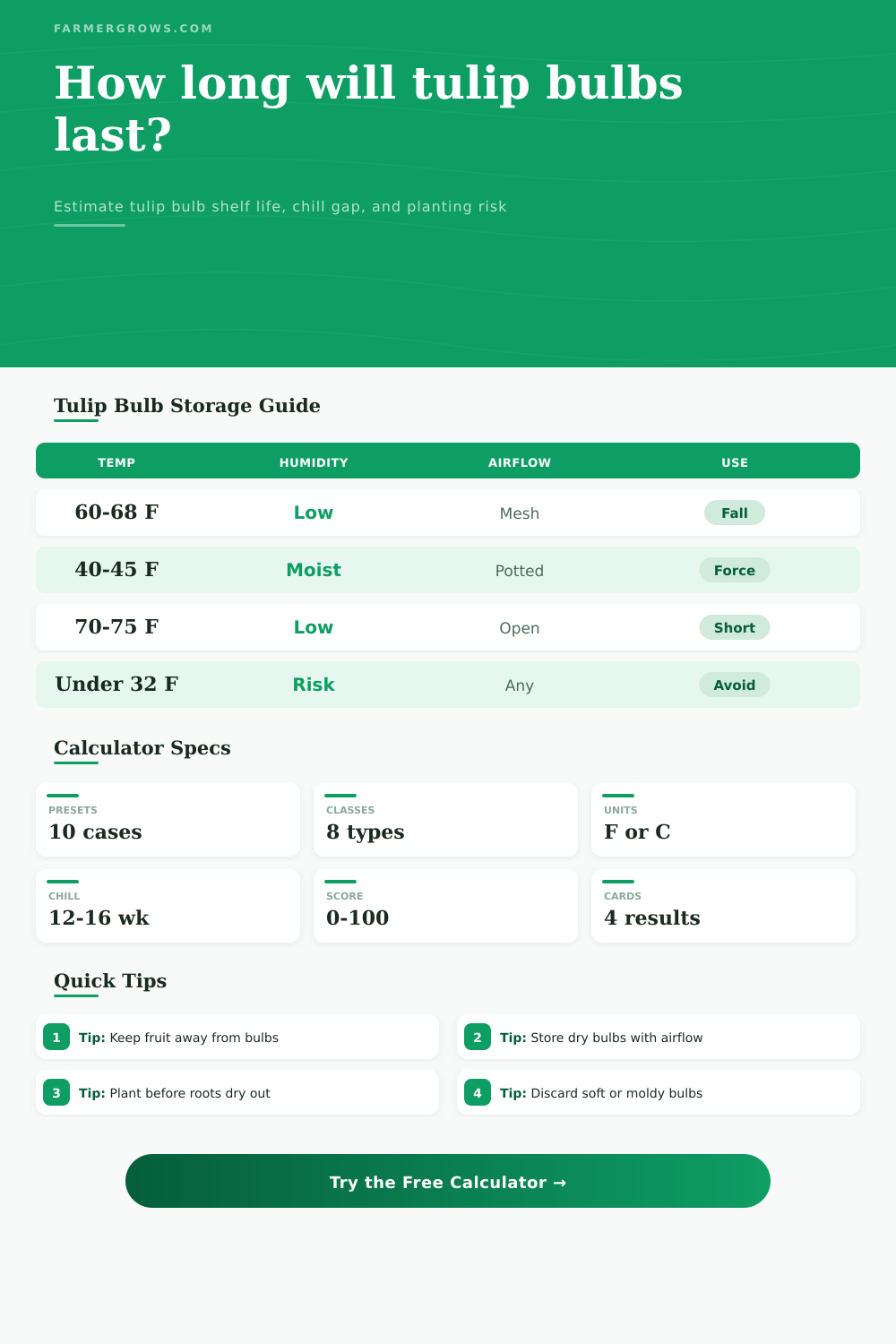
| 32°F or below | Freezing injury risk for dry bulbs | Avoid for storage | Freeze-thaw damage, collapsed tissue |
| 35-48°F | Chilling range for potted or controlled forcing | Indoor forcing programs | Fruit ethylene, excess moisture, freezing |
| 50-59°F | Cool holding with slower respiration | Short delay before fall planting | Condensation if moved from cold to warm air |
| 60-68°F | Common dry shelf range for spring bulbs | Retail-style dry holding before fall planting | Shriveling if held too long |
| 69-75°F | Energy use rises and sprouting may start sooner | Only brief holding | Long pale shoots and lighter bulbs |
| Above 75°F | Rapid quality decline | Move promptly | Drying, blind blooms, weak rooting |
| Tulip class | Relative holding strength | Bloom expectation | Storage note |
|---|---|---|---|
| Darwin hybrid | Strong | Reliable landscape bloom from large bulbs | Handles ordinary fall retail holding well |
| Triumph | Strong to moderate | Good garden performance when kept firm | Plant before shoots stretch |
| Species and botanical | Moderate | Smaller bulbs can still bloom naturally | Prevent small bulbs from desiccating |
| Parrot | Moderate to delicate | Showy flowers need strong bulb reserves | Avoid warm, long shelf holding |
| Double late | Moderate to delicate | Heavy flowers need large healthy bulbs | Reject soft bulbs aggressively |
| Fosteriana | Strong | Early bloom from large, heavy bulbs | Good candidate for prompt fall planting |
| Visible condition | Score impact | What it means | Suggested action |
|---|---|---|---|
| Firm, heavy, dry tunic | Positive | Bulb still has stored moisture and energy | Store briefly or plant on schedule |
| Loose papery tunic only | Minor | Normal outer drying on tulip bulbs | Check weight and basal plate |
| Small green nose | Minor to moderate | Sprout is beginning but reserves may remain | Plant soon and avoid breaking shoot |
| Long pale shoot | Moderate to high | Stored energy has already been used | Plant immediately; expect weaker bloom |
| Soft spot or mold | High | Rot can spread in storage | Discard affected bulbs |
| Damaged basal plate | High | Rooting point may be compromised | Do not rely on strong flowering |
| Planting goal | Storage target | Timing target | Quality priority |
|---|---|---|---|
| Outdoor fall bed | Dry, airy, 60-68°F | Plant before ground freezes | Firmness, no rot, little sprouting |
| Late outdoor planting | Cool and dry until soil can be worked | Plant as soon as possible | Basal plate health and stored weight |
| Indoor forcing | Potted cold storage, 35-48°F | Complete 12-16 weeks chill | Moist but not soggy medium |
| Temporary holding | Cool, dark, breathable container | Inspect weekly | Remove any soft or moldy bulbs |
Use dry storage for unplanted bulbs. Tulip bulbs should feel firm and heavy, with breathable packing and low humidity. Do not seal dry bulbs in plastic unless the container is vented and checked often.
Keep forcing and dry holding separate. Dry shelf life is about preserving the bulb before planting. Forcing is different: potted bulbs need a controlled cold period, moisture, darkness, and protection from freezing.
You ordered tulips in early fall from bulb catalogs, hoping for color, but what arrives instead is usualy a flimsy cardboard box of something that sits forgotten in garage for three weeks until after ground freezes. How do you know if you can plant it (and hope), or if it’s spent its money already on rotting and sprouting?
Enter the calculator up top, which help you calculate if your bulbs are still worth the time; or if you’re better off not even bothering. It translates worry over storage conditions into a real score, that’s how long you need to wait given the conditions you really have.
How to Store Tulip Bulbs
The most important thing is heat. Basically what happens is that tulips wants to sleep, and don’t appreciate being awoken with a temperature jolt. If you stash bulbs in your warm garage, air respiration rate increases. They’ll begin using up the starch stored in their tunic without ever having touched a bit of dirt. This is why the tool punishes high temps so harsh. At seventy-five degrees, a bulb may appear to be okay on the outside, but inside, it’s working too hard, which is why it might grow a leaf but no flower. Energy drops quickly as temperature rises, as shown in reference table on the page.
It is a combination of airflow and humidity. This one seems counter-intuitive, because everyone thinks they’re sealing in freshness. But sealing bulbs into plastic bags seals in their own moisture, and that’s where bacteria and mold start to grow, creating a microclimate that rot them from the inside out. Mesh bags, or an open crate, let dry air circulate; which is what you want. Check the airflow if you store bulbs in basement. If it feels muggy to you, it feels muggy to bulb.)
The calculator accounts for your storage conditions and estimates how many more days of good life these bulb have left. This is a very rough guide, but it prevents you from planting some that has already started going soft on the inside.
Nobody thinks about ethylene gas until it’s too late, but it’s one of the biggest threats to us all: a natural ripening agent given off by apples, pears and bananas that emits the signal to other fruits (and vegetables) that it’s time to go ahead and get growing, or die. A bag of fruit stored in your fridge next to tulip bulbs is asking for trouble; it gives them the signal to start growing too soon, resulting in those long, pale, blind shoots poking up out of the ground, with no flower at their end. That’s why the tool asks whether there are any fruits near the tulips: It’s a check against a hidden threat that will ruin not just the forcing project, but also late plantings.
No algorithm can convey importance of physical inspection. A bulb should be heavy as a rock (if it’s light or spongy, the inner part has withered or even rotted). Examine the bulb’s bottom root disk, called the basal plate; if it’s damaged or crumbling, how will the thing hold together? You assess these factors. Firmness and defects… And enter them into the calculator. The calculator adjust the final score downward to match, but it never replaces your hands; it only adds context to them.
Is there a little green nose? That’s okay; it’s normal. A couple-inch pale shoot indicates that the bulb wasted its energy on trying to sprout underground in the dark.
BULBS: It’s also bulb-forcing time here. The timing is meant to have blooms by a desired holiday, so it’s more about scheduling than temperature. Most forcing tulips require 12-16 weeks at 35-48 degrees F. They must be cold, meaning under 50, and not just cool. This is where the range can help: it monitors difference and helps you know when to pot up for a desired bloom date. Can’t bake a bulb in heat and then hope to force it to bloom, however cold you make your room later on.
The bottom line: It’s all about keeping them alive long enough for the roots to get going. Yes, bulbs are tough. But they’re not indestructible; think of them as perishible food instead of something made of cast iron. That means storing them cool, dry, separate from any fruit (which emits ethylene gas that’ll mess with their processes), and checking on them regularly. Do that, and you would of a very good chance; the calculator just shows how much time is left.