
When you plant A tree sapling you expect an immediate return: Some shade, right? No such luck most of the time. Growing a maple tree take a while, so many homeowners lose heart.
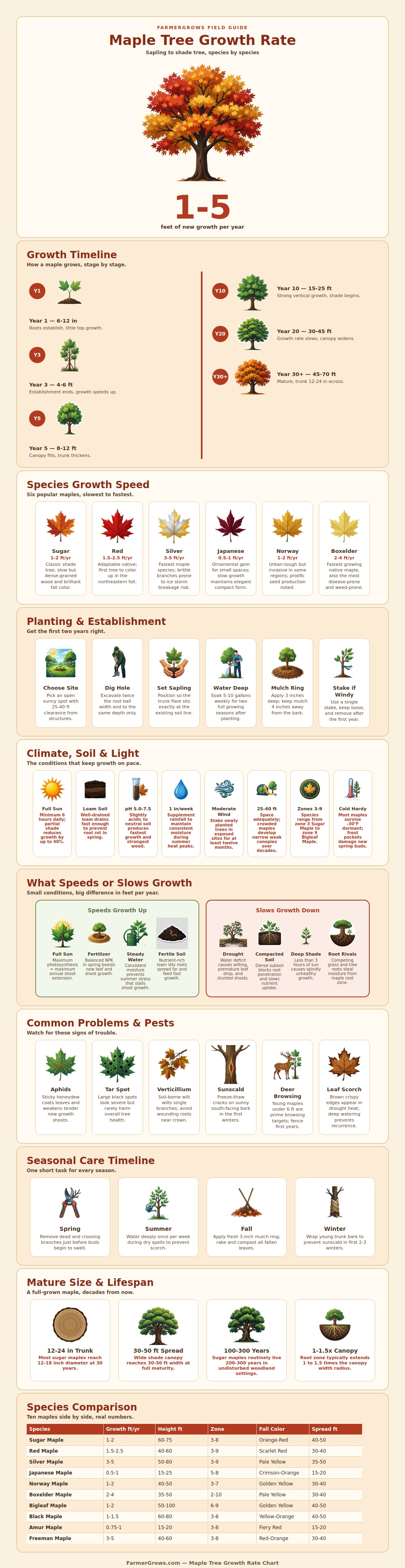
Yes, I know: Trees are quiet growers. There’s not much happening up top, but down below they’re mapping out the territory in root form to lay the groundwork for decades to come. It test your patience, and later on, it will test your gardening skill. From the growth timeline, I can see why this early dormancy must be part of the deal, it’s not a flaw, but rather an early stage of what will be a fast-paced life.
Why Trees Grow Slowly
After the initial establishment period, here comes takeoff: the fifth year see trunk widening and filling-in of canopy. Year ten? A real tree is fifteen to twenty-five feet high already; and growing. A real tree is fifteen or twenty-five feet high already (and growing). Not quite a straight line, either, tripping up inexperienced planters who expect even progress all along the way. Flat for awhile, then off we go.
Knowing that rhythm helps us not panic when our baby hasn’t hit a size milestone by 18 months old and we think it’s dead. What type is it? That matters. Some trees move to the same beat; others march to their own.
Sugar maples are slow growers. They’ll add only a foot or two a year, but they’re solidly built for the long haul. Silver maples is on the other end of the spectrum: three to five feet a year is fast, and the price of such speed is being all twigs and brittle branches when ice coats them in winter. Do you want a fast canopy or a legacy for generations? Mostly it’s not even a question of which tree is best. Which one will suit your timetable?
Genetics play a role in it, but so do day-to-day decisions; such as how much sunlight you offer the tree, which powers all the action. Maximum sun equals max photosynthesis. It gets forty percent or more less light if it’s partly shaded. That’s where human beings go astray: thinking poor growth is due to bad soil. No, the thing are hungry for light.
And then there are the planting hole details. The most frequent error is digging a hole too large and too deep, causing the root system to suffocate aboveground. Make the root flare be flush with ground level; don’t bury it an inch or two deeper. Sounds easy, right? But this invitation to rot also weaken the tree’s structural base.
As with everything else: How and when you water makes a big difference. Soaking deeply, rather than repeated light spritzes, is best. To coax the roots downward in their initial couple of years, give them a weekly drench of five or 10 gallons. This help them reach the moisture found deep in the ground.
Mulch helps retain that moisture, but keep it away from the bark; a volcano ring of mulch against the trunk is a recipe for disease and pest invasion. What you want is a donut; not a mountain. It should of been used carefully.
Over time, the tree changes its priorities: After twenty or so years, it begins to grow more slowly upward, instead focusing on increasing the girth of the trunk and broadening the canopy. That’s where the real character of the tree come in; it starts to provide that heavy shade you sought all along, becoming a true part of the landscape. It grows from a delicate sapling to a great old giant a century later; it is a long haul, yes, but the early years are laying the groundwork for what is to come. It was slow and steady, but patience were rewarded by a lifetime of color and shade. Actualy, trees provides more than just shade.