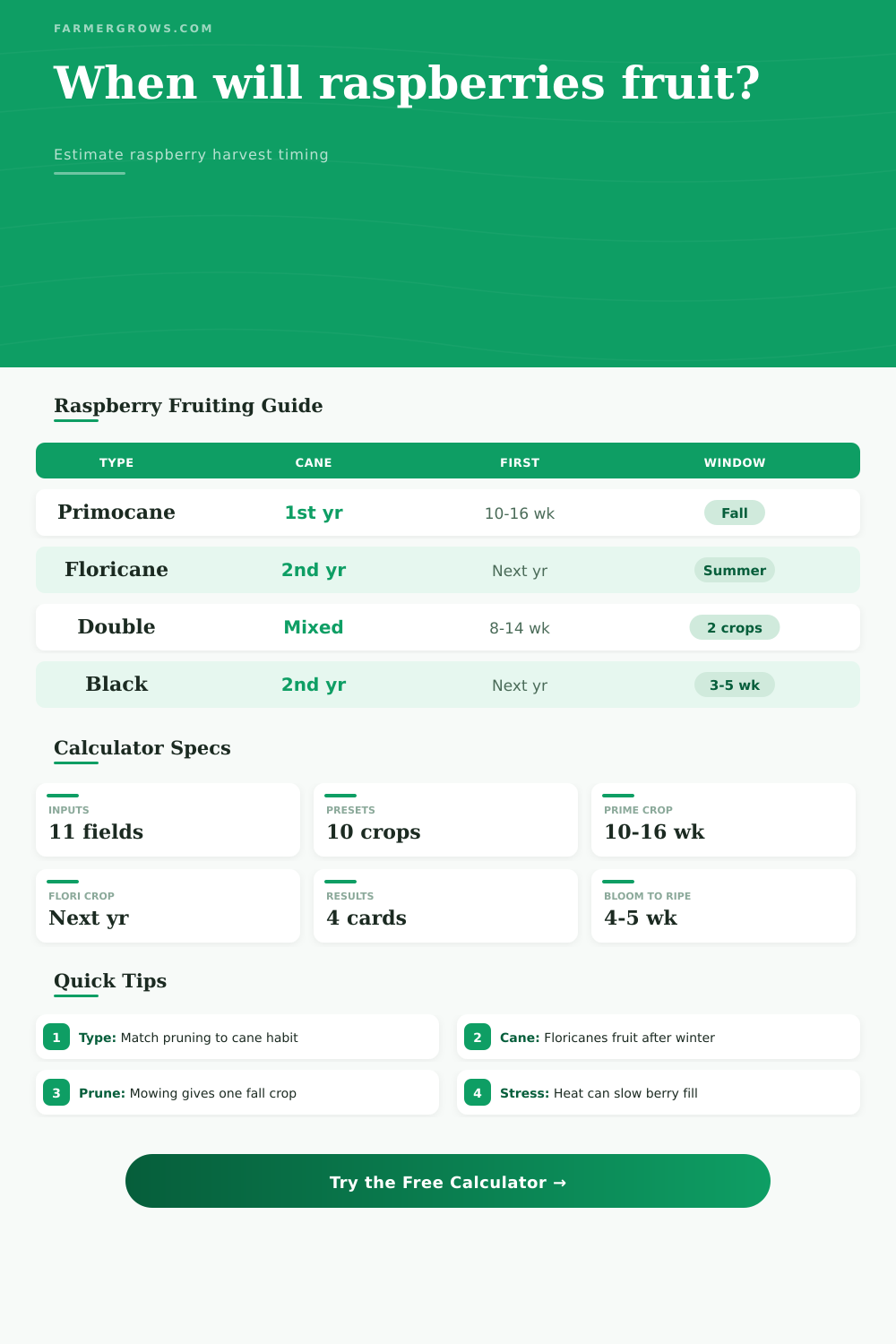
Raspberry Time to Fruit Calculator
Estimate when raspberry plants may flower, ripen their first berries, reach peak picking, and finish their harvest window from planting date, primocane or floricane fruiting type, cane age, growing zone, pruning system, transplant size, and site vigor.
Load a realistic planting, then tune the cane type, planting date, cane age, USDA zone band, pruning system, transplant size, row vigor, and heat stress for your patch.
Fall-bearing cultivars flower on current-season cane tips, so strong spring starts can produce a late summer or fall harvest.
Summer-bearing red, black, and purple raspberries usually fruit on canes that grew last year and survived winter.
Mowing primocanes to the ground favors one simpler fall crop; retaining overwintered canes can add an earlier floricane crop.
Large potted crowns and established divisions shorten establishment; weak bare-root crowns may spend the first season building roots.
Estimated Raspberry Fruiting Window
Adjust the inputs and calculate to estimate first bloom, first ripe berry, peak picking, and cane-readiness confidence.
| Raspberry type | Main fruiting cane | Usual first crop | Common harvest window |
|---|---|---|---|
| Primocane fall-bearing red or yellow | Current-season primocane tips | Planting year if spring started and vigorous | Late summer through fall, often 4-8 weeks |
| Summer-bearing red floricane | Second-year floricanes | Usually the year after planting | Early to midsummer, often 3-5 weeks |
| Double-crop everbearing | Floricane lower cane plus primocane tips | Summer crop on retained canes, fall crop on new tips | Two windows, smaller early crop and fall crop |
| Black and purple raspberries | Floricanes from tipped primocanes | Usually the second growing season | Midseason, often 3-4 weeks |
| Pruning system | Best fit | Timing effect | Watch point |
|---|---|---|---|
| Mow all canes in late winter | Primocane fall-bearing cultivars | Skips summer crop and simplifies one fall harvest | Short seasons may frost the last berries |
| Double-crop retention | Everbearing red and yellow cultivars | Adds summer floricane berries before fall primocanes | Can reduce fall crop if cane energy is limited |
| Remove spent floricanes only | Summer-bearing red raspberries | Keeps next year's primocanes for summer fruit | Do not remove healthy new primocanes |
| Tip and train canes | Black and purple raspberries | Builds lateral fruiting wood for next season | Late or severe tipping can delay structure |
| Transplant start | Establishment speed | Typical first fruit signal | Calculator adjustment |
|---|---|---|---|
| Small bare-root crown | Slowest | Often roots and canes before fruiting | Adds several weeks, lowers confidence |
| Strong bare-root crown | Moderate | Can make useful primocanes in spring | Baseline new-plant estimate |
| Quart or gallon plant | Fast | Earlier bloom if not rootbound or stressed | Pulls same-season fruit earlier |
| Established division | Fastest | May carry older crown strength into the row | Best confidence for near-term harvest |
| Zone band | Primocane timing | Floricane timing | Risk |
|---|---|---|---|
| Zones 3-4 | Late, frost-sensitive fall finish | Early summer after winter survival | Winter injury and short fall window |
| Zone 5 | Late summer to fall | Early to midsummer | Late cultivars can be tight |
| Zones 6-7 | Reliable fall crop for many cultivars | Midsummer crop common | Heat may soften berries |
| Zones 8-9 | Earlier but heat-limited | Late spring to early summer if chill fits | Low chill, heat, and cane disease pressure |
Separate cane ages before pruning. Floricanes have already carried or will carry summer fruit; primocanes are the new growth that feeds future crops or a fall-bearing tip crop.
Match the pruning system to the cultivar. A primocane type can be mowed for one fall crop, but summer-bearing floricane cultivars need healthy new canes retained for next year.
Use the first crop as a confidence check. A few berries the first season are normal for some primocane cultivars, while a full bowl usually requires strong roots and multiple canes.
Protect the harvest window. Consistent moisture, mulch, trellis airflow, and prompt removal of spent floricanes help the calculated window turn into clean ripe berries.
This calculator estimates biological timing for planning. Local cultivar selection, nursery quality, chill exposure, disease pressure, and sudden heat or frost can move real harvest dates.
Growing raspberries requires one particular type of patience: not only must you water them, but also identify what cane you’re looking at. In spring, you plant the crowns and the shoots come up fast, tall, tall green pillars showing much potential but bearing no fruit. Why? Because unlike most things we think about as crops, these plants has been programmed to devote their first year to setting up infrastructure, not making berries. It is easy to confuse this quiet period with failure.
Once you plug in your planting date and variety, the calculator above do the math for you, eliminating guesswork: Are my plants asleep or suffering? Learn how the cane grows. Raspberries tend to break down into primocane raspberries (fruiting on current season’s new growth) or floricane types (waiting till year two for wood from previous season to flower). Knowing this makes all the difference in how you prune and when you can expects your berries. You won’t have anything but disappointment forcing a floricane-type raspberry to bear in its first year, even if spring happens to come in strongly. Visualizing it in this timeline makes all the difference (and stops you from yanking out perfectly good but non-ready-to-fruit cane).
When to Pick Raspberries
It depends on inputs more than you might think. Your choice of transplant size tell the system what percentage of that plant’s total energy output has gone toward producing top growth versus establishing roots, establishing roots. Think about a tiny bare-root crown pushing its way down deep before it can ever push up tall. This means it will bloom several weeks later than same plant would if it were in a gallon pot with an established, strong root ball. Another problem is the zone: Hot summers will heat-stress primocanes into dropping their flowers, while cold ones will kill off tender floricanes. It all gets explained nicely on page in a reference table for various cultivars.
The most common mistake gardeners make that throws off their harvest window is pruning. Many people prune too aggressively by mowing down all the canes each winter. This is great if you want one big fall crop from primocane berries, but it is not so good if you want an early summer crop from floricane wood. Floricanes will be labeled as dead sticks in winter; mark them and leave them, since once gone, healthy new primocanes are totally wiped out next year. The calculator factors in how you prune (mow-down system or double-crop retention system), and then adjusts the estimated harvest window to match.
Other factors also influence how much a berry fills, such as heat and moisture stress. If you’re seeing that your raspberries is supposed to be ready on schedule according to the calendar, but they aren’t, it may be because an extreme heat event has slowed them down, or caused some flowers to abort rather than set fruit. Sunlight also helps; raspberries must have sun to turn their cane growth into sugar-rich drupelets. A shaded patch will give you more leaves, perhaps, but less fruit stretching out the harvest peak.
The bottom line: The best time to pick raspberries is when they are ripe; it’s not about waiting until you’re ready, but matching your expectations to the plant’s internal clock. Want to know where the fruit is coming from? Want to know when to stop pruning and start picking? It would of save you some frustration, whether you’re hunting down the first tentative taste of summer or prepping for a serious canning project come fall. All those months of investment in trellis-building and soil-prep make it so much better to know what you should be seeing, insted of standing around wondering why the heck there isn’t anything up on the vines yet.
The reward for waiting patiently, if you must wait, is greater when you do so with knowledge.