Bell Pepper Plant Lifespan Calculator
Estimate how long a bell pepper plant may live and keep producing from blocky sweet pepper maturity, green versus ripe harvest, fruit load, frost timing, greenhouse cover, container size, stress, and overwinter plans.
Pick a realistic bell pepper setup, then adjust plant age, fruit load, harvest stage, frost exposure, container size, greenhouse cover, and overwinter conditions.
Most garden bell peppers live from transplant until frost, disease, or fruit exhaustion.
Pot volume, daily watering swings, and root heat can shorten useful production.
Protected sweet pepper crops can live much longer when fruit load is balanced.
Leaving blocky fruits to color extends harvest timing and increases plant energy cost.
A healthy bell pepper can survive multiple seasons if protected from cold and low light.
Bell Pepper Lifespan Estimate
Adjust the inputs and calculate to estimate total life, productive weeks, end date, and overwinter odds.
| Growing setting | Typical useful life | Best productive span | Bell pepper lifespan note |
|---|---|---|---|
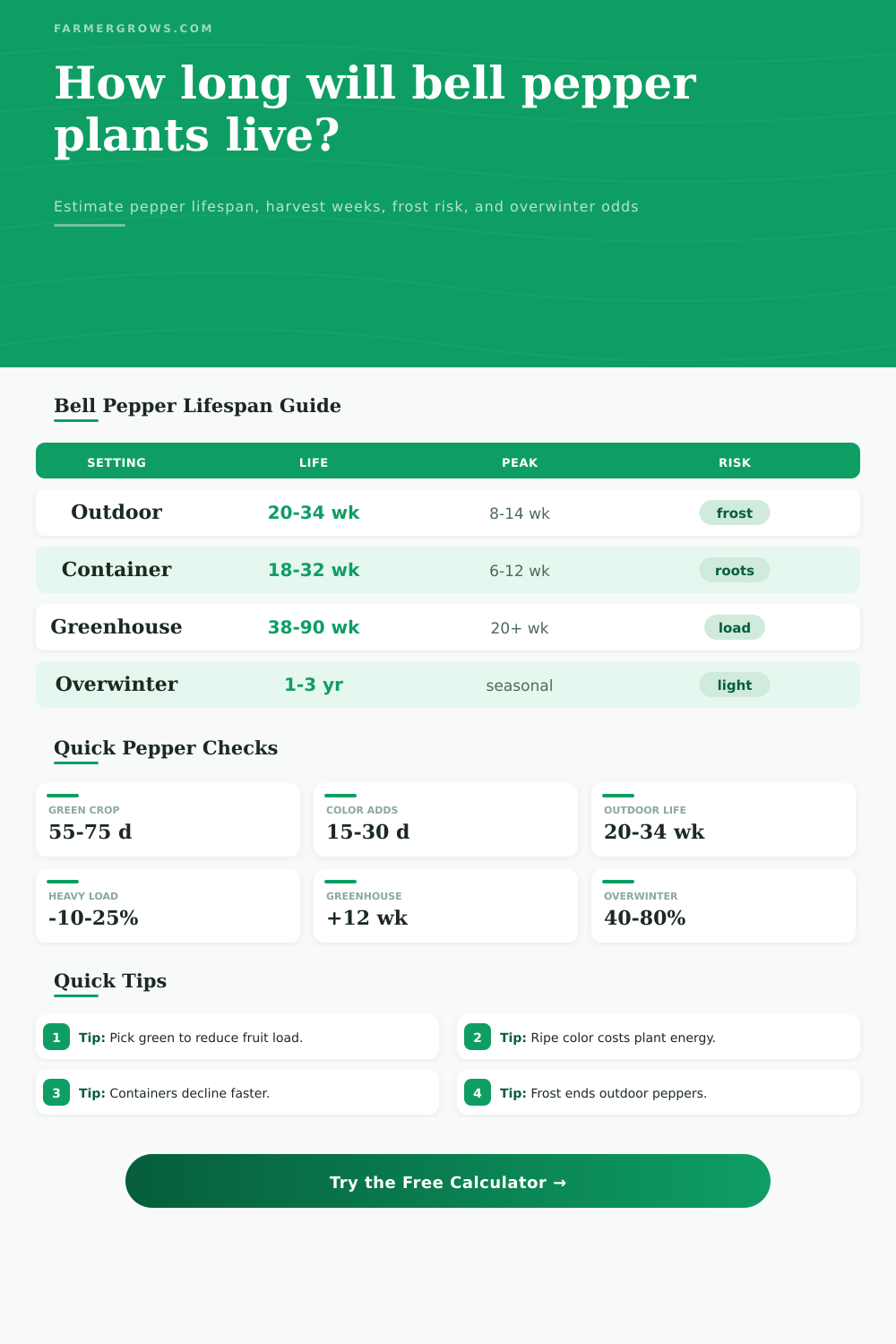
| Outdoor in-ground bed | 20 to 34 weeks after transplant | 8 to 14 harvest weeks | Usually ends with frost, disease pressure, or late-season fruit exhaustion. |
| Outdoor container | 18 to 32 weeks after transplant | 6 to 12 harvest weeks | Root heat, dry-down, and smaller soil volume shorten bell pepper life. |
| High tunnel or unheated greenhouse | 30 to 52 weeks after transplant | 14 to 26 harvest weeks | Protection extends cool weather but low light and fruit load still matter. |
| Heated greenhouse blocky crop | 50 to 90 weeks after transplant | 25 to 45 harvest weeks | Professional crops balance pruning, nutrition, and fruit load to avoid exhaustion. |
| Home overwintered bell pepper | 1 to 3 years possible | Seasonal flushes | Success depends on warm roots, bright light, pest control, and reduced fruit load. |
| Bell pepper type | Green harvest | Ripe color add-on | Lifespan behavior |
|---|---|---|---|
| Early red blocky bell | 50 to 62 days | 15 to 22 days | Good for short seasons because green harvest starts early. |
| Main-season red blocky bell | 65 to 78 days | 18 to 28 days | Large fruit can drain plants if many are held to red. |
| Yellow or orange bell | 65 to 80 days | 18 to 30 days | Color goals need a longer frost-free window than green harvest. |
| Purple bell | 60 to 75 days | 18 to 28 days | Purple is often edible before the final red finish. |
| Mini sweet bell | 55 to 68 days | 14 to 22 days | Smaller fruit usually reduces load and can extend harvest rhythm. |
| Harvest and load pattern | Effect on plant life | What to watch | Useful action |
|---|---|---|---|
| Mostly green harvest | Lower energy drain | Enough full-size fruit before picking | Pick often once blocky walls size up. |
| Mixed green and ripe color | Moderate energy drain | Branches bending under full fruits | Leave selected fruit to color and harvest the rest green. |
| Mostly ripe red, yellow, or orange | Higher energy drain | Slow new blossoms and smaller late fruit | Thin overloaded plants and support heavy branches. |
| Overloaded blocky fruit set | Shortens useful life | Leaf yellowing, flower drop, and stalled tips | Harvest large green fruit to restart growth. |
| Overwinter method | Typical chance | Best use | Main failure point |
|---|---|---|---|
| No overwinter | 0 percent | Normal annual garden culture | Frost kills exposed pepper tissue. |
| Bright window or grow light | 35 to 60 percent | Saving a favorite bell pepper plant | Low light, aphids, mites, and wet roots. |
| Cool frost-free dormant hold | 40 to 65 percent | Cut-back plants with reduced watering | Stem dieback or root rot in cold soil. |
| Protected greenhouse carryover | 55 to 80 percent | Strong container or tunnel plants | Winter pests and fruit load left too high. |
| Heated greenhouse growth | 65 to 90 percent | Long-season productive bell crops | Imbalanced nutrition, pruning, or pollination. |
Green bell peppers are physiologically mature enough to eat before full color. Picking some fruit green reduces the load and can keep new flowers and shoots moving.
Large four-lobed bell peppers are heavier than many frying or hot peppers. A plant carrying many full-size fruits often slows, drops flowers, or ages faster.
Bell peppers can live well in containers, but hot pot walls, small root volume, and daily dry-down make them decline earlier than similar plants in open soil.
A bell pepper plant can survive more than one year, but overwintering is a rescue strategy. Remove fruit, reduce top growth, keep roots frost-free, and watch pests closely.
When the ground has warmed, it’s time to plant your seedlings. But in real life, there is always a gap between plan and execution. More often than we’d like, our bell pepper plants dies before we get even one hard frost. Why do peppers peter out prematurely? To find out, we need to go beyond the leafy surface and look at what each plant spends its daily energy on.
That’s where it gets interesting: every fruit hanging from a branch use up the plant’s resources. Waiting until they are fully colored before picking instead of picking them green make that loss even worse. Plug in your harvest stage and calculator does the math for you. If something stalls, leaves go yellow, or other visual clues suggest something isn’t right, the calculator translates those cues into a probable timeline for your crop. You won’t have to guess how much those heavy red bells damaged the root system.
How To Keep Your Peppers Alive Longer
If you grow them in A CONTAINER (or indoors), expect your bell peppers to live a shorter life; the clock ticks faster once those same plants is planted in a five-gallon pot. Because containers heat up fast and hold less water, they create conditions that stress roots even when the air temperature is just fine. When the tool adjusts the expected lifespan downward it takes that container stress into account. Many times sunlight isn’t as important to longevity than root volume, it’s real-world stuff.
The primary trade-off: Do I want red or green? The choice between harvesting green vs. Letting them ripen to red is the largest tradeoff. Green means picking the bell when it’s still firm, leaving plenty of energy in plant for next round’s blooms. Red means waiting an extra 15 to 30 days per fruit for the sweet red. This doesn’t sound like much, but it does mean an additional couple weeks of development time per fruit.
The plant can only support so many at one time, overload a branch with big blocky fruits and canopy will slow down. Photosynthesis will decrease as the leaves gets shaded, causing the plant to age before its time. It is a little thing, but it is sometimes more important than all your fertilizer schedules combined.
BUT HEY: No frost? That’s a whole other story; a greenhouse changes everything. With protection, the growing season could of been extended to 90 weeks or longer. But only if you prune carefully and keep things humid enough. This is where the calculator makes a distinction between an unheated “hoop house” type of situation and a heated one. In the former, it will go dormant based off the outside temperature; in the latter, it’ll continue to grow if it is kept warm.
When overwintering your peppers, think of it as a rescue mission rather than just business as usual. To get that pepper safely indoors, you must prune it heavily to stop pests when it gets dark inside during winter. You also need bright lights and careful watering. When people overwinter plants, they typically don’t succeed because they didn’t remove enough of their crop when storing. While in that dark corner, with a tomato-size capsicum hanging heavy from each plant, the thing attempt to ripen those fruits. It exhausts itself using up its starch reserves until there are none remaining.
If you cut off the top growth and remove any existing fruit, the roots can rest. That’s your ticket for another year. This works only if you can force yourself to not think of it as a plant outside in winter. That is all laid out nicely on the page’s reference tables, where they compare settings next to each other. For example, there is a contrast between the stable temperature of a raised bed and that of the root-hardy little things in a pot.
Take those benchmarks as a way to set realistic expectations based on what you’ve got. Don’t hold your container garden up against what happens in a greenhouse or think that your outdoor crop will go on longer than the frost date you keyed in. So, at least in the case of peppers, it’s all a matter of balance. We want enough fruit to get us through our craving days without exhausting the plant before September. Extend its productive period by taking care to shield the root system from the extremes of heat and cold and adjust your picking accordingly. The more your bell pepper knows what’s coming. That it’ll have strength left to reward you with another soon, the tastier that first green bell of summer will be.