Pepper Seed Viability Calculator
Estimate pepper seed germination, seeds to sow, viable seedlings, sow-by timing, and slow-germination buffer from seed age, storage, heat mat temperature, pepper type, and test results.
📋Named pepper seed scenarios
Choose a realistic starting point for fresh bells, saved jalapenos, older superhots, fridge-stored packets, or a germination test batch.
🌶Pepper seed inputs
Enter the seeds you have, the number of transplant-ready plants wanted, and the conditions that matter most for pepper germination.
Pepper seed viability estimate
Calculated results will appear here after your inputs are evaluated.
Calculation breakdown
📊Viability factor summary
These cards show the main factors currently driving the estimate, so you can see whether seed age, storage, warmth, or the germination test is doing the most work.
🌱Buffer comparison
Compare how the same seed lot behaves when you sow with less or more extra time for slow pepper germination.
📘Pepper seed reference tables
| Type | Warm mix | Old seed | Notes |
|---|---|---|---|
| Bell / sweet | 7-14 days | 10-21 days | Fastest common pepper group. |
| Jalapeno / serrano | 7-16 days | 12-24 days | Usually steady with warm media. |
| Poblano / Anaheim | 8-18 days | 14-28 days | Can be uneven in cool trays. |
| Habanero / bonnet | 10-24 days | 18-35 days | Benefits from patient buffering. |
| Superhot chinense | 14-35 days | 21-45 days | Needs the widest time window. |
| Storage | Annual hold | Risk | Best use |
|---|---|---|---|
| Sealed freezer | 96% | Low | Long-term dry backup seed. |
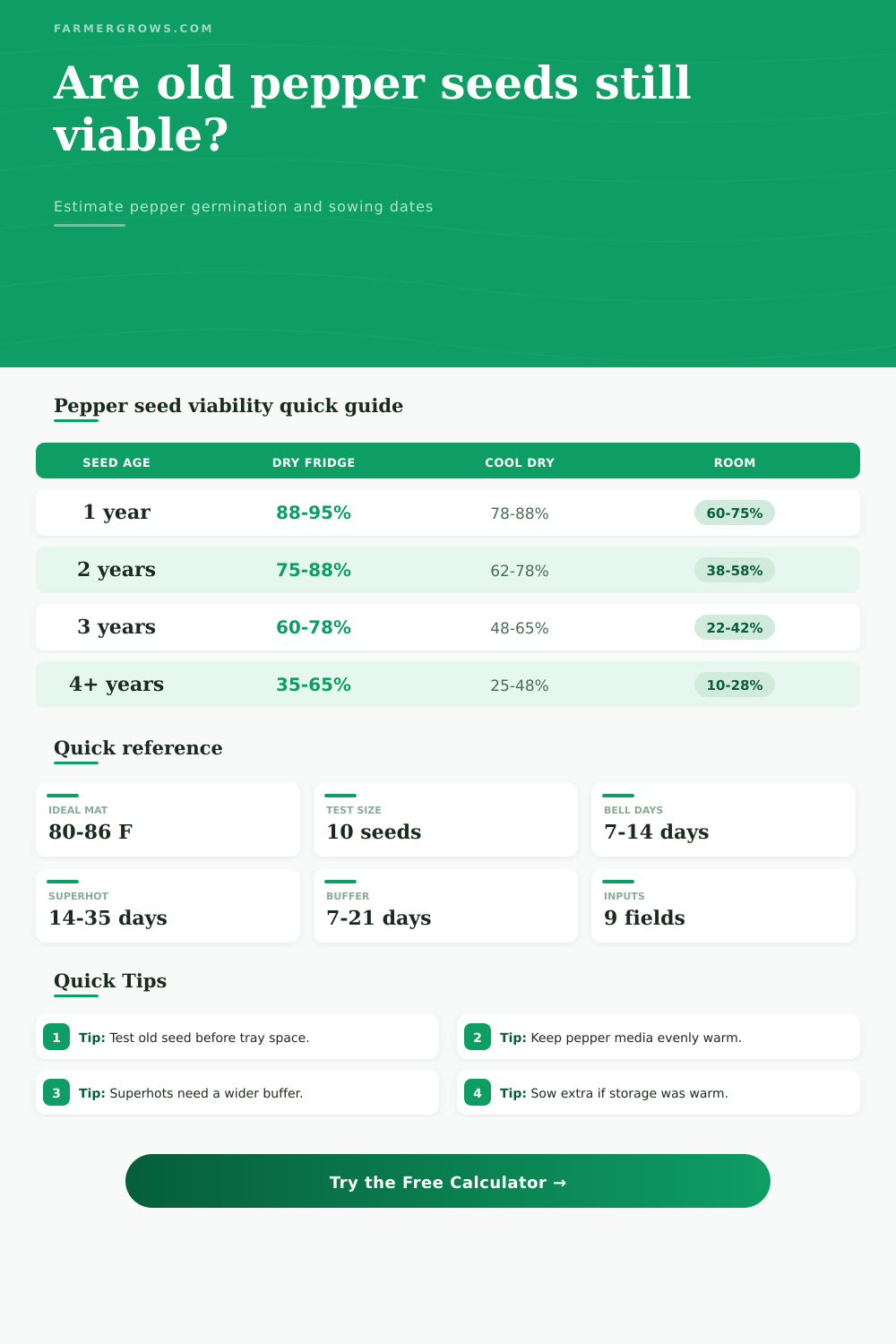
| Dry refrigerator | 90% | Low | Packets used over several seasons. |
| Cool dry cabinet | 82% | Medium | Home storage in stable rooms. |
| Room packet | 68% | High | Use quickly or test first. |
| Warm or humid | 45% | Very high | Sow heavily and test first. |
| Mix temp | Effect | Expected pace | Action |
|---|---|---|---|
| Below 65°F | Very slow | Patchy | Add bottom heat. |
| 70-74°F | Moderate | Slower | Use a larger buffer. |
| 80-86°F | Ideal | Best | Hold steady moisture. |
| 87-90°F | Slight stress | Fast but risky | Check thermometer accuracy. |
| Above 95°F | Damage risk | Poor | Cool the tray surface. |
| Test | Sprouts | Rate | Meaning |
|---|---|---|---|
| 10 seeds | 9-10 | 90-100% | Strong pepper seed lot. |
| 10 seeds | 7-8 | 70-80% | Good with minor over-sowing. |
| 10 seeds | 4-6 | 40-60% | Sow extra cells or retest. |
| 10 seeds | 1-3 | 10-30% | Use heavy sowing or replace. |
| 0 seeds | none | model | Estimate from age and storage. |
For peppers, the thermometer in the seed mix matters more than the heat mat setting. Dense trays can run cooler than the dial.
When pepper seed is older than three years, a small germination test can save tray space and protect the transplant schedule.
Estimates are planning values. Actual pepper germination can shift with seed maturity, drying quality, moisture, sanitation, and seed-starting mix temperature.
You have a packet of superhot seeds from two years back, stashed in a drawer that gets warmed by sunlight. You’re looking for some fiery fruits, and why should they cooperate? Pepper seed can be fussy. Will any of those even come up, and if so, how many must you sow to ensure viable, healthy plant for planting out here? Don’t waste time (or space), waiting till frost comes, either.
Use a viability calculator. Most growers focus entirely on heat mats. Turn up the heat; problem solved! Yes, bottom heat of eighty to eighty-six degrees Fahrenheit speeds germination; but won’t bring back dead seeds. The baseline probability is a function of age and storage conditions well before the mat goes on. Seeds sealed in a freezer will last longer than those sitting in a cool, dry cabinet. Plug in your seed age and where they’re stored: that’s the number the calculator does the math on. The rate of decay determine exactly how many seeds you need to plant.
How to Grow Pepper Seeds Better
Most people don’t realize that some pepper varieties is better starter plants than others. Bell peppers, for example, go in pretty fast, sometimes they pop in less then two weeks, given ideal conditions. A Superhot (like a Ghost Pepper or Carolina Reaper) may take up to 40 days or longer, even from fresh seed. Knowing what kind of variety you’re starting makes all the difference. The tool takes this into account and adjust its estimates of how long things should of taken to get going. Don’t waste your trays by tossing them aside too soon: Habaneros take much longer to sprout than your bell pepper packets do, so measured patience is called for. Know when slow is actualy abnormal…or else it’s not happening.
You can protect your time with a little germination test prior to sowing your main crop. To run one, put ten seeds on a moistened piece of paper towel and see what happens in two weeks. Do you have any idea how many seeds will sprout? You don’t need an estimate anymore, you have real data from your germination test. Only three out of those ten sprouted? Then your seed viability was about thirty percent. Sow perhaps three times as much seed as desired plants to make up for it. If the germination test result is lower, the calculator override the age-based estimates using that test percentage instead so it doesn’t lead you to under- or oversow unnecessarily, either by way of false hope or too great a concern.
There is another wrinkle: transplant timing. Superhot peppers requires a lengthy growing season (they don’t like to languish in tiny cells, either), so even if your last frost date is late May, sowing superhots in early February might seem aggressive, yet it is often necessary. Backdate from your planned transplant date based off this tool. It takes into account what kind of pepper you want to grow and how fast that variety germinates. It also provides some extra time as a buffer against batch-to-batch variation, for the few who take longer to respond to all that wet goodness inside their seed coat.
The last number in the equation is one of weak seedlings. Not all sprouts becomes sturdy transplants. Depending on your watering and sanitation practices, some portion of your sprouted seeds will die from damping-off, helmet heads, or other mishaps that result in fewer viable plants. When you include this cull rate, the question isn’t just “how many seeds do I need to germinate?” Instead, it becomes “how many do I need to germinate to reach my goal after culls?” This turns guesswork into know-how.
So there’s no magic to growing peppers from seed; it’s just managing probabilities. You manage the environment, but you don’t manage the genetics within any single seed. Manage your sowing strategy with data, and you’ll eliminate the wait-and-anxious-guessing game over whether green shoots will appear anytime soon. Knowing exactly what the odds are eliminates the worrying and waiting in favor of confident waiting.