Spinach Seed Viability Calculator
Estimate viable spinach seed, adjusted sowing rate, row seed needs, thinning surplus, and crop timing from seed age, storage, germination test results, sowing temperature, row length, and target plant spacing.
📋Spinach crop presets
Choose a real spinach sowing situation, then adjust seed age, storage, germination count, row length, and target spacing for your own packet.
🌱Seed lot and germination test
Spinach seed often drops noticeably after the second year, especially if it sat warm or humid. A small germination test overrides the age estimate when you have test results.
🌡Sowing conditions and stand target
Spinach germinates best in cool soil. Warm sowing, overwinter exposure, and tight final spacing all change how many seeds should be dropped per row.
Spinach seed viability results
Enter seed and row details to estimate viable seed, emergence, and sowing quantity.
Detailed seed lot breakdown
📊Seed lot comparison
These cards compare the current seed lot with a fresh packet and a conservative rescue rate for old spinach seed.
🧮Viability reference cards
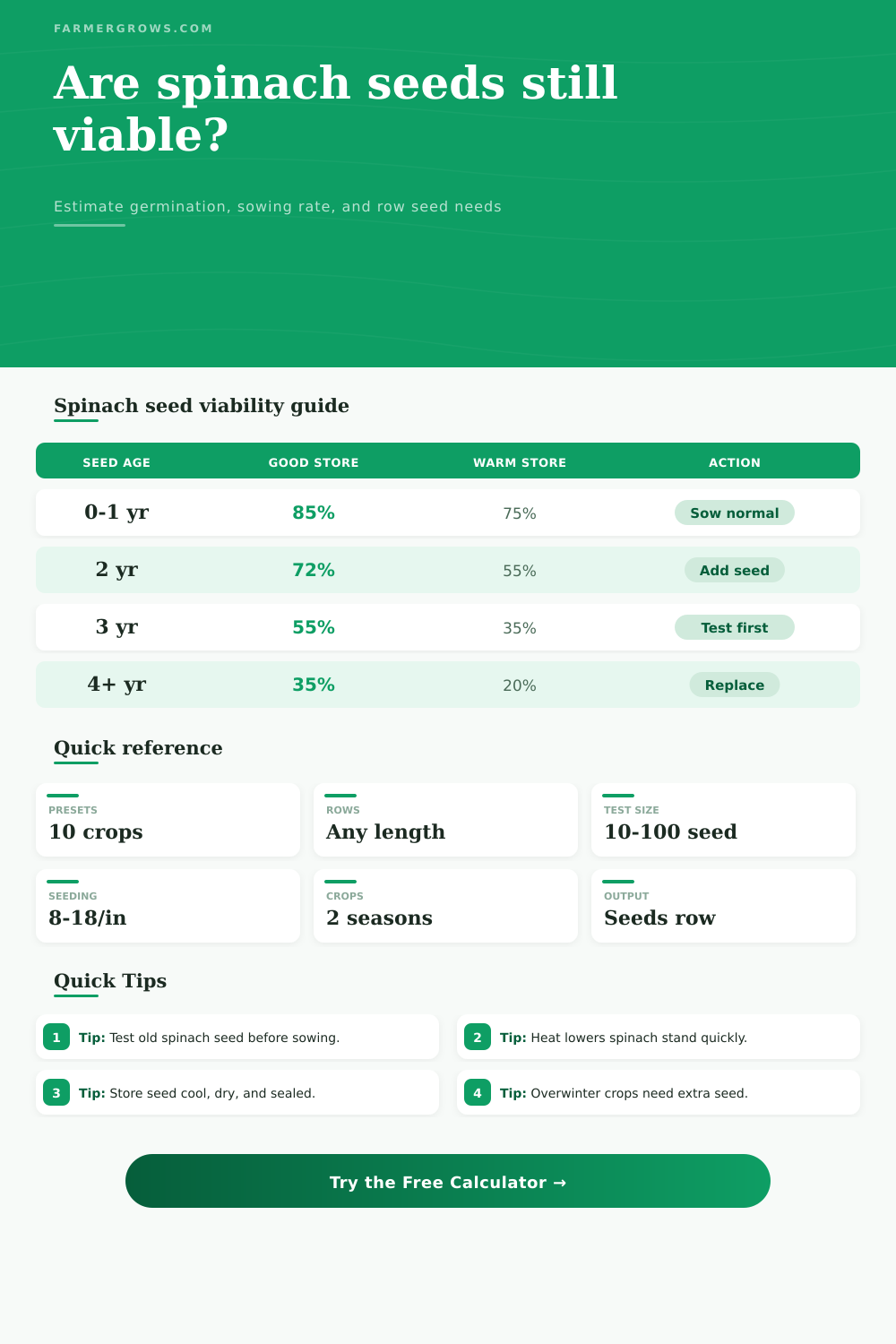
| Age | Cold sealed | Room shelf | Warm/humid |
|---|---|---|---|
| Fresh | 90% | 85% | 75% |
| 1 year | 84% | 76% | 62% |
| 2 years | 72% | 60% | 42% |
| 3 years | 58% | 42% | 25% |
| 4 years | 42% | 28% | 15% |
| 5+ years | 28% | 16% | 8% |
| Condition | Penalty | Best use | Note |
|---|---|---|---|
| Cool soil | 0% | Spring/fall | Best emergence |
| Cold soil | 8% | Early spring | Slower stand |
| Warm soil | 18% | Late summer | Use shade/water |
| Hot soil | 35% | Avoid if able | High failure risk |
| Overwinter | 15% | Fall sowing | Winter thinning |
| Greenhouse | 3% | Tray starts | Most controlled |
| Use | Final spacing | Seed/in | Plants/10 ft |
|---|---|---|---|
| Baby leaf | 1.5 in | 1.6-2.0 | 80 |
| Salad leaf | 2 in | 1.2-1.6 | 60 |
| Bunching | 3 in | 0.8-1.2 | 40 |
| Large leaf | 4 in | 0.6-0.9 | 30 |
| Overwinter | 2.5 in | 1.2-1.8 | 48 |
| Plug tray | 1/cell | 1.3/cell | varies |
| Test result | Use rating | Sowing action | Packet call |
|---|---|---|---|
| 85%+ | Excellent | Normal rate | Keep |
| 70-84% | Good | Slight extra | Use soon |
| 50-69% | Fair | Increase rate | Test again |
| 30-49% | Poor | Heavy sow | Replace soon |
| Under 30% | Very poor | Buy fresh | Do not rely |
| Moldy test | Unclear | Retest clean | Dry storage |
For a small packet, test 10 to 25 seeds on a damp towel. For saved seed, test 50 to 100 seeds so the percentage is less jumpy.
Spinach struggles in warm soil. Use shade cloth, evening watering, or pre-sprouting when late-summer soil is warm.
Fall spinach planted for overwinter harvest often needs a bigger initial stand because cold, heaving, and dampness remove plants.
After opening a packet, reseal it with desiccant and label the year. Spinach seed is worth replacing sooner than many garden seeds.
Calculator estimates are planning values for spinach seed lots. Actual emergence still depends on seed depth, soil moisture, crusting, disease pressure, and planting accuracy.
How old are those seeds? If your spring garden plans include leafy greens (and who doesn’t?), the answer matter, because their shelf life is brief. We don’t even know if the seeds were stored in a moist environment instead of a sealed container. There are many factors beyond just the printed package date that influence how long seeds will stay fresh, so what’s a gardener to do? Consider the data.
This seed viability calculator will help you turn all those factor into one number to decide whether or not to plant your seeds. It takes into account your own germination tests, soil conditions, and storage history, while also accounting for possible field losses or different soil temperatures. If you have old seeds, it know that some won’t sprout (so you don’t guess). The process give you a clear count of how many seed per foot of row to sow to reach your target number of plants.
How to Check If Your Seeds Are Still Good
Spinach seed has a limited lifespan: Age plus moisture plus heat equals shorter shelf life. It’s true that seeds will last longer in a dry location different than a moist one, and in a cooler place instead of a warmer one. In less-than-ideal conditions, seed viability decline dramatically within two years (according to table of reference). Before making plans, take stock of how you store yours; moisture significant lowers the percentage of germinations. That’s why the calculator factor in such sobering truths, you may want to order an extra packet, or just go heavy on sowing.
How do you know if your seeds are any good? One sure-fire method is the paper towel test: Place a moistened paper towel into a zippered plastic bag, then add 25 seeds; after seven days, tally up the number that have sprouted. That’s your actual germination rate, your own real-world data, rather than relying on general guesses about seed conditions. Plug that number into calculator (the one you’ve entered). Knowing your exact seed-lot condition will save you time, and avoid wasting space with blank rows.
And then there are field conditions: Too-hot-to-bloom conditions is a bane of spinach; so are soils that are too cold, or crusted over. Overwintered spinach is penalized on the calculator because its root system get exposed to freeze-thaw cycles. Warmer-than-ideal soil also affect germination and receive a penalty. There’s even a penalty if you don’t care about thinning, since some spinach varieties has higher spacing needs than others; those changes factor into final plant number.
The seed calculator includes bad germination and takes into account pest and disease losses, too. The total seed count provided for your row length accounts for all of those factors. This tells you how many plants you’ll end up with after thinning, or if your packet is enough at all. This saves you from waiting weeks before realizing it’s too late: Your seeds didn’t sprout. You should of checked earlier.
And now you can make an informed decision. To sow more thickly, to expect fewer plants, or to buy another packet with confidence. Getting Spinach to grow depends on understanding the soil requirements, as well as being careful with the fragile seeds. Using simple tests and information from your storage history turns guessing into a real plan. Instead of wondering if something will sprout, you can focus more on how to take care of whatever does grow. It allows for confidence by using facts to separate fertile beds from patchy ones, rather than relying on hope alone.