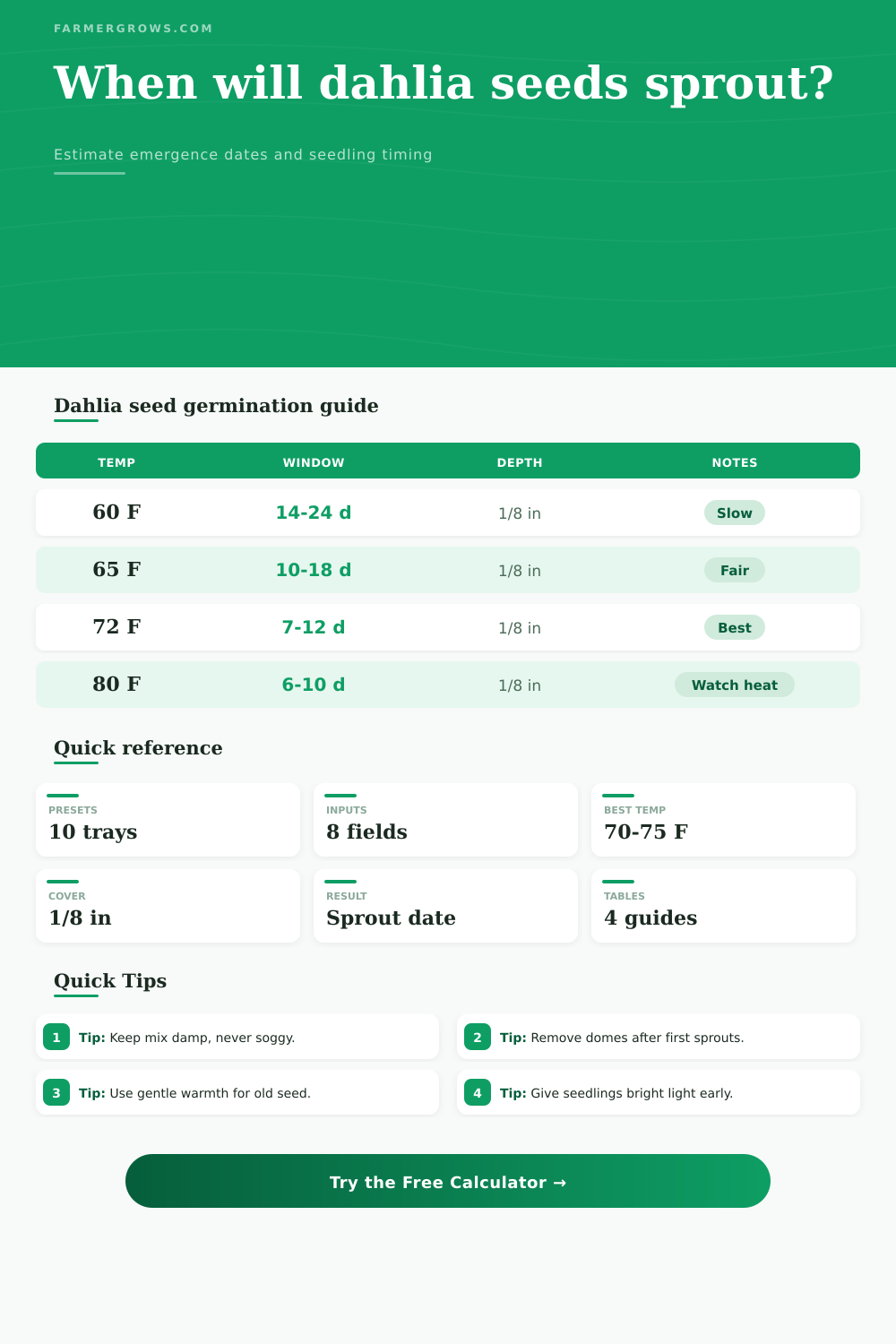
Dahlia Seed Germination Time Calculator
Estimate dahlia sprout windows, first emergence dates, expected germination, and pot-up timing from seed age, tray temperature, cover depth, moisture, and humidity.
📋Dahlia germination presets
Choose a tray situation that looks close to your setup, then adjust the sow date, temperature, seed age, and surface cover for your actual dahlia seed batch.
🌼Dahlia seed tray inputs
Dahlia seeds usually emerge fastest in evenly warm, moist seed-starting mix. The calculator uses media temperature as the main driver, then adjusts for seed age, cover depth, humidity, and tray method.
The estimate is for viable dahlia seed in clean seed-starting mix. Very old seed, saturated trays, or chilled media can widen the window beyond the calculated range.
Dahlia germination estimate
Set the tray conditions and calculate to estimate first sprouts, peak emergence, and transplant timing.
Full dahlia tray breakdown
🌱Seedling readiness markers
⚖Temperature comparison grid
Compare your current dahlia tray against cooler and warmer propagation options. Heat shortens the window only when moisture and air exchange stay steady.
| Media temp | Expected window | Germination effect | Tray note |
|---|---|---|---|
| 55-59°F | 18-30 days | Very slow and uneven | Move to a warmer bench if possible. |
| 60-64°F | 14-24 days | Slow but possible | Use a dome and avoid wet mix. |
| 65-69°F | 10-18 days | Moderate speed | Good for rooms without bottom heat. |
| 70-75°F | 7-12 days | Best practical range | Common target for dahlia seed trays. |
| 76-80°F | 6-10 days | Fast, watch moisture | Vent domes once sprouts appear. |
| 81-85°F | 7-14 days | Heat stress can rise | Check media with a thermometer. |
| Seed age | Likely rate | Timing change | Best action |
|---|---|---|---|
| Fresh seed | 75-90% | Baseline | Sow normally in cells. |
| 1 year, cool dry | 65-80% | +1 day | Sow a few extra seeds. |
| 2 years, cool dry | 50-70% | +2 days | Use gentle bottom heat. |
| 3 years or warm kept | 35-55% | +3 days | Pre-test a small sample. |
| 4+ years unknown | 15-35% | +4 days | Sow thickly and expect gaps. |
| Cover | Approx depth | Effect | When to use |
|---|---|---|---|
| Vermiculite dusting | 0-1/16 in | Fast but dries easily | Use under a dome or mist often. |
| Light cover | 1/8 in | Reliable and balanced | Best general dahlia seed depth. |
| Moderate cover | 1/4 in | Slightly slower | Useful in dry rooms. |
| Heavy cover | 1/2 in | Delayed and patchy | Only for coarse, fast-draining mix. |
| Very deep | Over 1/2 in | High delay risk | Scrape back gently if no sprout. |
| Stage | Typical timing | What to watch | Next step |
|---|---|---|---|
| Radicle starts | Day 4-8 warm | Not visible in cells | Keep moisture even. |
| First sprout | Day 7-14 | Hooked stem emerges | Move under bright light. |
| Cotyledons open | Day 8-16 | Seed coat may cling | Vent or remove dome. |
| First true leaves | Day 18-30 | Leaf pair starts | Begin light feeding. |
| Pot-up stage | Day 25-40 | Roots reach cell edge | Shift to 3-4 inch pots. |
Count from the day the seed mix is evenly moist and warm. A tray sown cold, then moved onto heat two days later, behaves more like the later warm date.
Once the first dahlia seedlings break the surface, vent the cover and add bright light quickly. Warm, dim trays stretch before the rest of the seed finishes germinating.
Dahlia seeds deserve tender loving care, though they’re not as dramatic as some might think. They’re small; very small, and packed tightly together, which means they requires precise heat to germinate. That doesn’t mean the seed’s dead if it fails to sprout when the soil remains cool. You just need patience; it is waiting for warmth because of physics.
After you enter your tray conditions into the calculator (above), it does all the math for you. You won’t have to guess or wonder how much of each item go in each place, because it provides a realistic time frame.
How to Grow Dahlia Seeds
The biggest factor is temperature. Water volume and light are secondary. It’s OK if the air around the seeds is cool, but not if the soil below them is cold. At sixty degrees Fahrenheit on the bench, expect emergence to start slowly. It could last up to three weeks, lengthening the odds that something go wrong before your sprout breaks through. You can move the tray onto a mat set to seventy-two degrees. You slash the wait time nearly in half. From our perspective, the wait seems like a lot longer then. But then we remember it’s biology, and biology work at a pace appropriate to its circumstances.
Smaller variations in temp change your calendar as this page’s reference table shows. Depth also matters. These are low-energy seeds; burying them a half inch is actualy too deep and can absorbs them to starve. Most years I’ll press them into place, or give them a light sprinkling of vermiculite. They get moist but also easily out. One mistake many newbies make is burying the seeds too deep in the mix. It may smother the crop. Go shallow. Shallow’s good. And keep that mix moist (not sodden). Even if they sprout, soggy mix will still choke their roots.
The other factor is age. Seed that’s fresh, purchased from a reputable source, generaly germinates well. Seed saved in last year’s season? Not so much. Older seed tend to come up sporadically. Some are strong starters who emerge days before weak straggler even think about moving. The tool takes that into account by expanding the window. For older seed, it reduces the expected germination percentage. That way, you can manage your own expectations. If you’re sowing with aged seed, plan on more; treat the blanks as part of the deal.
When the green hooks pop out, it’s go-time: the change from dormant to active state makes light an important factor. Seedlings growing in humidity domes will reach for the light if left too long. They’ll get spindly and weak. Get the covers off quickly, so they stay strong and short. Why? When you pot them up later, a sturdy stem will do better than a floppy one. Transplanting a leggy dahlia can snap its stem and reverse all those weeks of tender loving care.
You should of known this. And there’s less worry when you plan for those time frames. No need to check on the tray an hour from now. Everything is fine, steady conditions; trust the process.
Whether the varieties are big or small, these rules work the same way. Growth begins with warmth. Growth continues with moisture. Growth follows light direction. Get that right, and there will be fewer gaps in your garden. More vivid summer color. Less guessing, but still a project that you’re managing and enjoying.