Grape Vine Spacing Calculator
Plan grape vine spacing by vineyard block size, vine spacing, row spacing, trellis system, end post setback, slope allowance, alley access, replacement buffer, and expected mature crop.
Load one of 10 named grape trellis presets, then tune the block dimensions, slope, alleys, replacements, and crop target for your vineyard or backyard row.
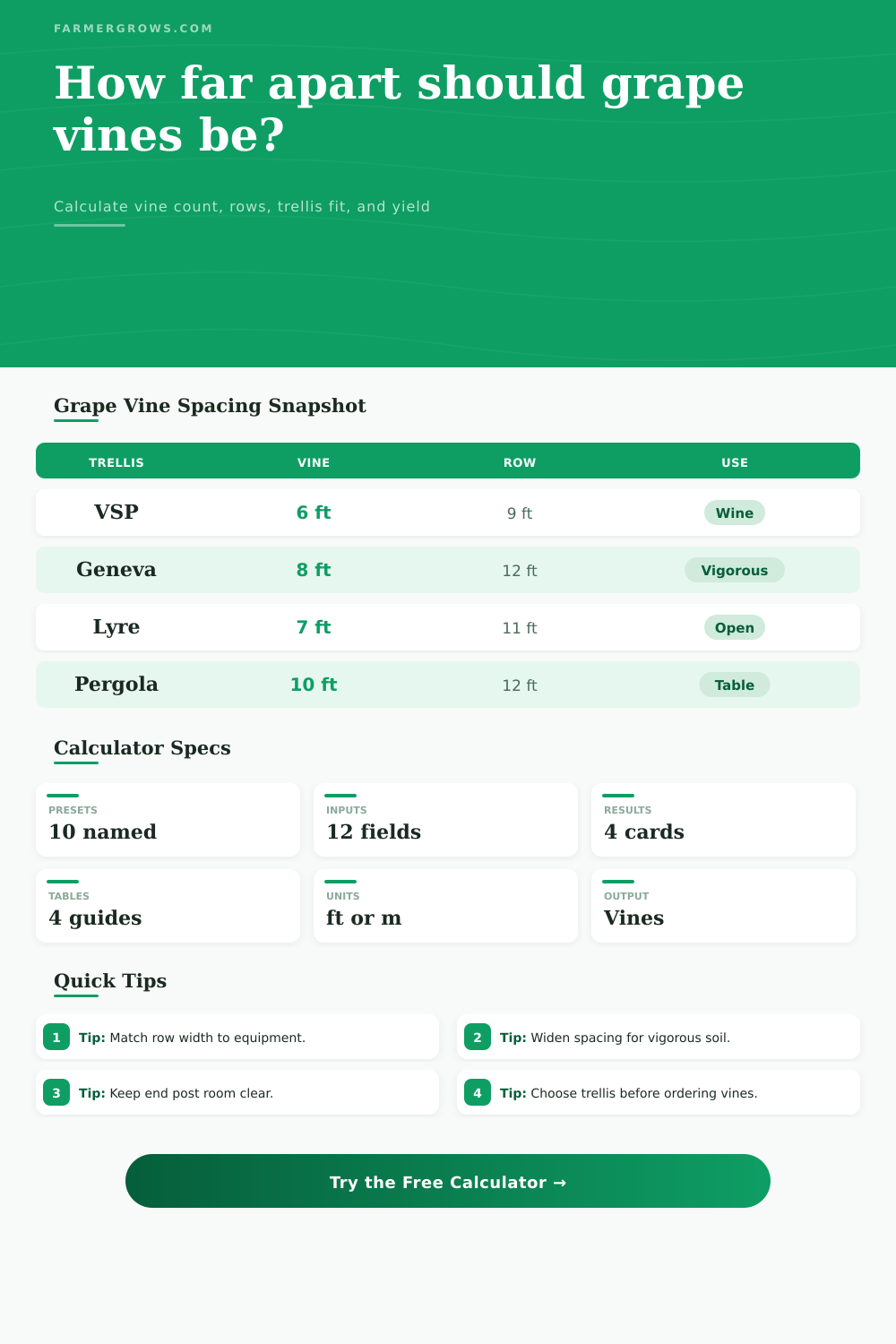
Vertical shoot positioning fits narrow vineyard rows, simplifies spraying, and suits moderate vigor wine grape sites.
Good for American hybrids and juice grapes where trailing shoots need a high wire and steady row access.
Geneva and Lyre systems spread canopy across more wire space so strong soils do not shade the fruit zone.
Wide overhead structures need more vine spacing and extra post planning, especially near walkways or patios.
Grape Vine Layout Results
Your grape vine spacing summary will appear here.
These compact guides keep the calculator scannable while covering trellis type, cultivar vigor, equipment access, and vine ordering checks.
| Trellis | Vine | Row |
|---|---|---|
| VSP | 5-7 ft | 8-10 ft |
| High cordon | 7-9 ft | 10-12 ft |
| Geneva double | 8-10 ft | 11-13 ft |
| Site | Adjustment | Reason |
|---|---|---|
| Low vigor | Tighter | Fill canopy |
| Moderate | Reference | Balanced crop |
| High vigor | Wider | Limit shade |
| Access | Row Need | Fit |
|---|---|---|
| Hand work | 6-8 ft | Small rows |
| Mower | 8-10 ft | Common |
| Compact tractor | 10-12 ft | Orchard |
| Item | Rule | Note |
|---|---|---|
| Vines | Count + buffer | Replace losses |
| End posts | 2 per row | Anchor load |
| Line posts | Row length/post | Round up |
Trellis tip: Choose the trellis before ordering vines because divided canopy, pergola, and muscadine systems usually need more space than compact VSP rows.
Equipment tip: Row spacing should fit the widest mower, sprayer, harvest cart, or tractor that will travel the vineyard after the canopy is mature.
Vigor tip: Rich soil, irrigation, and vigorous rootstocks need wider spacing or more canopy division so shoots do not shade clusters and reduce fruit quality.
Ordering tip: Keep replacement vines from the same source and cultivar batch when possible so replants match the block and are easier to train into the trellis.
Use local viticulture or extension guidance for cultivar selection, disease pressure, cold hardiness, rootstock choice, irrigation, and legal pesticide access. This calculator estimates layout quantities, not engineering loads for trellis anchors.
Maybe it’s your first time planting a row of vines in a piece of ground you’ve acquired, and you’re getting bogged down by all details of planning a vineyard. Do you want to plant closely for fast production or more sparsely for elbow room? Air, light, and how easy you can walk between rows are determined by spacing.
Give the calculator some parameters about what size the block will be and let it figure out numbers for you while you think about managing the canopy. All grapevines are not created equal; most novice growers assume they are, and treat all of their vines alike. Vigorous hybrids such as Concord produce thick shoots that can stifles a nearby plant if planted too closely together. More restrained vinifera varieties intended for wine tend to be happy in closer quarters, focusing their energy on making good fruit instead of growing leaves.
How to Space Your Grapevines
Before ordering your rootstock, select your trellis system. Systems such as Geneva double curtain take up more space, while vertical shoot positioning keeps everything narrower. As the structure grow more complicated, so does required row width (see table of references). The whole deal is about machinery clearance, which may sound like a no-brainer but isn’t. Will you be mowing the rows with wide mower, or driving a compact tractor across them? You’ll want 10-foot alleys between vines if so; eight if you think you can jam another row in and just hand-weed all those inches of alley for next couple of decades. That’s your future workload, talk about defining details.
It’s the tool that takes into account these setbacks and alleys, so that number of vines you come up with as theory turns into how many really fit onto your property. Also factor in some slack, since even best-laid plans will have gaps. Frost heaves up and kills vines. Deer nibble away at them. They succumb to root rot. The math may say you need 24 vines; don’t order just that many. Order a few more, five percent is cheap insurance… So all your rows is about the same width.
On paper, it is simple to picture a full-on green wall, but real life is different than what you expect. Patchy is what typically happens unless you planned for loss. Flat maps do not take slope into account, and more complex factors enter: On hillsides where contour planting prevents erosion, it also decreases actual row area (since those rows is no longer straight lines). This lost ground must be considered in your calculation of required stock. To make up for this, the calculator provides a simple coefficient. With this, you receive an honest estimate of how many vines you’ll need. Better to know you’re shorthanded prior to spring planting than at rain-fall time. You should of known it.
But how much space? Space is always a compromise between manageability and density. Rows that are too narrow lead to smaller fruit, disease issues and fights for light and air. Rows that is too wide result in wasted yield (what could be picked per acre) and domination of the understory by weeds. There’s not one “right” number, just what’s “right” on your place given your variety, your soil, and your ability to work it.
Go ahead and start with presets, tweak based off your equipment, include your buffer, and then stand back. Consider the layout to be a living system you’ll pass through during each summer. You’ll thank yourself when it comes time to pick ripened fruit many years later if you got spacing right today.