
The way most farmers think about their farm is as a spreadsheet: Every row represent one crop; everything else is noise. If all you care about is harvesting fast, then great; this approach make sense. But if you care about soil that’s capable of breathing? Then it doesn’t work.
Inter-cropping treats the field more like an ecosystem different than an assembly line. It’s about planting neighbors, not just products. How well do they get along with each other? Often, the difference between a thriving intercrop system and a struggling monoculture comes down to this.
Why Mixing Crops Is Good for Your Farm
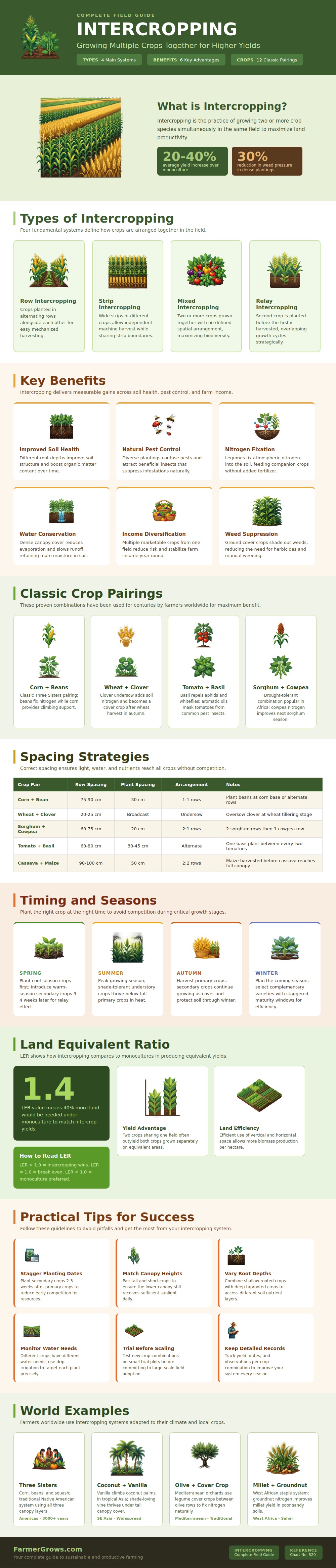
To clarify: There’s no one right answer. In fact, I’ve broken it out into four main types (above). The most common method are row intercropping. By planting one crop in alternate rows, you can works alongside moddern machinery. You do not need to stop and start all the time.
Similar logic applies with strip intercropping. It uses wider bands and a larger scale. There is a beneficial effect along boundaries, and then each thing are harvested separately.
Mixed intercropping is the wild card. Sow it all together. No defined layout at all. To an untrained eye, it looks like chaos; but in doing so, it maximize biodiversity in ways that well-ordered rows never will.
Then relay intercropping layers on time: Plant a second crop before the first is even harvested. By overlapping, the land produce something every single day of the growing season.
Consider all this, because there’s nothing like a tangible benefit. No airy-fairy philosophy stuff here. According to data, growing different crops together can result in an increase in yield of twenty to forty percent over growing one crop. That’s a hell of a lot of money on your bottom line.
Even more important: It radically reduces weed pressure (a dense canopy shades them out before they get a foothold). And the soil benefits, as well: You’re using nutrients from different levels of the soil with different root depths. Legumes takes nitrogen out of the air and deposit it in the ground as food for their vegetable or grain partners. It is free fertilizer that arrives on its own timetable.
Art meets science when it comes to choosing partners. Thousands of years ago, people discovered a perfect Three Sisters combination: Corn, Beans and Squash. Why? Because it works. The squash leaves create a blanket over the soil, holding in moisture; the corn adds structure; the beans fixes nitrogen.
Don’t expect to follow ancient tradition down to the letter… But do think about compatibility. Taller plants with shorter plants gets their share of sun. Plants with deep roots don’t compete with plants with shallow roots.
Basil with tomatoes isn’t just for flavor… It’s a pairing featured on infographic, because the oils in the basil fool pests who’d otherwise destroy your crop by masking the tomato scent.
The other factor that a lot of first-time gardeners overlook is timing. Not everything get planted at once. In fact, staggering your planting by a couple of weeks will reduce early competition for resources. Give main crop some time to get going before you introduce its neighbor. A little tweak here makes all the difference in the world between two adult-sized sofa thriving or two crops choking each other out. It’s all about making the best use of time and space so no single plant feel crowded while it needs room to grow the most.
Don’t attempt to intercrop every square inch of your farm all at once. Begin by planting an experimental plot. See how the plants grows together (under your particular local conditions). Note your successes and failures. Remember, this isn’t about being perfect; it’s about making progress.
A field with multiple crop supporting one another is something to see; it’s like watching efficiency in action. It tells us that nature seldom grows anything in isolation, and neither should of we.