
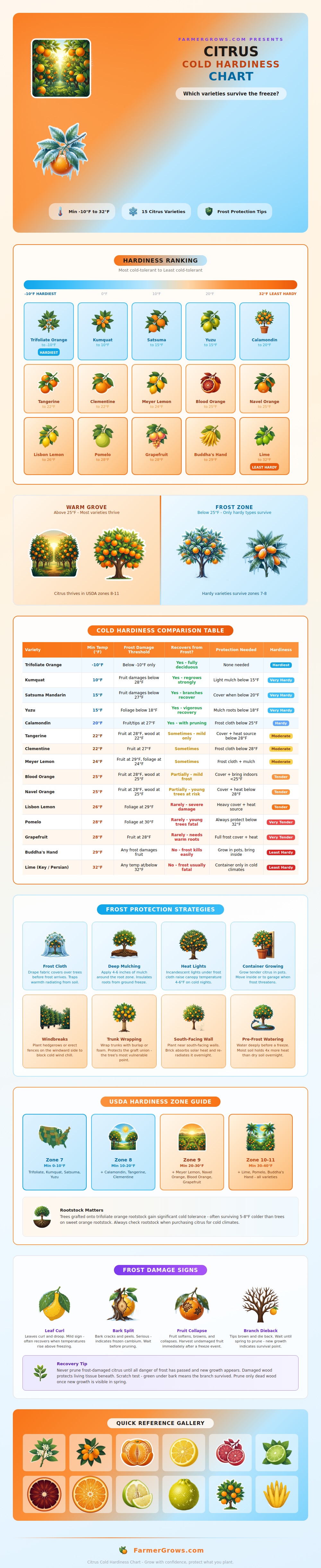
Citrus trees requires special care. They are fussy and they are particularly sensitive in the winter months regarding how to treat them well in the cold weather. When those colder temps comes around, you might be a little nervous, frost-killed citrus tree are no good. Know what is tolerant of the cold and what isn’t, that’s key to making smart choices about where to plant what.
Fifteen popular types is broken down by how cold they will take it, with a visual guide for reference. These range from tough oranges to tender limes. Of all the citruses, the toughest ones are the kumquat and its cousin the satsuma (which can hang on near 10-degree temperatures). That means that even if you’re in a colder zone then previously thought suitable for growing citrus, you may still have hardy enough plant to bear some of your own. Choose a variety adapted to your particular microclimate and you don’t need to be in California or Florida to have the real thing fresh from the tree.
How to Protect Citrus Trees in Winter
However, some of the other popular varieties, such as blood oranges or navel oranges, are less tolerant to cold, with damage beginning at around twenty-five degrees. In areas where night-time temperatures regularly drop below thirty degrees, it will be difficult for key lime tree to survive outside. A more sensible plan is to grow tender types in pots which can be brought inside during periods of cold weather.
Prevention is also key; selecting appropriate varieties plus protecting them properly can help make all the difference. Using a light fabric called frost cloth to cover your plants work well to keep things cozy. Don’t forget about tree’s root zone, adding several inches of an organic material like mulch will insulate it from chilly conditions as well. Even if the tree’s canopy sustains some injury, a warm root zone will help recovery. Don’t forget about tree’s root zone, adding several inches of an organic material will insulate it from chilly conditions as well. Even if the tree’s canopy sustains some injury, a warm root zone will facilitate recovery.
Frost cloth, which can be stretched over trees like this, traps heat radiating from ground, forming a thermal barrier between your plants’ leaves and air outside. Apply it beforehand (not after damage has been done). One thing that many gardeners don’t think about when buying young trees: The rootstock also determine how cold-hardy the eventual tree will be. For instance, a navel orange grown on trifoliate rootstock will handle colder weather better than if it were grafted onto sweet orange rootstock. That’s important information here in marginal climate zones so always ask at the nursery; knowing the rootstock would of save you money…and prevent lost trees down the road.
Prune out any branches that was badly damaged by frost, but wait till spring, when new growth emerges, before pruning. That way, you can mark off the bad wood right down to the good stuff. When in doubt about whether something is dead or not, do a little scratch test; if it’s still got its cambium layer (the green innermost part) intact, it will be green. And don’t rush to remove branches and end up taking off more than your fair share of the tree. Patience is a virtue in this case, especially until spring when new growth appears.
The trick to growing citrus in colder zones: Choose varieties rated for your lowest temperature; not your average high one. You can’t change the weather, but you CAN learn what to plant and how to protect it. A little prep goes a long way, whether it’s a tender potted lime or a hardy kumquat. It’s the mark of a confident gardener, not someone whose citrus always gets hit by the cold. It also helps you feel more prepared come winter.