
That’s part of the problem with planting everything in March. You’ll notice that by midsummer, when you expect to see color, you find only green leaves instead. Why? Because most flowers don’t know when you want them to open (they’re waiting for some other cue in their bodies). Perennial flower don’t bloom all at once to accommodate you; each plant work according to its own schedule.
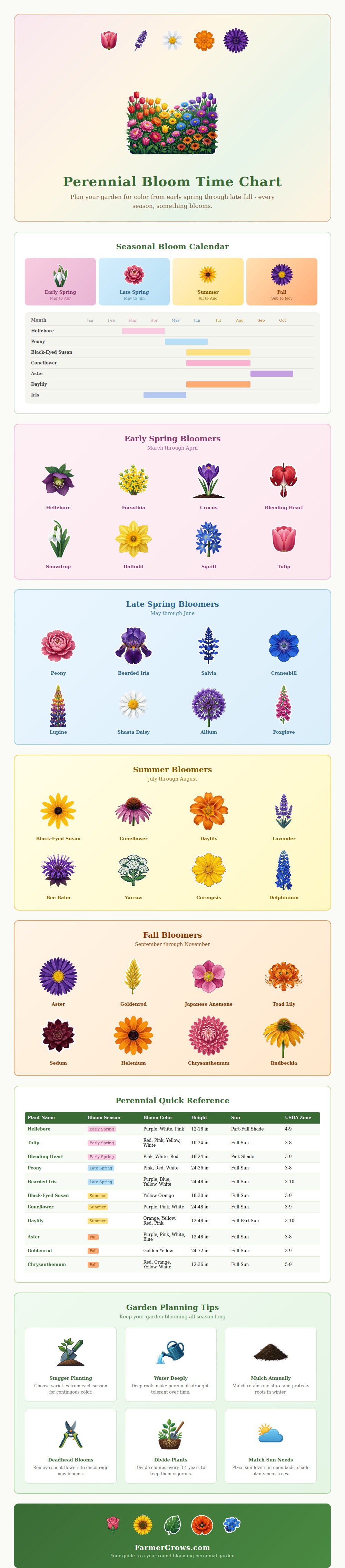
Here is what happens with individual plants throughout the year. This includes early spring, late spring, summer, and fall. The chart is shown below. Use this as a kind of cheat sheet and you will start to see where there are holes in your plan. Perhaps you have lots of June blooms, and nothing post-Labor Day.
Plan Your Garden by Season
Gardening isn’t just about acquiring plants. It’s about planning for color. In March and April, get going with the earliest things that flower (the ones who don’t mind mud or even a cold ground; they’ve stashed their energy underground until it warms). Hellebores and crocus is good examples of this type of early riser, plus anything else that’s up and at ’em when snow is retreating.
In May and June, irises and peonies are next up. These guys want good soil, meaning well drained. And full sun. Do them right by preparing where they’ll grow since once placed they reward you for years with yearly blooms.
In July and August, daylilies, coneflowers, and black-eyed susans is all common summer flowers that shine through. Things that like it hot and bright gets their moment here. Put these guys where they can soak up afternoon sun…or else they’ll flop over and stretch out tall and weak. From delicate spring blooms, we’ve moved into the bolder world of summer plants that ask little besides sunshine.
Don’t let summer end your gardening! From September to November, too many gardens fizzle out but a lot of gaps are filled in by things like chrysanthemums, goldenrod and asters. Fall planting continues a sense of intent throughout yard right up to frost. And feeds the bees and other pollinator who is building up for winter. It’s just as essential as all that springtime bloom, though nobody talks about it so much.
To make plants actualy bloom, keep them in shape. Strong roots resist drought, and are made when you water deeply. Roots also like it cool which is what mulch provides; I always do this yearly. To signal the plant not to set seed but continue producing, deadhead flowers as they fade. Avoid crowding by dividing clumps periodically (every few years); otherwise plants won’t be strong.
Use a seasonal plan to make gardening a strategy rather than a reaction. How to know what’s coming up next and stop thinking “Gosh, now the yard just looks empty.” With things staggered from spring bulbs to fall asters, the garden changes constantly, never standing still. It’s mostly psychology; the whole solution is that seeing the timeline eliminates blame for bad luck.
You select the right thing for each spot on the calendar, and suddenly your yard are a string of events, not just a static collection of plants. That way there will be something in flower from March till snow flies again.