Sweet Potato Planting Depth Calculator
Estimate planting depth for sweet potato slips, buried node count, in-row spacing, row spacing, slip quantity, ridge allowance, and soil-temperature readiness before setting slips in warm beds.
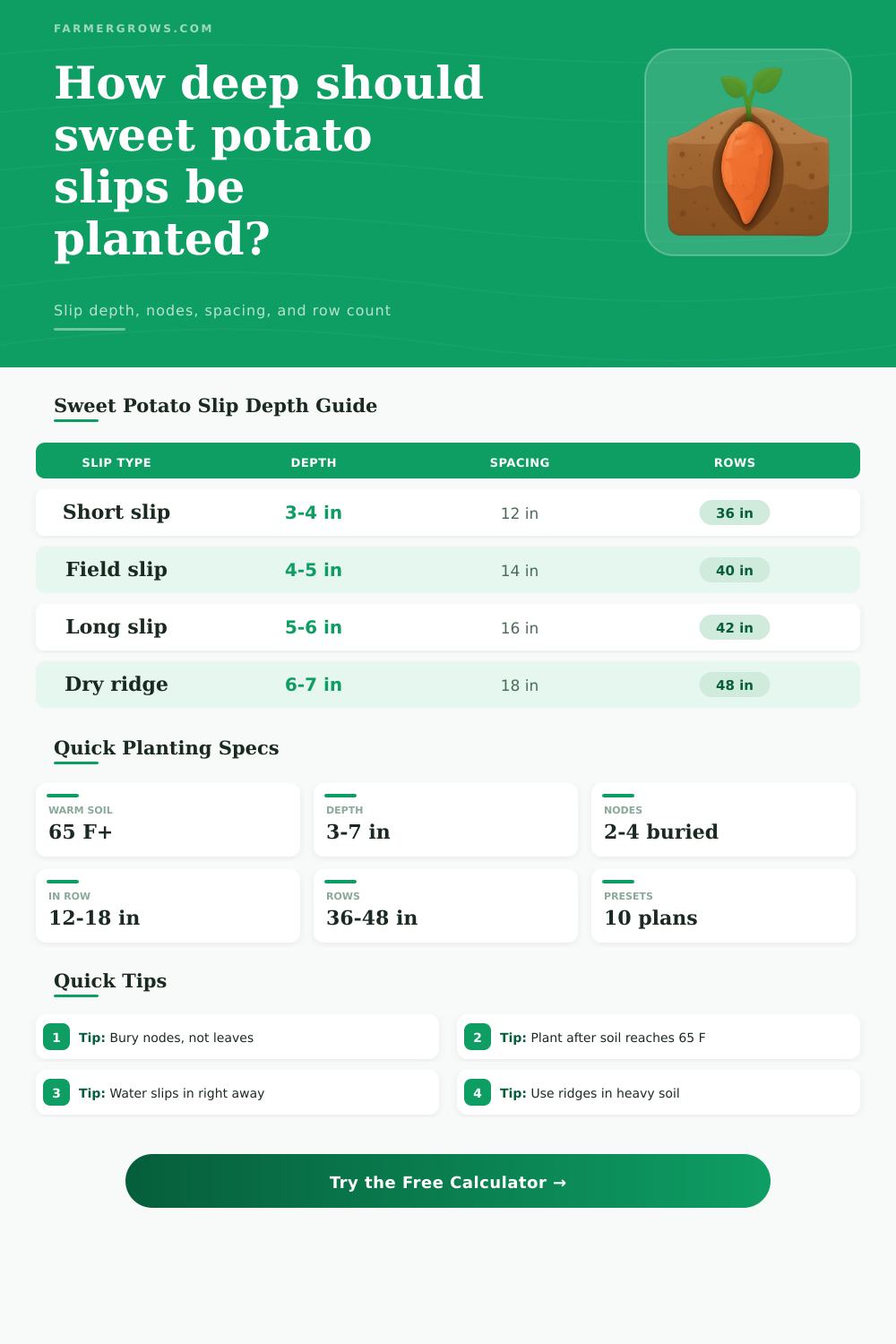
Sweet potato slips are planted differently from seed potatoes. The key is burying enough stem nodes to root well while keeping the leafy crown above the soil surface.
📋Sweet Potato Slip Presets
🍠Slip Planting Methods Compared
⚙Sweet Potato Depth Inputs
Sweet Potato Slip Planting Plan
Depth recommendation, buried node target, row layout, and warm-soil notes for the slip batch entered above.
📏Depth And Spacing Reference
📚Reference Tables
Sweet Potato Slip Depth By Slip Length
| Slip length | Common setting | Depth range | Buried nodes | Best use |
|---|---|---|---|---|
| 6-8 in slips | Vertical hole | 3-4 in | 2 nodes | Small garden transplants and rooted slips |
| 8-12 in slips | Angled hole | 4-5 in | 3 nodes | Most Beauregard, Covington, Jewel, and Georgia Jet slips |
| 12-16 in slips | Angled trench | 5-6 in | 3-4 nodes | Long vigorous slips with tall leafy crowns |
| 16 in+ slips | J-root trench | 6-7 in | 4 nodes | Long shipped slips that need extra buried stem |
Soil And Ridge Adjustments
| Soil condition | Depth adjustment | Ridge target | Temperature note | Planting caution |
|---|---|---|---|---|
| Sandy loam | Add 0.3 in if dry | 4-6 in | Warms quickly | Water deeply after setting slips |
| Loam | Use standard depth | 5-8 in | Stable soil warmth | Firm soil around each stem |
| Clay loam | Plant 0.3 in shallower | 8-10 in | Warms slowly | Avoid waterlogged holes |
| Heavy mulch | Plant at soil grade | 6-8 in | Surface stays cooler | Do not bury leaves under mulch |
Rows, Spacing, And Slip Counts
| Layout | In-row spacing | Row spacing | Slips per 10 ft | Root size tendency |
|---|---|---|---|---|
| Tight raised bed | 12 in | 30-36 in | 10 slips | More medium roots |
| Standard garden row | 14-15 in | 36-42 in | 8 slips | Balanced roots and vines |
| Wide market row | 16-18 in | 42-48 in | 6-7 slips | Larger storage roots |
| Grow bag or tub | 12-18 in | Container limit | 2-4 slips | Depends on soil volume |
Common Sweet Potato Planting Blocks
| Planting area | Rows estimated | Typical spacing | Slip count | Starter depth |
|---|---|---|---|---|
| 4 ft by 8 ft raised bed | 1 row | 14 in | 7-8 slips | 4-5 in |
| 30 ft home garden row | 1 row | 14 in | 25-28 slips | 4-5 in |
| 50 ft market ridge | 1 row | 16 in | 38-42 slips | 5-6 in |
| 100 ft double row block | 2 rows | 15 in | 160-176 slips | 4-5 in |
🌱Planting Notes
Bury two to four stem nodes, then leave the leafy crown above the soil. If the slip is long, angle it instead of digging straight down into cooler subsoil.
Sweet potatoes root best after soil reaches about 65°F. Water immediately, shade wilted slips briefly if needed, and keep the ridge evenly moist while roots form.
You can treat sweet potato slips like tomato seedlings if you prefer; just dig a hole, drop them in, and hope for the best. More likely, you’ll have stunted plants and rotting stems, or at least, something sad and stunted-looking that didn’t do what it was supposed to, since sweet potatoes aren’t normal vegetable transplants.
A sweet potato is a vigorous vine, and wants to be in touch with the soil to “wake up” (soil warmth + some part of its roots in contact with it = happy). The calculator does all this for you. It matches the length of your slips to how high the ridges will be, which determines how much of each plant’s roots touches the soil. Combined with the soil temperature, this ensures fast rooting of your transplants without burying the foliage.
How to Plant Sweet Potato Slips
The thing to remember: You don’t want to bury leafy crowns, but rather nodes, those little bumps on the stem from which roots will develop. Bury just one node, and the plant has trouble anchoring itself. With three or four buried nodes, however, there is several places for nutrients and water to enter.
The calculator takes your slip length as an input and calculates depth accordingly. For example, a short six-inch slip needs a shallow vertical hole, maybe three inches deep. A longer Okinawa slip (say 16 inches) can goes in the ground either at an angle, with much of the stem covered, or stretched out in a shallow trench. That’s important, because sticking a long slip into a narrow vertical space wastes all the rooting potential lower down on the stem, and also runs the risk of pushing leaves in the soil (which then rot).
Soil temperature is the quiet assassin of too-early planting. The calculator checks your soil temperature to make sure it’s warm enough for sweet potatoes. If the soil stays cold and soggy, they’ll rot, or at least just sit there still. The calculator compares your inputted soil temperature to that magic 65-degree-Fahrenheit number. It is not just a guideline; it is a requirement for a living creature’s quick root development. A mere five degrees below that might be enough to cause the slips to blacken, then collapse before they emerge from the ground.
Where soils are prone to staying cool and sodden, as with heavy clays, creating a ridge elevates the planting area into the warmer air and more-draining medium. The tool compensates for this, calculating a steeper ridge where clay prevails, or a flatter profile if you’re on sandier loam.
People also skimp on space. I know it’s tempting to cram the slips into a row as tightly as possible to get most crop out of every square foot. Sweet potato plants are vines; they sprawl! Cramming them will cause them to compete for resources, which prevents them from using all their energy to form tubers. Also, wider spacing lets air circulate (which decreases fungal problems) and allows each plant to recieve some sunlight.
The calculator factors in the recommended buffer zone for lost transplants, helping you figure out how many total slips to order for your garden bed. Always order extras, since inevitably there will be some that have been damaged or is wilted when recieved. Ordering 10 percent extra is normal practice here so that you can fill in gaps without having to stop and order more several weeks later.
That’s the kind of understanding that turns planting from drudgery to a game plan. It’s not just moving plants around in the earth; it’s creating conditions for root outburst. Attend to soil warmth and node burial, and your crop gets a head start that shows up at harvest time. How well those initial couple of weeks proceed can make all the difference between a respectable pail of potatoes and a storage-root bonanza.
You should of done the depth part right. Keep the leaves clear to prevent rot. Let the warmth do its thing.