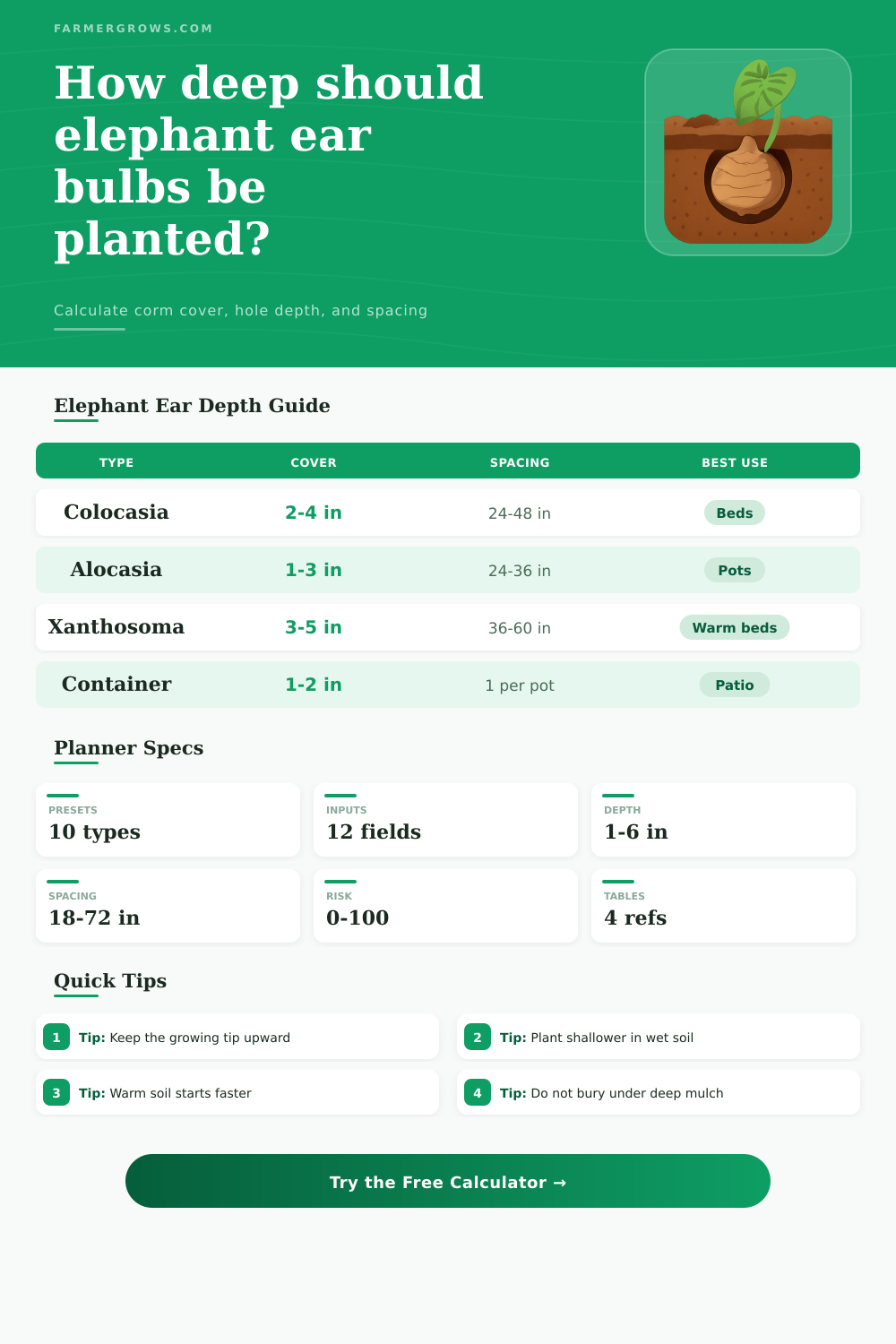
Elephant Ear Bulb Planting Depth Calculator
Estimate the finished soil cover, hole depth, spacing, container fit, and rot risk for elephant ear corms and tubers, including Colocasia, Alocasia, and Xanthosoma types.
📋Elephant Ear Presets
Load a named elephant ear scenario, then adjust the measured corm or tuber. The calculator treats the top of the corm as the growing-eye side and the bottom as the root plate side, so orientation and wet soil both affect the final depth suggestion.
⚙Corm, Soil, And Planting Inputs
🌱Spacing, Temperature, And Mulch
Planting Depth Results
Enter your corm measurements and planting conditions to calculate the recommended depth.
📏Depth And Spacing Snapshot
⚖Elephant Ear Type Comparison
📚Elephant Ear Reference Tables
Planting Depth By Elephant Ear Type
| Elephant ear type | Typical cover over top | Total hole guide | Spacing guide | Depth note |
|---|---|---|---|---|
| Colocasia esculenta corms | 2 to 4 inches | corm height plus cover | 24 to 48 inches | Plant growing point upward in warm, rich soil. |
| Colocasia gigantea or Thailand Giant | 3 to 5 inches | large corm plus cover | 48 to 72 inches | Give giant types extra room and moisture once growing. |
| Alocasia tubers or rhizomes | 1 to 3 inches | shallow cover preferred | 24 to 36 inches | Often dislikes cold, soggy soil more than Colocasia. |
| Xanthosoma malanga tubers | 3 to 5 inches | deeper warm-bed hole | 36 to 60 inches | Large edible-type tubers need loose soil below. |
| Stem division with crown | crown near soil line | roots covered, crown high | match mature spread | Do not bury the crown deeply like a dormant corm. |
Depth Adjustment By Soil And Drainage
| Condition | Depth adjustment | Why it matters | Best response |
|---|---|---|---|
| Loose loam, normal drainage | Use standard cover | Good oxygen and moisture balance | Backfill gently and water once. |
| Clay or compacted soil | Plant 0.5 to 1 inch shallower | Wet pockets slow sprouting and invite rot | Raise the bed or amend with compost. |
| Sandy fast-draining soil | Add up to 0.5 inch cover | Top layer dries quickly in heat | Mulch lightly after growth begins. |
| Peat-heavy potting mix | Stay shallow | Mix can remain wet around dormant tissue | Use a pot with open drainage. |
| Pond-edge moist bed | Use shallow to standard cover | Moist soil is fine after active growth | Start only after soil has warmed. |
Corm Size And Hole Depth Examples
| Corm size | Cover target | Total hole depth | Spacing target | Use case |
|---|---|---|---|---|
| Small 2 inch corm | 1.5 to 2 inches | about 4 inches | 18 to 24 inches | Starter pot or small border plant. |
| Medium 3 to 4 inch corm | 2 to 4 inches | about 5 to 7 inches | 30 to 42 inches | Most packaged Colocasia bulbs. |
| Large 5 inch corm | 3 to 5 inches | about 8 to 10 inches | 42 to 60 inches | Vigorous garden specimen. |
| Sprouted division | 1 to 2 inches | cover roots, crown high | 24 to 48 inches | Already-started plant or lifted clump. |
Container And Bed Fit Guide
| Planting setup | Minimum width | Depth approach | Corm count | Watch point |
|---|---|---|---|---|
| Patio tub for one Colocasia | 18 to 24 inches | 2 inches cover | 1 corm | Use a heavy pot so tall leaves do not tip. |
| Large Alocasia container | 14 to 20 inches | 1 to 2 inches cover | 1 tuber | Keep the crown airy and the mix open. |
| Mixed tropical border | 36 inch bed width | 2 to 4 inches cover | staggered spacing | Leave room for leaf spread over paths. |
| Giant elephant ear bed | 60 inch spacing | 3 to 5 inches cover | 1 focal plant | Big leaves need wind shelter and water. |
💡Planting Depth Tips
Measure cover from the top of the corm to the finished soil surface. Mulch goes on top after planting and should not be counted as firm planting depth.
Dormant elephant ears can rot before they root. If soil is cool, wet, or heavy, use shallower cover and start in a warmer pot when possible.
Preparing to plant elephant ears presents you with one particular dilemma: When that dormant corm emerges from its box it can resemble a dead, dirty rock, making you want to hesitate before planting it. How much cover should be provided? Which way should the corm face, upside down or right side up? What kind of soil environment best wakes the tissue up without injury? The calculator on this page will help you measure; hopefully you won’t have to wing it and wonder if two inches is enough, or four inches too many.
The trickiest part of the whole thing is: orientation. Although all those tubers and rhizomes don’t typically look any different from one another at a glance, each has its own up and down. Most commonly that’s because you see what looks like a tiny bump of growing points (sometimes called eyes) on top. Often, they are barely pinkish and show up as a cluster, rather than just one eye.
How to Plant Elephant Ears Correctly
Even when planted upside-down, the plant will still curl itself upward to get to the light. However, it won’t be happy about it until it gets oriented right-side-up again. This take precious energy during its vulnerable early stages. Getting things oriented correctly from the beginning produces sturdier stems, and also helps to prevent rot as the plant tries to reorient itself.
That’s all about finding depth, enough to stabilize the corm and provide darkness (until temperatures consistently moderate) but not suffocate it. Don’t bury them too deeply, especially in heavy, water-holding mixtures of peat and clay. Doing so invites fungal issues to take hold in the warm, wet soil while the roots is still getting started.
On this page, you’ll see a tool that will tweak the advice according to how fast your soil drains and what type of soil it is. The tool recognizes the difference between compacted garden clay and sandier soils such as loam when it comes to how moisture is held around vulnerable tissue.
Understand your plant groups, because some tolerate being buried deeper than others. Typically colocasias (the common elephant-ear variety) tend to be the most forgiving of normal planting depths; even a few inches covered will work well in a warm bed, whereas alocasias are usually more finicky and want to be planted somewhat shallowly, particularly if there are any signs of emerging sprout before burying them. The xanthosomas can take a little deeper but require good drainage beneath their root plate. Knowing this avoids assuming all bulbs is interchangeable as if they were onions.
As summer unfolds, all those elephant ears get aggressive, wide; and that means spacing matter just as much as depth (more on that below). Competition for air circulation and water makes things too humid right near the stem bases, and that’s a breeding ground for disease. The genus-by-genus, how-much-space-to-leave-between-things table on the page gives you the picture of just how much room each plant will want to take up.
Sure, it’s tempting with all those huge leaves to cram some pots together to create an instant lushness, but don’t do it, or they might tangle or shade each other until they become weak. Then there are the variables when it comes to containers. The space they occupy is limited, and therefore the growing medium will dry more quickly different than soil in beds, but also hold more intense heat in high summer.
If possible, use a larger pot (wider rather than deeper) as this allows for more stability against the weight of overlying foliage, and less likelihood of toppling on breezy days. And speaking of bottoms…are your pots or other containers truly well-drained? That’s the most important factor of all. Even if you get every detail of the planting depth just right, you cannot have any standing water down below where the dormant corms live.
Success also hinges on what isn’t said: the importance of soil temperature. The corm must first try to warm itself before it begins to root, sowing in cool, sodden ground is a recipe for trouble. Better to wait until things have truly warmed up and plant when soil conditions are better, reducing corm stress and substantially minimizing rot risk. For those with cooler climates (or just plain impatience), an early indoor jump-start in a small pot under gentle heat will be repaid in the form of strength throughout the season.
Avoid counting mulch as part of what you measure for planting depth, and remember to wait until growth appears before adding it. When you plant, firm soil must touch the surface of corm, but don’t add thick mulches right away because they hold too much moisture around the dormant tissue. Wait till shoots push through the dirt and begin to show green aboveground; then apply some sort of protective layer over them.
Remember: The growing tip must be pointing up; everything else follows from getting that first part of planting correct. Just provide sunshine and water. The elephant ear will take care of most of the rest. It wants to be warm and well-drained (with a little shade to make it feel safe). Respect its tropical nature and it will repay you with patience.