Lily Bulb Planting Depth Calculator
Estimate planting depth, bottom-of-hole depth, spacing, and bed capacity for true lily bulbs such as Asiatic, Oriental, trumpet, martagon, tiger, Easter, and Madonna lilies.
Standard Hybrids
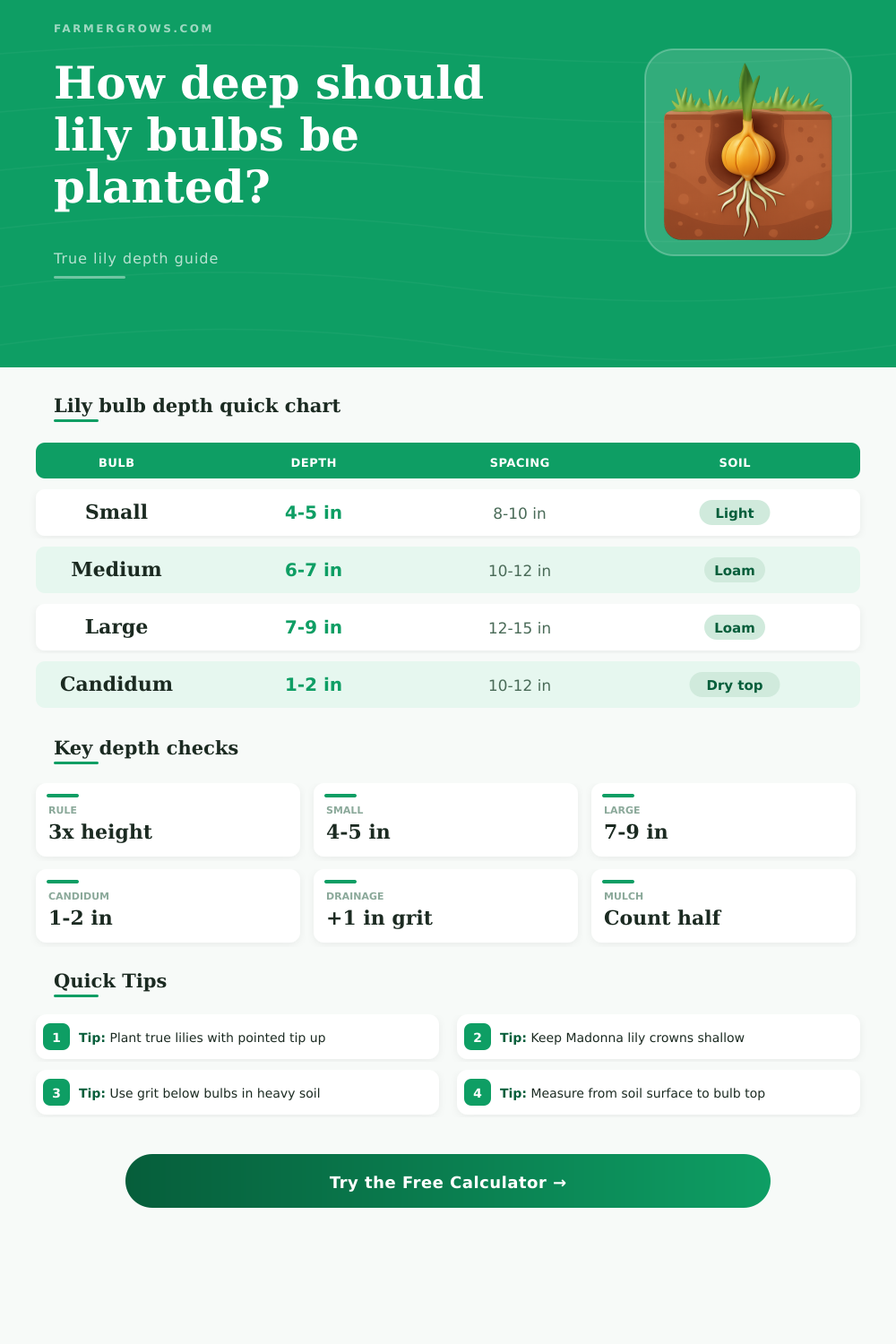
Asiatic, LA, Oriental, trumpet, Easter, tiger, and most OT lilies usually perform well with soil over the bulb near three times bulb height.
Tall OT Lilies
Large OT bulbs often benefit from the deeper end of the range because extra stem rooting helps anchor heavy flowering stems.
Martagon Lilies
Martagons dislike disturbance and normally prefer a steady, moderately deep setting in cool, humus-rich soil.
Madonna Lily
Lilium candidum is the exception: keep the bulb shallow, with only a thin cover over the top after planting.
| Lily group | Typical bulb height | Soil over bulb | Spacing |
|---|---|---|---|
| Asiatic lily | 1.5 to 2.25 in | 4.5 to 6.75 in | 8 to 12 in |
| Oriental lily | 2 to 3 in | 6 to 9 in | 10 to 15 in |
| Trumpet lily | 2 to 3.25 in | 6 to 9.75 in | 12 to 18 in |
| OT hybrid lily | 2.5 to 3.5 in | 7.5 to 10 in | 12 to 18 in |
| Martagon lily | 1.5 to 2.5 in | 5 to 7.5 in | 10 to 14 in |
| Lilium candidum | 1.5 to 2.5 in | 1 to 2 in | 10 to 12 in |
| Bulb circumference | Size class | Depth from top | Best use |
|---|---|---|---|
| 4 to 5 in | Small | 4 to 5 in | Pots, dwarf Asiatic lilies |
| 6 to 7 in | Medium | 5.5 to 7 in | Most garden groups |
| 8 to 9 in | Large | 7 to 8.5 in | Oriental and trumpet lilies |
| 10 in plus | Jumbo | 8 to 10 in | OT hybrids and tall borders |
| Soil condition | Depth change | Drainage layer | Why it matters |
|---|---|---|---|
| Sandy soil | Plant 0.5 in deeper | Usually none | Loose soil dries and settles faster |
| Loam | Use calculated depth | Thin grit optional | Balanced moisture and air |
| Clay soil | Plant 0.5 in shallower | 1 in grit | Bulbs need oxygen around scales |
| Raised bed | Use calculated depth | Thin grit optional | Good drainage reduces rot risk |
| Container mix | Check pot clearance | Thin grit optional | Roots need room below the bulb |
| Planting layout | Spacing target | Depth priority | Capacity note |
|---|---|---|---|
| Single specimen | 12 to 18 in | Anchor tall stems well | Give roots a wide amended pocket |
| Natural clump | 9 to 12 in | Even depth across the group | Plant odd numbers for a fuller look |
| Cutting row | 8 to 12 in | Consistent row depth | Keep labels beside each cultivar |
| Container | 6 to 10 in | Leave root room below | Use deep pots for Oriental and OT bulbs |
With lilies, most gardeners consider how deep they are planted more of a guideline than a structural detail. Digging what seems like the right-sized hole, then stashing a bulb inside and hoping it figures out what to do isn’t very successfuly. Unlike tulips or daffodils, which force their way up through snow with minimal covering of soil, true lilies requires their stems to root before the flower spikes poke up.
Go too high, and the stem break off when flowers try to hold up there heads. Too low, and things don’t go well either: the bulb is unable to push energy upward and might rot if soil is soaked.
How Deep to Plant Lilies
Enter the bulb-size-to-soil-type-and-depth-calculator (above). Say goodbye to guesswork; hello to a proper gameplan. The idea is as simple as it gets, but like many things that are simple to understand, it is hard to execute correcty.
Cover that bulb head with soil roughly three times the height of the bulb itself. That means the soil will hold them, but won’t smother them. What’s a little Asiatic hybrid lily? They are four inches or less. Giant-size OT lily? More, to secure those big stems. The device adjust accordingly… No need to pull out calipers or run the numbers yourself. Just tell it your estimate of bulb’s height and circumference, and let it do its thing.
The depth varies by soil type, where one number does not fit all garden. For example, clay is like a sponge, so it retains moisture in the basal plate (the part at the bottom) for days after it rain. Rotting soon follows. When planting in heavy soils, follow the general advice above but dig a little shallower and provide some grit underneath the bulb to improve drainage.
The chart shows the difference between sand and clay. One need deeper planting, while the other needs less depth because sand dries out the scale too quickly. How do you have just enough moisture but not too much to encourage rot? Balancing water and air.
Interestingly, climate also figure into these equations. In colder winter zones, freezing heave can shatter roots, so more soil provides better insulation. Add another inch or two to your planting depth if you have hard freezes; this will insulate the bulbs while letting them grow out once ground thaws. Shallow planting works in milder climates where the ground does not freeze solid because there is less frost heave. This is why winter severity affect your recommendation. The calculator adjusts the depth so the bulb isn’t exposed during the dormant period. It provides just barely enough depth to get by, which makes all the difference when spring come late.
It gets even more complicated when mulch enters the picture, if you don’t take into account its impact. If you plant and then pile on mulch, as many of us do, you might wonder why your lilies didn’t bloom or came up late. Now you know: mulch insulates the soil so well that it keep it from warming up as fast in the spring. And the tool will adjust for that, factoring in how much insulation value you have in your mulch, which means you can plant just a little bit shallower if you intend to smother the bed with mulch.
No other guide seem to mention this detail at all. They only talk about the dirt and say nothing about organic layer on top of it. The notable exception? Madonna lilies. Also known as Lilium candidum, it want good drainage and loves the heat but not much moisture (it’s happiest in a hot, dry spot), so they should be planted just below surface of the ground, barely buried at all, in other words. Planting them like an Asian hybrid is a how-to recipe for disaster.
You don’t need to use a one-size-fits-all approach to a plant that requires special treatment, and fortunately, the calculator will know the difference if you choose the right group. So finally, how deep should bulbs be planted? Well, as always, that depends on making sure the lily gets the best shot at establishing a good base of stem roots to hold up its flower head (the so-called secondary roots on the stem does all the work).
If it’s not buried deeply enough, no such roots will develop proper. Get the depth right, though, and your lilies will stand tall and shine for many years to come. Give them a good start beneath the surface, and they’ll repay you in spectacle above it.