Garlic Planting Depth Calculator
Estimate the soil cover above each garlic clove, the total hole depth from soil surface to clove base, mulch fit, emergence risk, and frost-heave protection from clove size, soil, zone, winter exposure, and bed conditions.
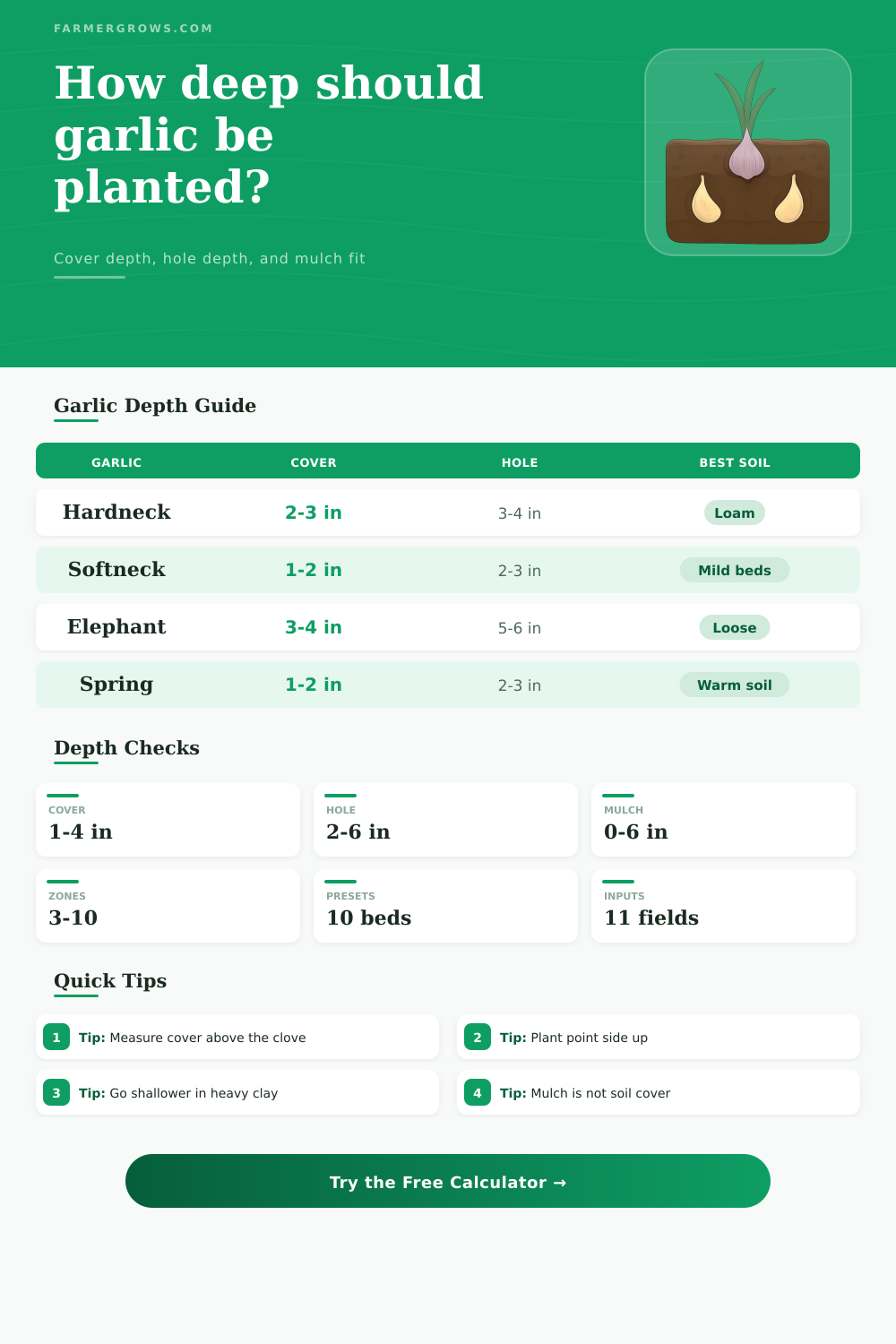
Garlic depth is usually measured as soil cover over the top of the clove, not the total depth of the planting hole. This calculator keeps those two numbers separate so large cloves, elephant garlic, heavy clay, and mulched beds do not get planted too deep.
📋Garlic Depth Presets
⚖Depth Method Quick Guide
Soil above the clove tip. Mulch is tracked separately because it settles and is often pulled back in spring.
Total depth from finished soil surface to the base of the clove after it is set point side up.
Heavy wet soils usually need less cover; sandy or loose soils can use a little more to prevent exposure.
Cold exposed beds need enough soil and mulch to reduce freeze-thaw lifting without burying shoots too deeply.
🧄Garlic Depth Inputs
Recommended Garlic Planting Depth
Your depth recommendation will appear here.
📏Depth Factor Snapshot
📚Garlic Depth Reference Tables
| Garlic type | Soil cover above tip | Total hole depth | Best use | Depth note |
|---|---|---|---|---|
| Hardneck garlic | 2 to 3 in | 3 to 4.5 in | Cold and moderate zones | Use the deeper end for exposed beds with mulch. |
| Softneck garlic | 1.5 to 2.5 in | 2.5 to 3.75 in | Mild and warm zones | Do not bury too deeply in wet winter soil. |
| Elephant garlic | 3 to 4 in | 5 to 6.5 in | Large cloves in loose soil | Needs deeper holes because cloves are much taller. |
| Spring-planted garlic | 1 to 2 in | 2 to 3.25 in | Late starts and warm soil | Shallower cover helps faster spring emergence. |
| Green garlic cloves | 1 to 1.75 in | 1.75 to 2.75 in | Small cloves for scallions | Use shallow cover because bulb size is not the main goal. |
| Soil condition | Cover adjustment | Why it matters | Watch for |
|---|---|---|---|
| Heavy clay | Subtract 0.25 to 0.5 in | Clay stays wetter and can crust over shoots. | Rot, slow emergence, smeared planting holes. |
| Silty soil | Subtract 0 to 0.25 in | Silt can settle and crust after rain. | Hard surface after winter rains. |
| Garden loam | No change | Balanced drainage and moisture make standard depth reliable. | Normal settling after watering. |
| Sandy soil | Add 0.25 to 0.5 in | Loose sand exposes cloves and dries quickly. | Cloves pushed up or uncovered by wind. |
| Loose raised mix | Add 0 to 0.25 in | Mixes settle after irrigation but usually drain well. | Settling around cloves after the first rain. |
| Zone group | Fall planting depth tendency | Mulch tendency | Depth priority |
|---|---|---|---|
| Zones 3 to 4 | Use upper cover range | 3 to 6 in loose mulch | Reduce heaving while keeping shoots reachable. |
| Zones 5 to 6 | Standard cover range | 2 to 4 in loose mulch | Balance winter hold and spring emergence. |
| Zone 7 | Middle to shallow range | 1 to 3 in mulch | Avoid wet, overly deep winter planting. |
| Zones 8 to 10 | Shallow to middle range | 0 to 2 in mulch | Prevent rot and warm-soil delay. |
| Spring planting | Shallow range | Light mulch only | Fast emergence matters more than winter hold. |
| Mistake | Typical cause | Likely result | Correction |
|---|---|---|---|
| Measuring to clove base only | Confusing hole depth with cover depth | Cloves planted too shallow | Add clove height to cover depth. |
| Counting mulch as soil cover | Loose straw included in depth | Cloves may heave or dry out | Measure mineral soil or compost cover separately. |
| Deep planting in wet clay | Trying to protect from cold | Rot and slow spring shoots | Plant shallower and improve drainage. |
| Shallow planting in sandy beds | Using a mild-climate rule | Cloves exposed by settling or wind | Increase cover slightly and mulch lightly. |
| Burying small spring cloves | Using fall hardneck depth | Delayed emergence and weak plants | Use shallow cover and firm soil gently. |
💡Garlic Depth Tips
Firm without compacting. After setting cloves, backfill with loose soil and press just enough to remove air pockets. Hard compaction over the tip can slow shoots, especially in clay.
Recheck after settling. Water or rain can lower loose beds by 10 percent or more. If cloves become visible, topdress with compost or garden soil before adding more mulch.
If you think about it, you always seem to plant garlic the wrong way because you measure how deep hole is instead of how deep the covering soil will be. A trench goes in; a clove drops in, but protecting part is that layer of soil over the top of tip of the clove, not any deeper! Too little and they’re shallow; too much and they’re smothered. It’s all about understanding which one you are measuring.
That’s where that calculator up there comes in: It splits those two figures apart for you, so you don’t have to guess if “three inches” mean on top of soil, or underneath.
Why Measuring Soil Depth Is Important
Certain types of garlic is harder to grow in winter than others. Hardneck varieties generally do better then softnecks, and they also tend to live in heavier soils. The calculator factors in what kind of garlic you’re growing along with your personal base cover. Then it tweaks things based off your desired planting date.
What is elephant garlic? It is a whole other ball of yarn, given those giant-sized clove. If you planted one of those at the same depth as a regular old hardneck, you’d be covering it with practically five inches of earth which won’t go well.
Once you choose your variety, the soil matters. Clay-heavy ground will hold moisture against you. If you bury bulbs (the cloves) deeper than recommended, the heavy soil will crust over. This is bad news for when they try to push through. The shoots must find their way upward. They will be blocked if they cannot get past the thick layer, and they may even die off or weaken. In clay soils, therefore, less is more, get them up and into the sun stat!
In sandy conditions, the soil moves around under rainfall and wind, and also dries rapidy. There, you want some bulk to weigh things down and keep those cloves in place as things settle in bed. This is why how-to takes soil type into account. It adjusts your depth goal to match whether you’re sowing on a raised bed or in sand, clay, loam, etc.
How well it hold up to winter exposure is also a big factor. If you have freeze-thaw cycles in your zone, the ground will expand and contract over the course of the year. If there isn’t enough soil covering garlic cloves, the moving ground can shove them aboveground. That’s what’s known as frost heave, which is why you’ll notice in January that some come up with their green tips showing through the mulch, then die back later that night during a hard frost. Planting them deeper is better to balance that upward force but do not plant them so deep that they smother the bulb itself.
Yes, mulch insulates; no, it doesn’t substitute for soil cover. Loose straw (above) doesn’t stay put. It floats and shifts around. But mineral soil stays in place, holding the clove fast to resist the ups and downs of the season.
The depth depends again on when you are planting, but keep in mind that fall-planted garlic must balance getting its roots established before winter with protecting itself from cold weather. For spring sowing (where the ground warms fast, and there’s less time for growing once up), early get-away is most important; go shallow. Tiny cloves reserved for scallions/green garlic harvests should never be buried deeply (you want a quick start, not bigger bulbs).
One size does not fit all when it comes to most rules. The reason your friend’s work succeeds at the same depth as yours may be because they have raised bed, or because their soil doesn’t drain as quickly as yours. You also need to plan for settling, which many people forget. If you didn’t compensate for that loss of space when planting, a freshly-turned bed will settle and expose your cloves with time. Gently firm the bed (not so much that it makes a hard surface over the tips).
Looking only at one variable isn’t good enough; it’s also about your whole system: what size cloves do you have? What’s the winter weather like (really)? How does water move through your soil? When you’re standing in the dirt, trying to remember whether you should add more or less cover to sandy soil, use the reference table on this page. It lays everything out clearly to make quick comparisons easy.
This isn’t about finding the perfect number, it’s about creating conditions that protect the roots from physical displacement and temperature swings, yet still allow them to breathe. The details matter to garlic. But so does a hands-off attitude, since this isn’t one of those crops where things has to be just right; they’ll work out if you get them most-of-the-way there.
Calculating the correct depth for each bed takes only minutes. This means no more guessing, and no more weeks of wondering what happened when spring comes and your beds look empty. Cover the soil well before planting, layer mulch over the top, and then let nature take its course. Thoughtful spacing trumps haphazard digging, and a healthy stand will result. All those careful measurements pay off in summer when there are heads upon heads waiting for you.