Zucchini Per Plant Calculator
Estimate zucchini yield per plant, total squash count, harvest weight, weekly picking pace, plant needs for a target harvest, and a practical low-to-high range for garden planning.
Zucchini plants can set quickly when weather, bees, water, and picking frequency line up. This calculator starts with a variety baseline, then adjusts it for harvest window, spacing, containers, pollination, stress, and kitchen losses.
Zucchini yield snapshot
Enter your crop details and calculate to see the estimate.
| Squash style | Typical count per plant | Typical weight per plant | Planning note |
|---|---|---|---|
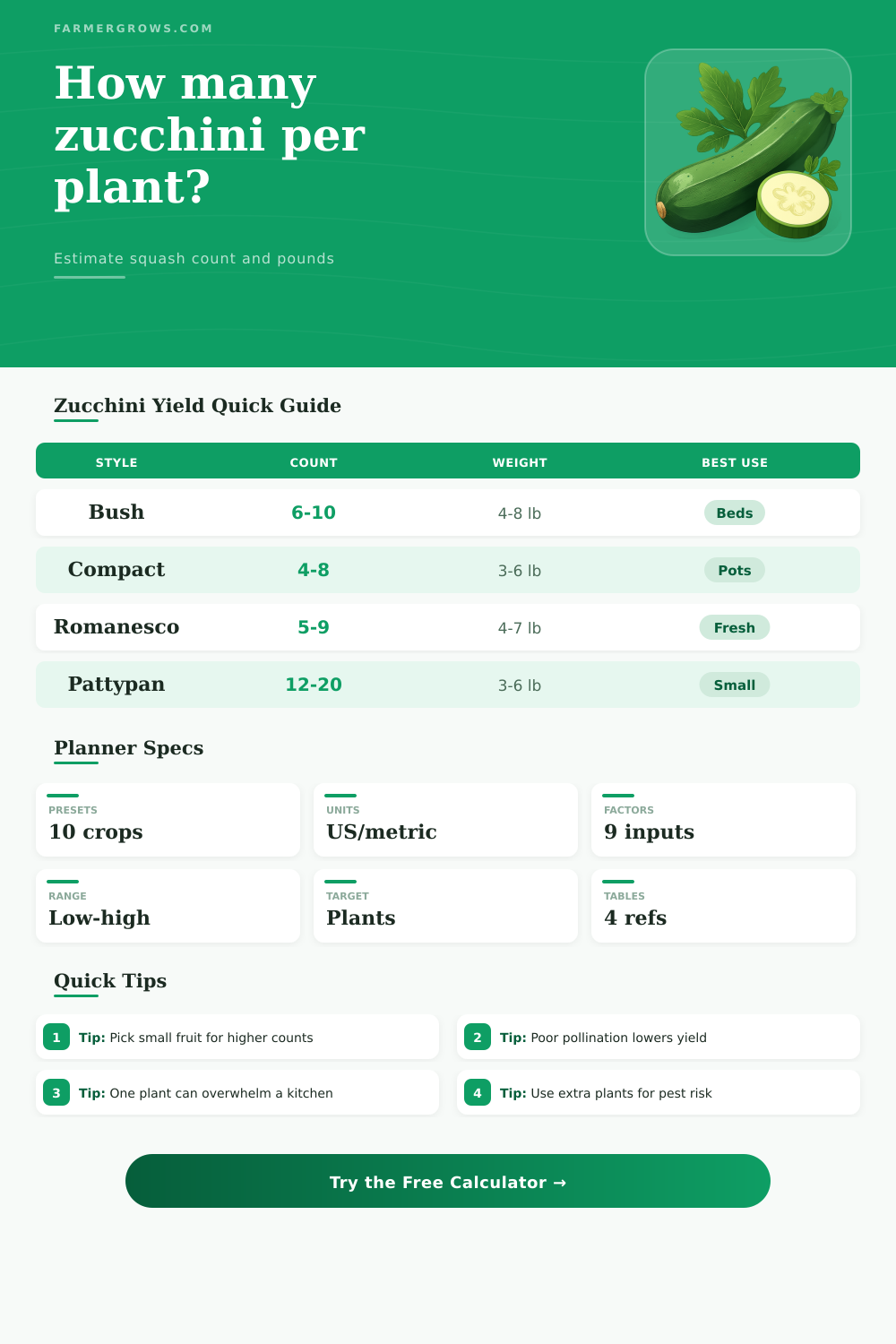
| Classic bush zucchini | 6 to 10 fruit | 4 to 8 lb | Best baseline for home garden planning. |
| Compact patio zucchini | 4 to 8 fruit | 3 to 6 lb | Container volume and watering matter most. |
| Romanesco zucchini | 5 to 9 fruit | 4 to 7 lb | Often valued for flavor and tender texture. |
| Pattypan baby squash | 12 to 20 fruit | 3 to 6 lb | High count when harvested very young. |
| Market row, picked often | 8 to 14 fruit | 6 to 12 lb | Frequent harvest keeps new fruit coming. |
| Growing setup | Suggested spacing | Root volume | Yield effect |
|---|---|---|---|
| Open raised bed | 30 to 42 in | 15 plus gal equivalent | Good airflow and strong roots support full yield. |
| In-ground row | 36 to 48 in | Deep garden soil | Reliable if fertility and watering are steady. |
| Large grow bag | 1 plant per 15 to 20 gal | 15 to 20 gal | Can perform well with daily water checks. |
| Small container | 1 plant per 7 to 10 gal | 7 to 10 gal | Expect smaller plants and a shorter season. |
| Crowded mixed bed | Under 24 in | Shared roots | Lower airflow and competition reduce yield. |
| Factor | Low-yield signal | Good-yield signal | Calculator effect |
|---|---|---|---|
| Pollination | Fruit shrivels young | Full fruit with firm tips | Changes fruit set directly. |
| Harvest interval | Huge hidden fruit | Picked every 2 to 3 days | Late picking slows new fruit. |
| Water | Wilt and dry swings | Even soil moisture | Affects fruit fill and plant stamina. |
| Sun | Under 6 hours | 7 to 9 hours | Raises or lowers the set multiplier. |
| Disease | Mildew or borer decline | Healthy green leaves | Removed as marketable loss. |
| Harvest goal | Likely plants | Weekly kitchen pace | Planning reminder |
|---|---|---|---|
| Fresh eating for one or two | 1 plant | 1 to 3 lb in peak weeks | Pick small and share extras early. |
| Family fresh eating | 2 plants | 3 to 6 lb in peak weeks | Check plants every other day. |
| Freezing and baking | 3 to 5 plants | 6 to 12 lb in peak weeks | Plan shredding or freezing days. |
| Market or donation row | 6 plus plants | Variable | Track culls separately from harvest weight. |
| Succession planting | 1 to 2 plants per round | Smoother supply | Start a second round before old plants fade. |
Pick before fruit gets oversized. Small and medium zucchini keep the plant in production and make the calculator count estimate more realistic.
Watch pollination during cool or rainy spells. If young fruit yellows at the blossom end, hand pollination can protect the next flush.
Use plant count cautiously. One strong plant can be enough for fresh eating, while several healthy plants can create a quick surplus.
Account for end-of-season decline. Powdery mildew, vine borers, squash bugs, and heat stress can shorten the harvest window.
It was a summer of zucchini, when vegetables became a threat. Each year it comes down to the same moment: When zucchini turns from a vegetable to a menace, and suddeny there is more then we know what to do with. One week you are carefully checking three plants for dinner, and the next your neighbor is handing you a sack of oversized green logs because they cannot consume them fast enough.
That surplus occur because we, the growers, fail to take into account the speed at which vines goes when the situation calls for it. It’s never about trying hard; it’s about not planning for quantity until after the very first flower has opened. Most gardeners sow in hopes, not mathematics, resulting either in feast or famine.
How to Plan Your Zucchini Garden
A calculator can bridge that gap, converting fuzzy plans into real expectations. So this tool (the one above) does the math for you, and doesn’t require you to guess about how many plants will meet your real-life kitchen needs. It also requests details about your own pollination quality, because that changes the outcome dramatically.
And harvest frequency, since picking every three days as opposed to once a week means there’s less time for a single gigantic zucchini to hog resources and more fruit are produced overall. That’s the trick that most people miss in their calculations. Instead of telling you what the ideal number would be if everything were perfect and everyone ate endlessly, it tweaks that starting point based off reality, and shows you a realistic range.
Think about it: Those figures take into account root space, too. How many gallons of water can that little patio pot hold compared to the sprawl-out plant enjoying the good life in lush garden bed? Fewer fruits and flowers, yes, if the roots are confined. That’s why you can enter not just the spacing but also container size; it factors into calculation.
And no: Don’t count on “garden-size” results with restricted soil area. That’s why a shrunken-in plant won’t make enough of itself before getting sick.
Another quiet spoiler is the factor called pollination. Even with abundant sunshine and ideal soil conditions, without bee activity on cool mornings, the female flowers drops off before fruit set. For this reason, there’s an element in the calculator to adjust for pollination. Why? Not all blooms becomes market-ready zucchinis. It forces honesty into your garden plans.
It reminds you that Mother Nature gets to cast her vote about what happens and when. When it comes to insects and weather, you’re not calling the shots. As the season goes on, picking at any given time makes all the difference. If the fruits get large enough that the plant stops making new blossoms (which shortens your harvest), you will end up with less fruit in the long run.
Enter when you want to start picking, and math adjusts accordingly to your real world routine. How fast you go each week will help you know whether you’re headed toward a tolerable amount of produce or a mad weekend of baking projects ahead of you. It is better to know early that two plants feed a family of eaters, as one will not be enough.
Spacing also affects yield: Spacing helps prevent diseases that hurt yields. Powdery mildew loves those little pockets of humidity between crowded plant. A basic plan from the reference guide includes tool details for proper air circulation spacing. Not only will your garden look clean and tidy, but you’ll have healthy-looking leaves into late summer. And healthy leaves are all about keeping them producing right up to frost time when the vines finally die back. It is a small logistics decision with a big-time impact on that last pickin’ harvest.
All this to say: Growing zucchini isn’t so much about cajoling it out of the ground as it is wrangling excess. What does that mean? It is a math problem that the calculator helps you answer: How many plants fit your style of eating (and freezing)? It transforms worry into strategy. By the time you see those earliest blooms, you won’t be fretting whether you’ll end up with too little or far too much; you’ll know, and you can get right to the joy of reaping what you sow.
And there’s no greater reward than knowing you should of thought ahead.